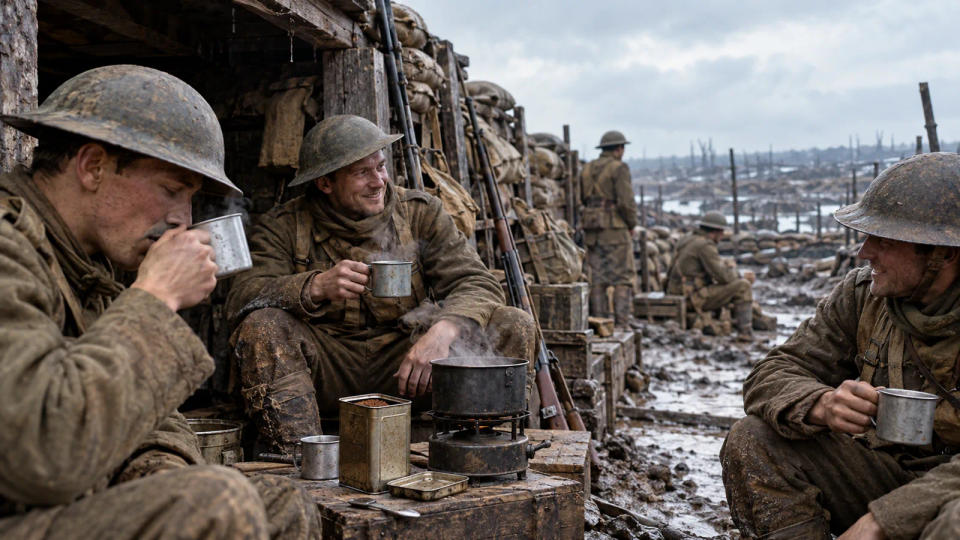
What made instant coffee suddenly useful on the Western Front? It was not invented by World War I, but the war gave an already existing idea exactly the kind of problem it could solve: millions of soldiers needed a hot, caffeinated drink that was fast to prepare, easy to carry, and practical when normal brewing was difficult.
By the time the United States entered the war in 1917, soluble coffee had been around for years but remained a relatively small commercial product. Military demand changed that. The U.S. Army bought enormous quantities of coffee, used soluble coffee in field rations, and helped turn a convenience product into something thousands of servicemen encountered under extraordinary conditions.
Instant Coffee Existed Before World War I
The story begins well before the trenches. Attempts to create concentrated or soluble coffee appeared in the nineteenth century, which is why claims about a single “inventor of instant coffee” are difficult to make with confidence. One well-documented milestone came from Japanese chemist Satori Kato, who was working in Chicago. He filed a U.S. patent application in 1901 for a dry coffee concentrate and a process for making it; the patent was granted in 1903.
Kato’s patent described removing unwanted fats and fibrous material, preserving coffee’s volatile oils, evaporating the remaining extract, and producing a dry substance that could be granulated or pressed into tablets. It was recognizably part of the technological path toward modern instant coffee, even if the result would not have tasted like the freeze-dried granules familiar today.
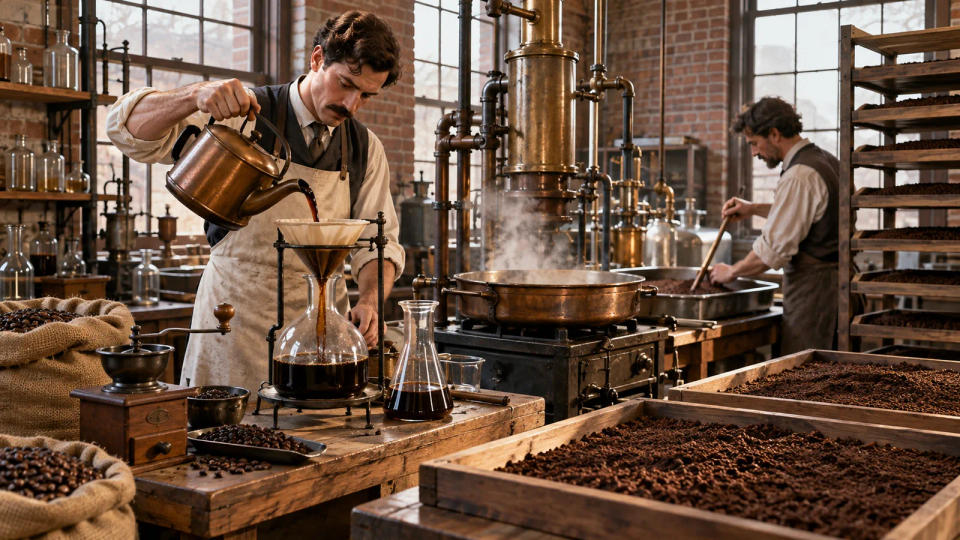
Another major figure was George Constant Louis Washington, an inventor and entrepreneur whose company began mass-producing soluble coffee in the United States around 1909–1910. His product was commercially available before American troops entered World War I. That detail matters: the war did not create instant coffee from nothing. What it created was a huge, urgent market for it.
Why Soluble Coffee Fit the Conditions of Trench Warfare
Coffee already had a long military history, but traditional coffee required equipment, time, fuel, and usually some combination of roasting, grinding, brewing, and straining. Armies could manage those steps behind the lines, and they often did. At the front, however, conditions were less predictable. Soldiers might be cold, wet, exhausted, short of time, or unable to use a full field kitchen.
Soluble coffee reduced the process to the essentials: coffee concentrate, hot water, and a cup. A small packet or tin was lighter and simpler than carrying the equipment needed to prepare coffee from beans. That did not mean the U.S. Army abandoned ordinary coffee. In fact, the National WWI Museum and Memorial notes that the Quartermaster supplied more than 75 million pounds of coffee in 1918 and that green beans were shipped overseas so they could be roasted closer to the troops.
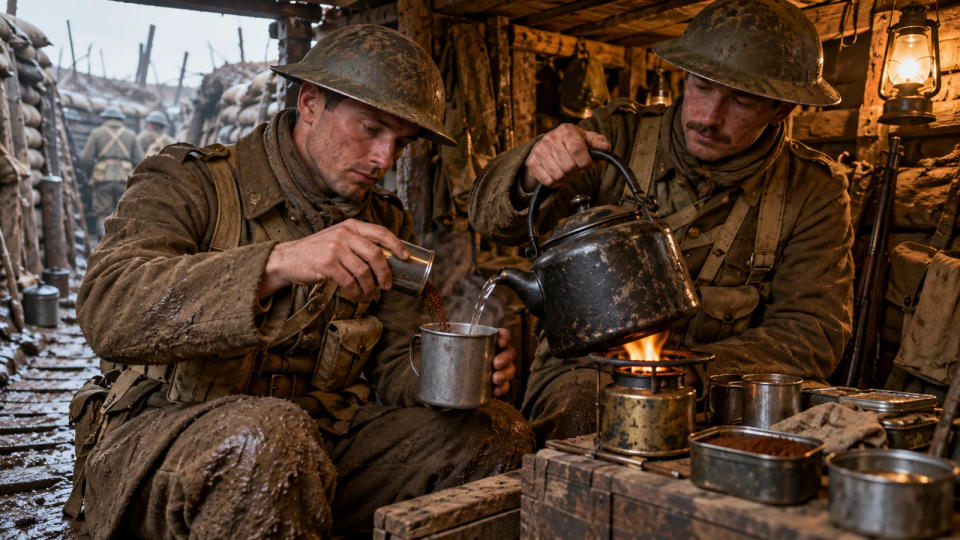
Instant coffee was therefore a specialized answer inside a much larger coffee supply system. Its strength was not superior flavor. Its strength was convenience when speed and portability mattered most. A soldier who could heat water could make coffee without a grinder, coffee pot, or lengthy brewing process.
Wartime Demand Turned a Niche Product Into an Industry
The scale of military purchasing was the crucial change. The National WWI Museum and Memorial reports that demand became so great that the U.S. Army effectively took over the young soluble-coffee industry, with production reaching as much as 6,000 pounds per day in 1918. The museum also preserves a pocket-sized tin of soluble coffee, a physical reminder that this was not merely an advertising idea but an item designed for military use.
George Washington’s company became one of the important suppliers associated with the wartime boom. Commercial instant coffee had existed before 1917, but military contracts gave manufacturers something civilian novelty products rarely receive: a massive guaranteed customer with an urgent need for production at scale.
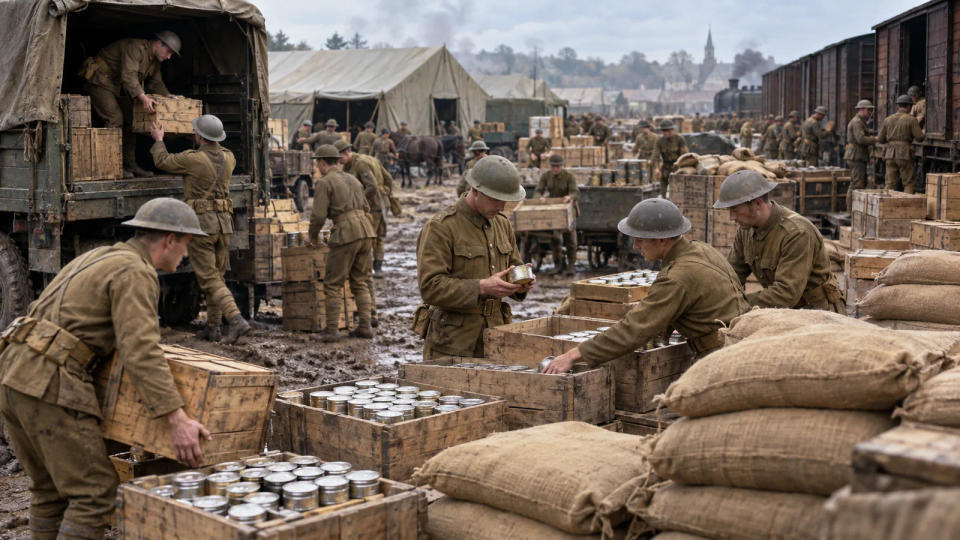
This is where World War I’s role in the history of instant coffee becomes clearest. The conflict did not provide the original chemistry. It provided the industrial pressure. Factories had to make more, supply systems had to distribute it, and soldiers had repeated opportunities to use it. What had been an unusual convenience product became a practical military commodity.
That distinction also helps separate fact from a common simplified version of the story. It is misleading to say that soldiers in the trenches “invented” instant coffee or that the Army suddenly replaced all brewed coffee with powder. The evidence instead shows a mixed system in which enormous quantities of conventional coffee remained important while soluble coffee filled a valuable logistical niche.
What Soldiers Carried Home After 1918
World War I also gave instant coffee something difficult for any new food technology to buy: familiarity. Millions of Americans passed through military camps, ships, canteens, and overseas service. The National WWI Museum cites wartime letters showing how strongly coffee became associated with routine, comfort, and relief during service. Soluble coffee was one part of that broader wartime coffee culture.
It would be an exaggeration, however, to claim that instant coffee immediately conquered American kitchens in 1919. Early products still had a reputation for inferior flavor, and ordinary roasted coffee remained deeply established. The larger commercial breakthrough came later as manufacturers improved processing and marketed convenience more aggressively.

In 1938, Nestlé launched Nescafé using a newer soluble-coffee process, marking another major step in the product’s global development. World War II then created another surge in military demand. By that point, instant coffee was no longer an experimental curiosity. It belonged to an established category whose practicality had already been demonstrated on a vast scale during the First World War.
That is why the most accurate historical claim is modest but important: World War I helped popularize instant coffee by expanding production, placing it in military supply networks, and exposing large numbers of soldiers to a form of coffee designed around speed and portability. The war accelerated adoption rather than inventing the drink.
Conclusion
Instant coffee entered World War I as a young commercial technology and emerged with a far larger place in everyday life. The trenches did not create soluble coffee, but wartime logistics showed exactly why it mattered. When brewing equipment, time, and comfort were scarce, a drink that needed little more than hot water had an obvious advantage—and that military usefulness helped prepare the ground for the global instant-coffee market that followed.
Sources & Further Reading
- National WWI Museum and Memorial — Coffee and WWI
- Smithsonian Lemelson Center — Coffee in an Instant
- U.S. Patent 735,777 — Satori Kato, Coffee Concentrate and Process of Making Same
- Smithsonian Magazine — Is There a Future for Instant Coffee?