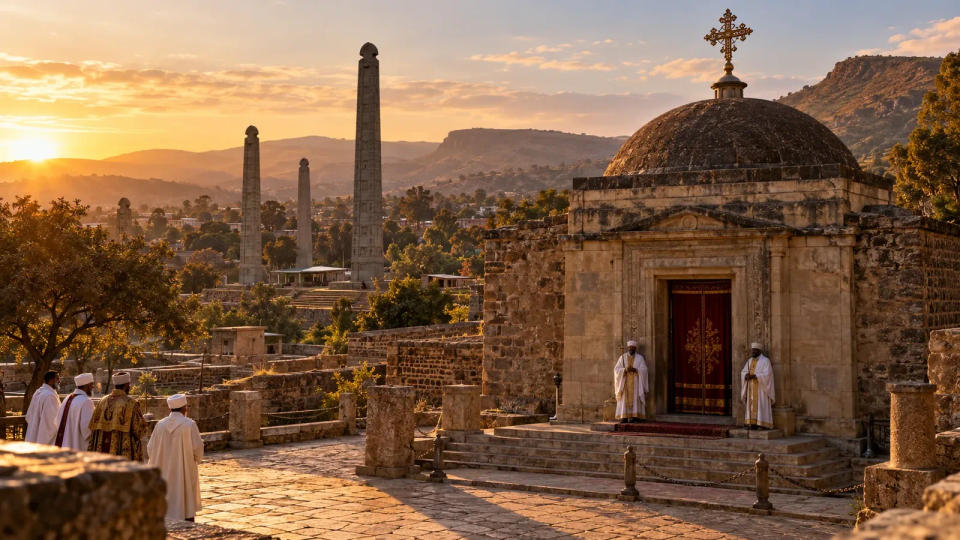
What if one of the most famous lost objects in biblical history is not lost at all, but guarded behind a closed door in northern Ethiopia? The Ethiopian Orthodox Tewahedo Church teaches that the original Ark of the Covenant rests in Aksum, yet no independent scholar has been allowed to examine the object. That makes the claim extraordinary, deeply important to Ethiopian Christianity, and historically unverified.
The short answer is that the Ark’s presence in Ethiopia cannot currently be proved. The tradition is real and centuries old, but the surviving evidence does not provide an unbroken, independently testable chain from ancient Jerusalem to Aksum.
Where the Ark Disappears From the Historical Record
In the Hebrew Bible, the Ark is the sacred chest associated with the tablets of the covenant and the divine presence. It is placed in the inner sanctuary of Solomon’s Temple in Jerusalem. After that, however, its historical trail becomes difficult to follow.
The First Temple was destroyed during the Babylonian conquest of Jerusalem in the sixth century BCE. Later Jewish sources discuss the Temple without giving historians a secure, verifiable account of the Ark’s survival. Modern scholarship therefore treats its fate as unknown rather than as a solved disappearance. Possibilities proposed over the centuries include destruction, concealment, removal, or relocation, but none has been demonstrated by archaeological evidence.
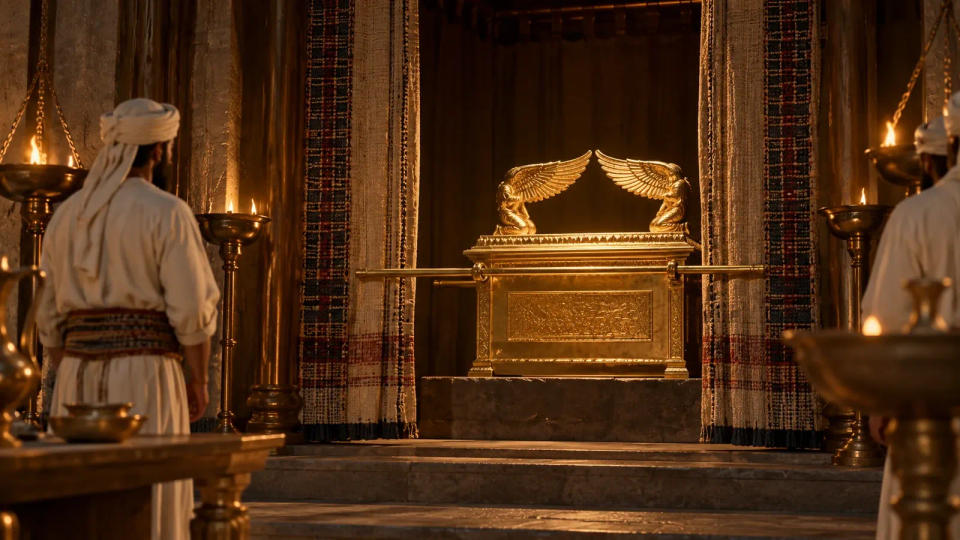
This gap matters because the Ethiopian claim begins precisely where firm documentation becomes thin. There is no surviving ancient inventory, inscription, excavation record, or contemporary travel account tracing the biblical Ark from Jerusalem to Ethiopia.
How the Ethiopian Story Reaches Aksum
The best-known Ethiopian account appears in the Kebra Nagast, or Glory of Kings, a major work of Ethiopian literature whose final Ge'ez form is generally dated to the fourteenth century. Its story expands the biblical meeting of King Solomon and the Queen of Sheba into a much larger sacred and dynastic history.
In the narrative, the Queen of Sheba—called Makeda in Ethiopian tradition—visits Solomon in Jerusalem and later gives birth to their son, Menelik. When Menelik grows up, he travels to Jerusalem. On his return to Ethiopia, companions led by Azarias, son of the high priest, take the Ark from the Temple. The story presents the Ark’s transfer not as a simple theft but as something permitted by divine will.
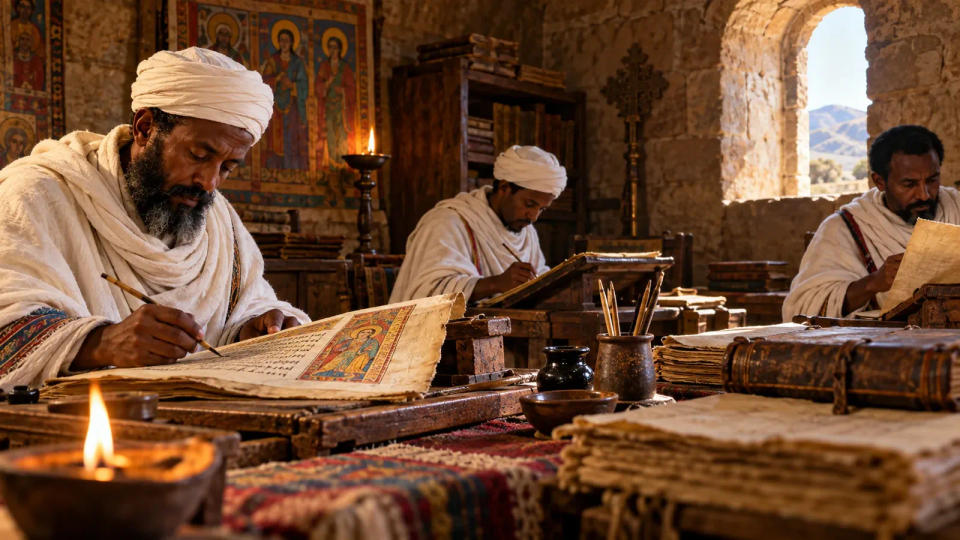
The Ethiopian Orthodox tradition receives this story as sacred history. Historians, however, must separate the religious tradition from what can be independently established. The surviving Kebra Nagast was written many centuries after the era traditionally assigned to Solomon, so it cannot by itself serve as contemporary evidence for an Iron Age transfer of the Ark.
Why Aksum Became the Center of the Claim
Aksum is not a random setting chosen for a later mystery. It was the center of a powerful ancient kingdom in the Horn of Africa, and its rulers adopted Christianity in the fourth century. The city remains one of the most important sacred places in Ethiopian Christianity. UNESCO notes that the Church of Saint Mary of Zion is believed to hold the Ark of the Covenant, placing the claim inside a real ancient city whose Christian history reaches back to the fourth century.
Today the claim is connected with a guarded chapel in the Saint Mary of Zion complex. Ethiopian Orthodox sources state that the Ark is kept there under the care of a designated guardian and is not available for ordinary viewing. This restricted access is not a modern publicity device; it fits a broader Ethiopian Orthodox understanding of sacred objects that are veiled, protected, and accessible only to clergy under specific conditions.
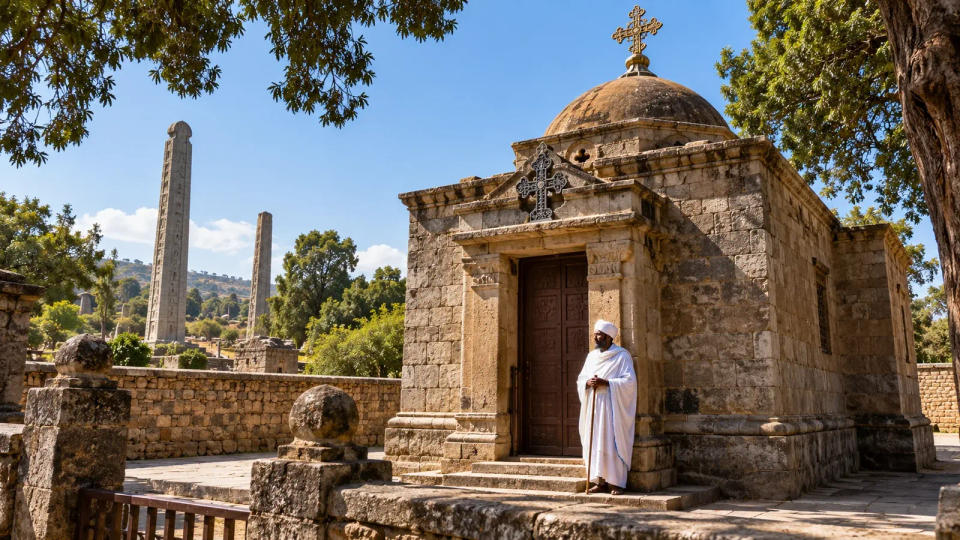
For historical investigation, though, the restriction creates a basic problem. No independent archaeological team has published a direct examination of the claimed object. There is no publicly available scientific dating, material analysis, inscription study, or documented chain of custody that could establish it as the Ark described in ancient Israelite tradition.
The Tabot Tradition Explains Why the Ark Matters So Much
The Ethiopian story is bigger than one hidden object. Every Ethiopian Orthodox church has a tabot, a consecrated tablet or altar object that represents the Ark of the Covenant and sanctifies the church. The British Museum describes the tabot as central to Ethiopian Orthodox worship and notes that it is normally kept in the church’s Holy of Holies, where access is restricted to clergy.
On important feast days, covered tabots may be carried in processions. The objects remain veiled, emphasizing holiness rather than public display. This helps explain why demands to “open the chapel and prove it” can miss the religious context. For believers, the Ark tradition is not simply an archaeological puzzle waiting for a laboratory test. It is woven into worship, sacred geography, royal memory, and the idea of Ethiopia as a new Zion.
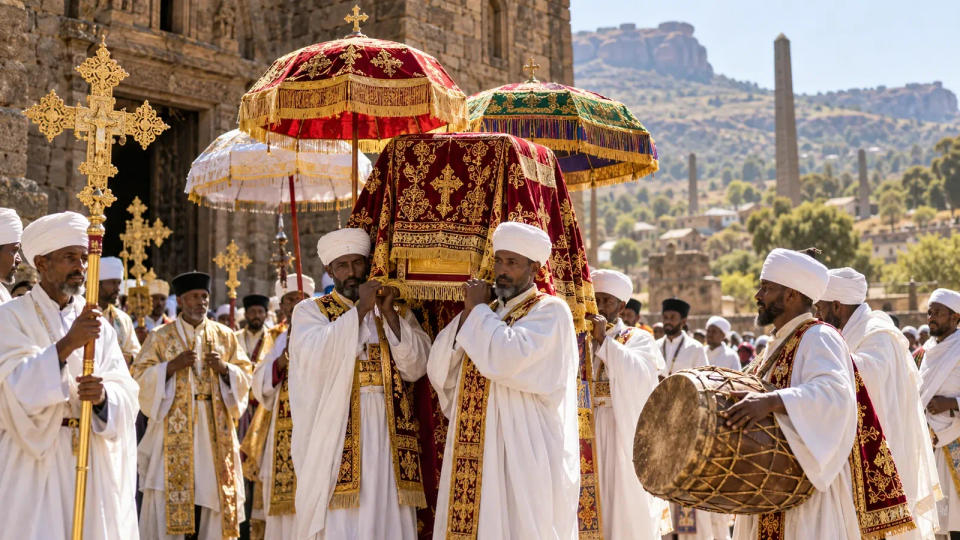
That cultural depth also explains why the claim has survived so powerfully. The tradition is supported by ritual practice and collective memory, even though those things are different from archaeological authentication. A belief can be historically influential without the physical object at its center being scientifically identified.
Conclusion
So, is the lost Ark of the Covenant really hidden in Ethiopia? The Ethiopian Orthodox Church says it is in Aksum, and that tradition deserves to be described accurately and respectfully. Historically, however, the claim remains unverified. The medieval Kebra Nagast preserves the famous story, Aksum provides a genuine ancient Christian setting, and the tabot tradition shows the Ark’s enormous religious importance—but none of these supplies direct proof that the guarded object is the biblical Ark.
For now, the Ark of Aksum sits at the boundary between faith and historical evidence: one of the world’s most enduring sacred traditions, but not a mystery that archaeology has yet solved.
Sources & Further Reading
- Ethiopian Orthodox Tewahdo Church Sunday School Department — The Ark of the Covenant
- UNESCO World Heritage Centre — Aksum
- Oxford Academic — The Romance of Solomon and Sheba: Ethiopian Ark Traditions
- Harvard Theological Review (Cambridge Core) — A Representation of the Inauguration Ceremony of the Restored Temple?
- British Museum — Ethiopian tabot
- Aethiopica — The Apocryphal Legitimation of a “Solomonic” Dynasty in the Kǝbrä nägäśt