In the photographs made by New Deal photographers during the 1930s, the Great Depression often appears in small, ordinary details: a patched coat, a nearly empty cupboard, a family car carrying everything its owners still possessed. For millions of Americans, daily life became a constant exercise in stretching money, finding work, keeping a home, and adapting to uncertainty.
The experience was never identical everywhere. A factory worker in Chicago, a tenant farmer in the South, and a drought-stricken family on the Great Plains faced different problems. But across the country, unemployment, falling incomes, bank failures, debt, and insecure housing reshaped routines at home and in public life.
Work Could Become a Daily Search
The most immediate change was the disappearance of steady work. The Federal Reserve’s historical account estimates that unemployment reached about 25 percent in 1933, while industrial production and national output fell sharply. Even people who kept their jobs could face shorter hours, lower wages, or fear that their employer might fail.
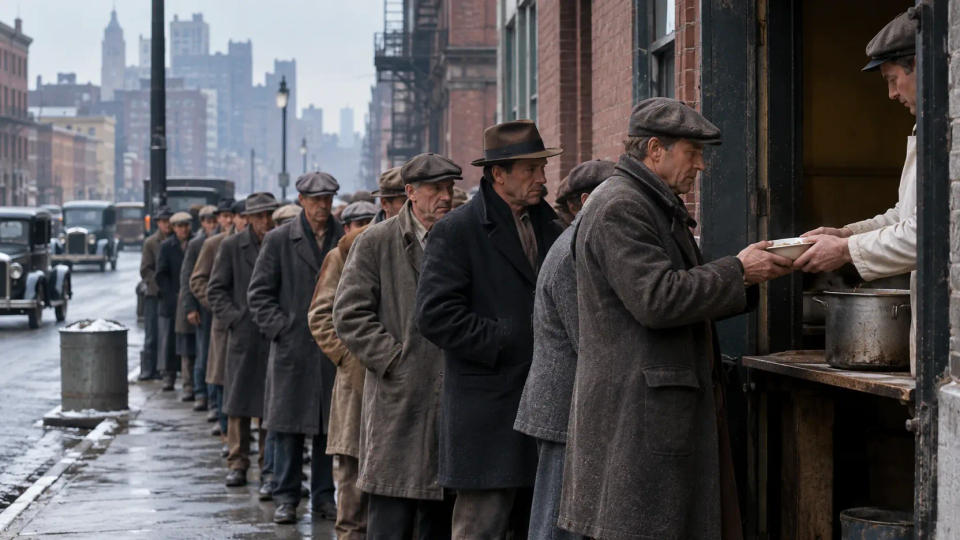
For someone without a regular paycheck, a “workday” might mean looking for temporary labor, waiting outside a factory, asking acquaintances about openings, or visiting a relief office. Breadlines and soup kitchens became highly visible symbols of the crisis, but they represented only one part of a larger struggle to secure food and cash.
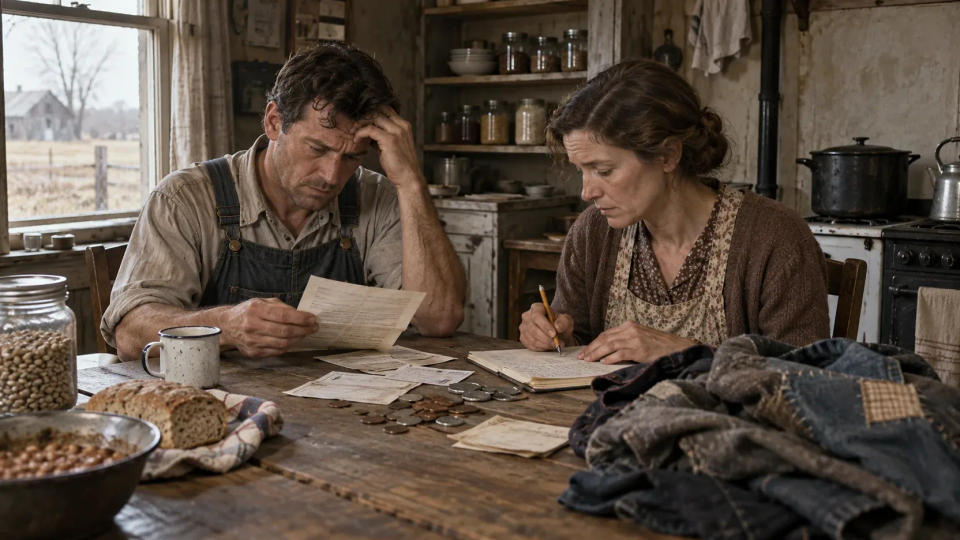
Families also depended more heavily on every possible source of income. Adults took in laundry, repaired goods, rented rooms, sold small items, or accepted irregular work when it was available. These strategies varied by place and household, but the common goal was simple: keep enough money moving through the household to cover food, rent, fuel, and other essentials.
At Home, Thrift Became a Survival Skill
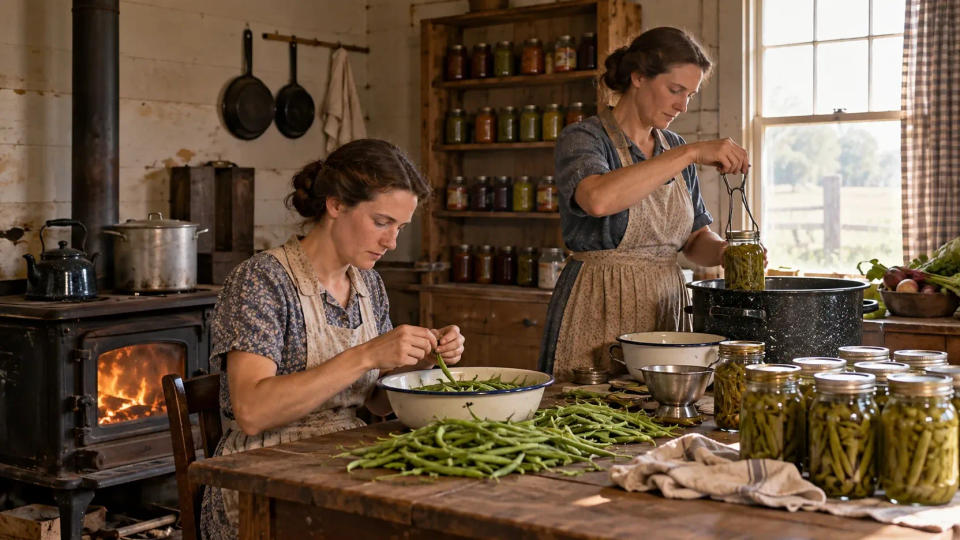
Daily life at home was shaped by the need to make possessions last. Clothing was patched and altered rather than casually replaced. Meals were planned around inexpensive staples, seasonal produce, and whatever a household could grow, preserve, or obtain cheaply. The Library of Congress’s Farm Security Administration collection includes photographs of home canning, food preparation, and improvised living arrangements that show how much labor went into ordinary survival.
That thrift was not merely a matter of personal virtue. Prices fell during parts of the Depression, but incomes often fell faster, and many people had little cash to spend at all. A cheaper item was still unaffordable if there was no paycheck. Households postponed purchases, reused containers, repaired furniture and appliances, and relied on relatives or neighbors when possible.
Food insecurity could become severe. Federal relief records preserved by the National Archives contain letters from people describing foreclosure, hunger, debt, and the difficulty of meeting basic expenses. Those records are especially valuable because they show the Depression not as an abstract economic chart, but as a crisis measured in rent payments, groceries, shoes, and heating bills.
Losing a Home Could Mean Moving Again
The Depression also put housing at risk. Families who could not meet mortgage payments or rent might double up with relatives, take in boarders, move to cheaper rooms, or lose their homes entirely. Makeshift settlements appeared around some cities, while other people took to the road in search of seasonal or industrial work.
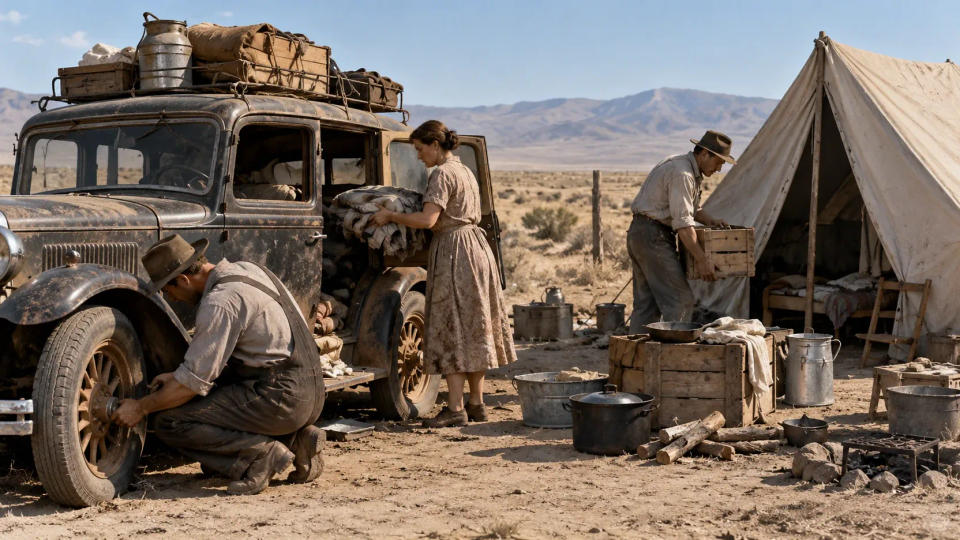
Migration is closely associated with the Great Depression, but it is important not to treat every migrant story as the same. The Dust Bowl was an overlapping environmental disaster centered on parts of the Great Plains, where drought and severe soil erosion damaged farms and pushed some families west. Other Americans moved because factories closed, farms failed, rent became impossible, or work seemed more promising elsewhere.
Farm Security Administration photographs document people living in camps, temporary shelters, and vehicles while following harvest work. These images have become some of the era’s most famous records because they capture both movement and uncertainty: families were not simply traveling; many were trying to rebuild a livelihood from one job opportunity to the next.
Relief Programs Changed the Rhythm of Life
Beginning in 1933, New Deal relief and work programs became part of everyday life for millions. The Federal Emergency Relief Administration sent federal money to states for relief, while programs such as the Civilian Conservation Corps offered paid work tied to public projects. Later programs expanded federal work relief in construction, conservation, arts, and other fields.
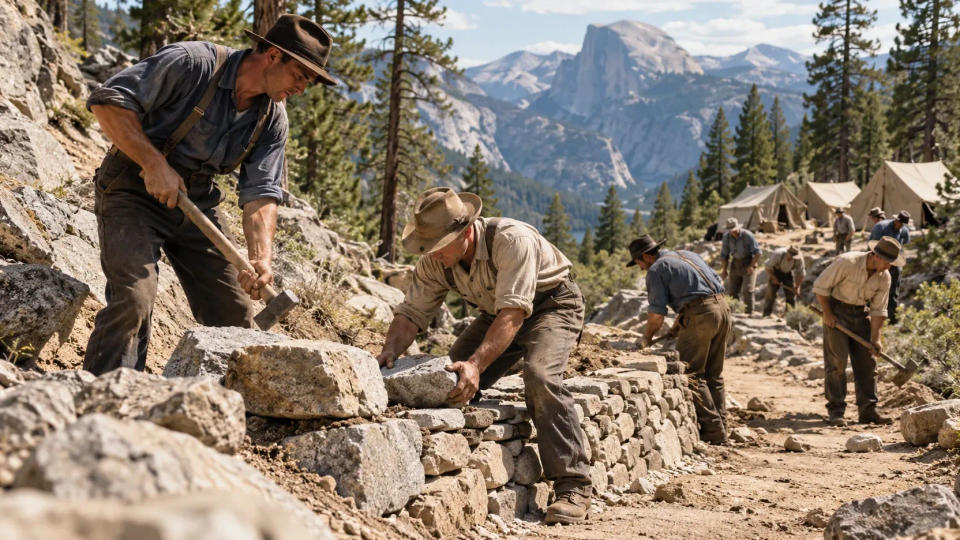
For CCC enrollees, camp life could be highly structured. National Park Service histories describe early wake-up times, group meals, organized workdays, barracks or tents, and wages from which a large share was commonly sent home to support relatives. That meant a federal job could affect not only the worker’s routine but also the household budget miles away.
Relief did not end hardship, and access was not equal. Local administration varied, discrimination affected minority communities, and the economy remained fragile. The sharp recession of 1937–1938 showed how incomplete recovery still was. Even so, relief agencies altered the practical question many families faced from “Where can we find any help?” to “Which local office, project, or program might provide it?”
People Still Found Cheap Ways to Escape the Worry
Hard times did not eliminate entertainment. Inexpensive leisure mattered precisely because everyday life was so stressful. The Library of Congress notes that movies, radio programs, swing music, and other forms of popular entertainment remained important throughout the 1930s. Radio was especially powerful because one set could bring news, comedy, drama, music, sports, advertising, and politics into the home.
By the late 1930s, radio had become a nationwide mass medium. Families listened to entertainment programs and major public addresses, including Franklin D. Roosevelt’s fireside chats. A household might have very little disposable income and still participate in a shared national culture simply by turning a dial.
That is one reason the Depression should not be remembered only through breadlines and abandoned farms. Daily life also included birthdays, jokes, music, church, neighborhood help, courtship, movies, baseball scores, and ordinary routines people tried to preserve. Hardship narrowed choices, but it did not erase everyday human life.
Conclusion
Daily life during the Great Depression was defined less by one dramatic moment than by relentless adjustment. People searched for work, stretched food and clothing, moved when housing failed, turned to relief programs, and used inexpensive entertainment to create moments of normalcy. The surviving letters, photographs, and government records show a society under enormous pressure—but also millions of households finding practical ways to keep going from one day to the next.
Sources & Further Reading
- Library of Congress — Great Depression and New Deal: A General Resource Guide
- Library of Congress — Farm Security Administration/Office of War Information Photograph Collection
- National Archives — Family Experiences and New Deal Relief
- Federal Reserve History — The Great Depression
- National Park Service — Civilian Conservation Corps
- Library of Congress — Art and Entertainment in the 1930s and 1940s