A dispute over Parliament’s power to tax the colonies escalated into armed conflict and, in 1776, a declaration of independence.
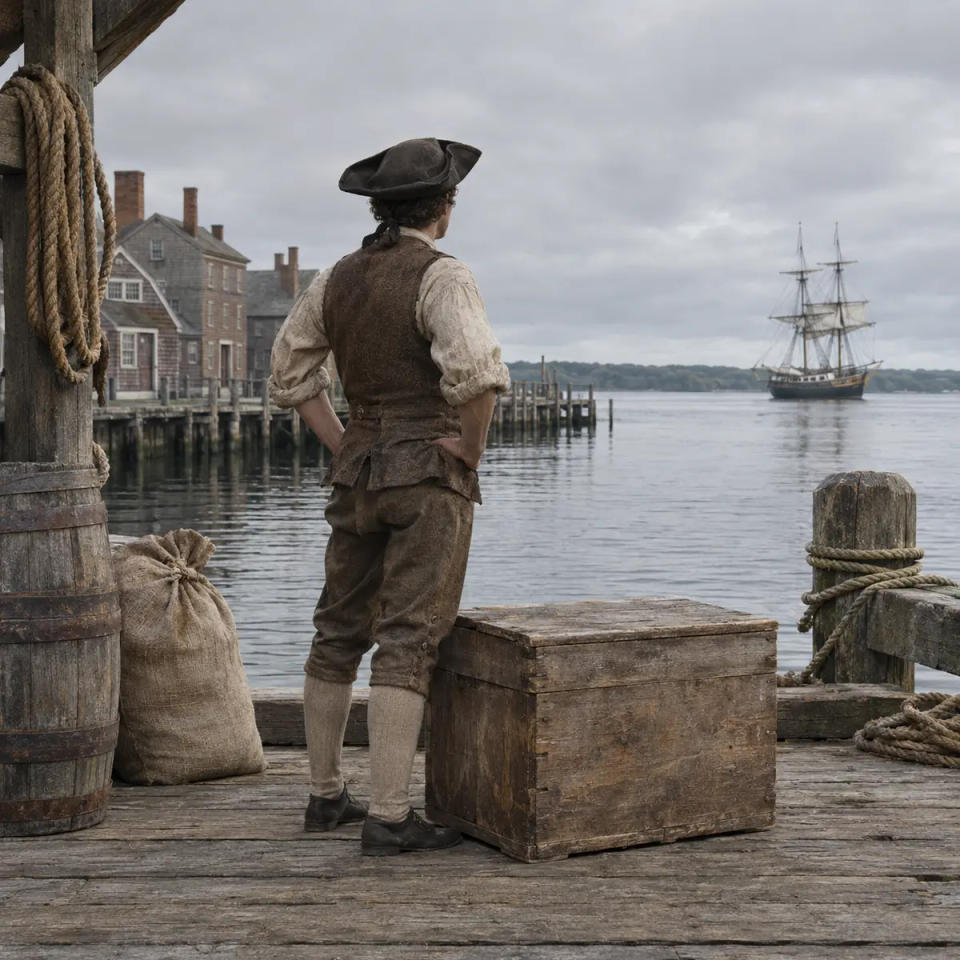
The American Revolution began because Britain and its North American colonies could no longer agree on who had the right to govern and tax the colonies. After the Seven Years’ War, Parliament sought revenue and tighter control over imperial trade. Many colonists argued that their elected assemblies should decide what internal taxes they paid. Over the next decade, protests, boycotts, and British enforcement measures turned that disagreement into a struggle over political authority. Fighting began in Massachusetts in April 1775. Congress declared independence more than a year later.
That gap matters. The people who first protested a tax did not all set out to create a new nation. Some wanted to preserve rights they believed they already held as British subjects. Others remained loyal to the Crown even after fighting began. The road to independence was a series of decisions made under growing pressure, and each decision narrowed the room for compromise.
Why Did British Taxes Cause Such a Fierce Dispute?
In 1763, Britain emerged from the Seven Years’ War with substantial debt and new responsibilities in North America. British officials expected the colonies to help pay the costs of running and defending the empire. They tightened enforcement of trade rules and sought revenue from measures that affected everyday transactions. In 1765, Parliament passed the Stamp Act, which required a tax on items including newspapers, legal documents, and playing cards. A person could encounter the tax while reading the news or doing business at a local court.
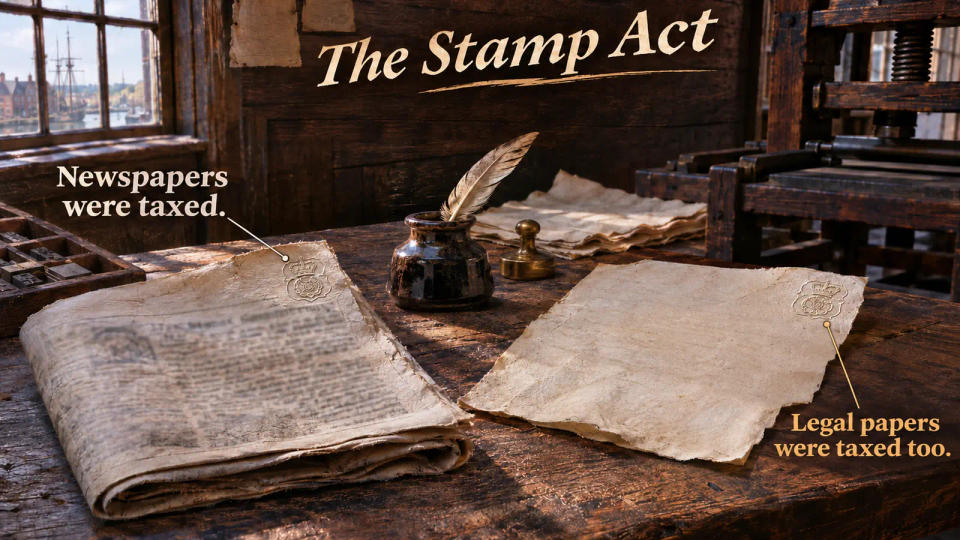
For opponents, the question was who could authorize a tax of this kind. The colonies had elected assemblies, but they elected no members to Parliament. Many protesters argued that consent to internal taxation belonged with their own representatives. Defenders of Parliament held that it could legislate for the empire as a whole and that representation did not require every community to elect a member directly. The disagreement concerned how the empire worked, so a compromise on the price of a stamp could only settle part of it.
Colonial resistance took several forms. Merchants agreed to limit imports, opponents organized public demonstrations, and delegates from several colonies met to coordinate objections. The boycott put pressure on merchants who depended on Atlantic trade. Parliament repealed the Stamp Act in 1766, but it also asserted its authority to make laws for the colonies. The repeal showed colonists that organized resistance could achieve a result. The accompanying assertion of power left the central dispute open.
How Did the Boston Tea Party Widen the Conflict?
The Tea Act of 1773 was designed to help the East India Company sell tea. It changed how the company could get tea to colonial customers while leaving an existing duty in place. Cheaper tea therefore could still provoke resistance. To critics, buying the tea meant accepting Parliament’s claim to tax it, and the company’s special advantages threatened some merchants’ interests. In December, protesters boarded ships in Boston Harbor and destroyed their tea cargoes.
Parliament answered in 1774 with measures the colonists called the Intolerable Acts. One closed Boston’s port to most commerce until conditions were met, including compensation for the destroyed tea. Another altered Massachusetts’s system of government. These measures raised the stakes for residents whose livelihoods depended on the port and for communities watching Britain change a colony’s institutions. Punishing Massachusetts helped persuade people elsewhere that its dispute might affect them too.
Delegates met in the First Continental Congress in 1774 and coordinated a boycott. Their willingness to act together was a major development, but it did not amount to agreement on independence. A boycott made it possible for colonies with different interests to apply common pressure while still pursuing a settlement within the empire. At the same time, organized resistance made it harder for British authorities to treat the unrest as a problem confined to a single town.
Why Did War Begin Before Independence Was Declared?
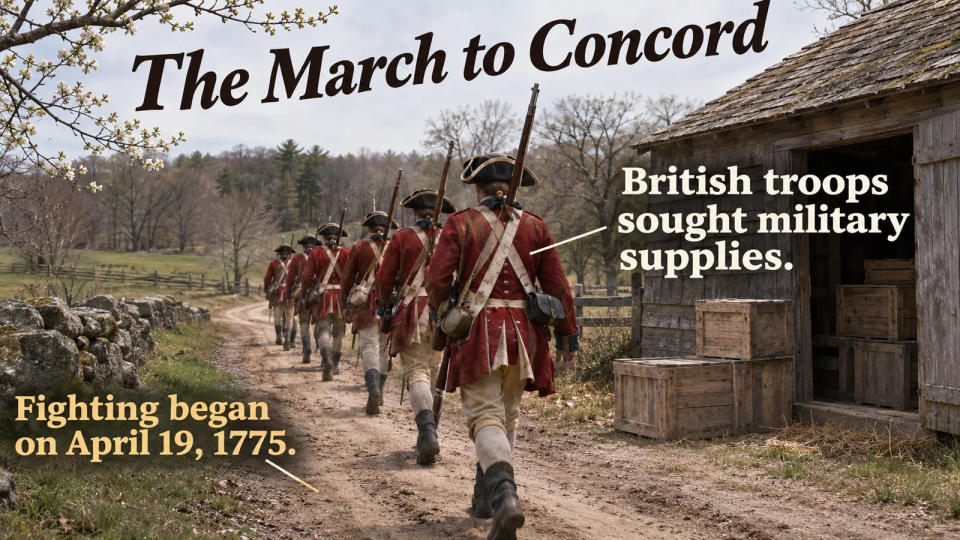
On April 19, 1775, British troops marched toward Concord, Massachusetts, to seize and destroy colonial military supplies. Fighting broke out at Lexington and continued at Concord and along the troops’ return route. The fighting spread well beyond the encounter on Lexington Green. The evidence does not settle who fired first at Lexington, but the exchange of fire transformed a confrontation over authority into sustained armed conflict.
Even after the first battles, some delegates still pursued reconciliation. Congress sent the Olive Branch Petition to the king in 1775 while it was also organizing a Continental Army. Those actions make sense together if we remember that the colonies were already fighting and their leaders had yet to agree on what political settlement they wanted. By the following summer, Congress had moved from petitioning the Crown to asserting that the colonies should govern themselves as independent states.
Congress voted for independence on July 2, 1776, and adopted the Declaration on July 4. The document explained the break by arguing that governments derive their authority from the people they govern and by listing grievances against the Crown. Its adoption announced a political decision while the military outcome remained uncertain. Loyalists continued to support Britain, and the declaration’s principles existed alongside slavery. The war would continue for years before Britain recognized American independence in the 1783 Treaty of Paris.
Conclusion
The Revolution began with a dispute over who could tax and govern the colonies. Resistance to the Stamp Act showed that coordinated protest could work. Britain’s response to the destruction of tea widened the dispute, and Lexington and Concord turned it into war. Independence came later, as Congress concluded that the colonies would have to break with Britain to govern themselves.
Sources & Further Reading
- National Park Service — Timeline of the Revolution
- Office of the Historian — Parliamentary taxation of colonies, international trade, and the American Revolution, 1763–1775
- Minute Man National Historical Park — April 19, 1775
- Office of the Historian — The Declaration of Independence, 1776
- Independence National Historical Park — Declaration of Independence Timeline
- National Archives — Declaration of Independence: A Transcription