
How did a fabric that dazzled shoppers as stockings become essential to the American war effort almost overnight? Nylon had been created before the United States entered World War II, but wartime need—especially the loss of dependable access to imported silk—redirected it from hosiery to parachutes, tire cord, ropes, and other military uses. Parachutes did not invent nylon, but they helped prove that a new synthetic fiber could be trusted for life-or-death jobs and produced on an enormous scale.
That shift changed what nylon meant. Before the war it was a remarkable consumer novelty. During the war it became strategic material. Afterward, it returned to civilian life with a reputation no advertising campaign alone could have created.
Nylon Was Born Before the War
The story began in a research laboratory, not in an aircraft factory. In 1928, DuPont hired chemist Wallace H. Carothers to investigate the chemistry of very large molecules. His team worked with polymers without starting from a single consumer product in mind. By the mid-1930s, that research had produced the polyamide fiber that became nylon.
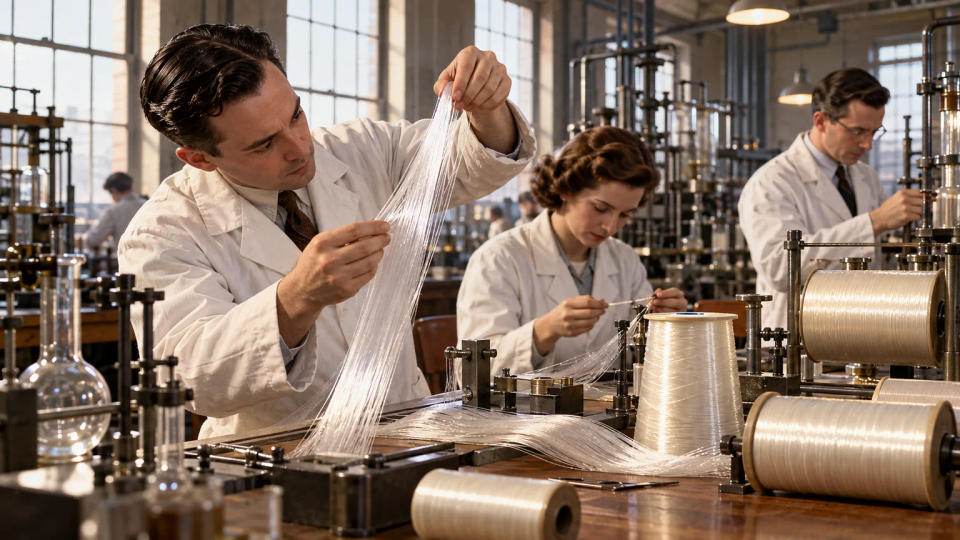
DuPont announced nylon in 1938. Its earliest commercial uses included brush bristles, but the product that made the material famous was hosiery. Nylon stockings appeared at the 1939 New York World's Fair and went on nationwide sale in May 1940. They offered consumers something that looked and felt close enough to silk to be desirable, while being made from an entirely synthetic fiber.
The launch was a commercial sensation. Science History Institute records that most stores sold out rapidly on the first day of national sales. Nylon seemed destined to become a story about fashion and modern chemistry. World events quickly gave it a very different role.
From Stockings to a Strategic Material
Before the war, silk was the preferred material for many parachutes because it was light, strong, and could be packed compactly. The United States, however, depended heavily on imported silk, much of it from Japan. As relations with Japan deteriorated in 1941 and silk supplies vanished, the need for a domestic substitute became urgent.
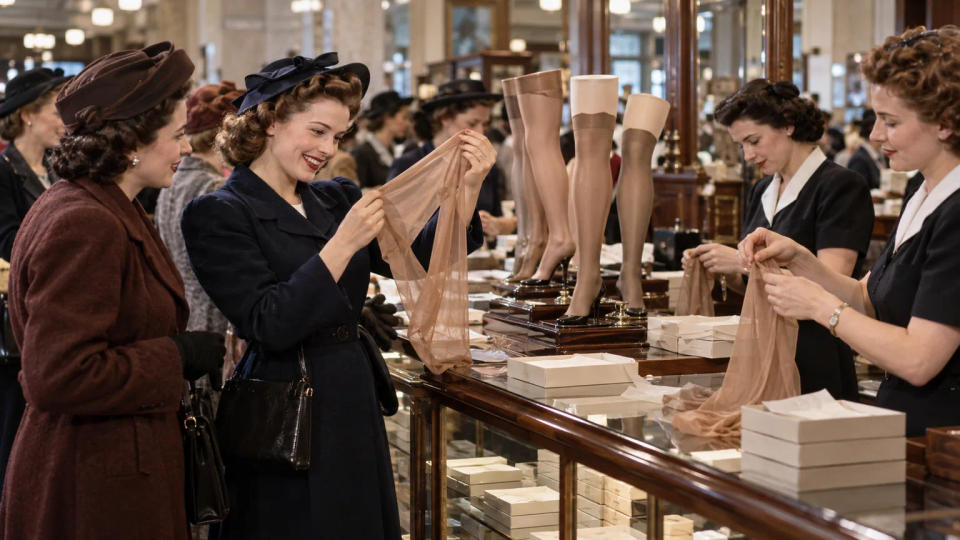
Nylon was suddenly more valuable in the sky than on women's legs. The Smithsonian notes that after the United States entered the war, nylon was withdrawn from normal civilian use. From 1942 through 1944, DuPont's nylon production was allocated to wartime purposes. Stockings disappeared from ordinary store shelves as factories redirected yarn toward parachutes and other military equipment.
The change became visible on the home front. Americans were encouraged to turn in worn silk and nylon stockings for recycling once workable recovery methods existed. The National Park Service records that recycled nylon could be respun for parachutes, ropes, and other goods. A fashion product had become part of the national materials drive.
Why Nylon Worked So Well for Parachutes
Nylon was not simply available; it had the right qualities for the job. U.S. Army Quartermaster histories describe it as the best satisfactory substitute for Japanese silk in parachutes. Its combination of lightness and strength made it useful not only for the canopy but also for the shroud lines that connected the canopy to the harness or load.
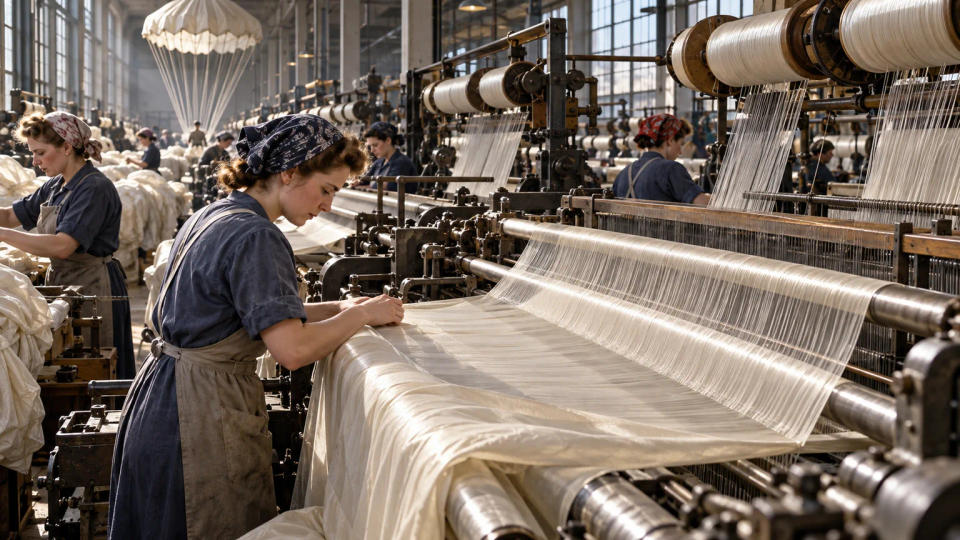
There was also a strategic advantage that went beyond performance: nylon could be manufactured domestically from industrial chemicals rather than harvested from silkworms overseas. That mattered when shipping routes were dangerous and Asian supply networks had been cut by war.
The transition can be seen in a remarkable wartime photograph preserved by the Library of Congress. A 1942 Office of War Information caption identifies Pioneer Parachute Company employee Adeline Gray as a licensed rigger and jumper who had made the first jump with the first nylon parachute the previous summer. The caption is a contemporary government record, not proof that every later parachute was nylon, but it captures how quickly the new fiber moved from experiment to practical testing.
Once large military orders followed, nylon stopped being merely a promising laboratory material. Mills had to spin it consistently, weave it into dependable cloth, inspect it, sew it, pack it, and repeat the process in mass production. That industrial discipline was as important to nylon's future as the original chemical discovery.
The War Gave Nylon a Much Bigger Future
Parachutes were nylon's most famous wartime use, but they were not its only one. Wartime sources and later institutional histories document applications in tire cord, ropes, netting, glider tow ropes, shoelaces, mosquito netting, hammocks, and other equipment. Demand became so intense that the Army's Quartermaster Corps sometimes had to wait for nylon because parachute requirements took priority.
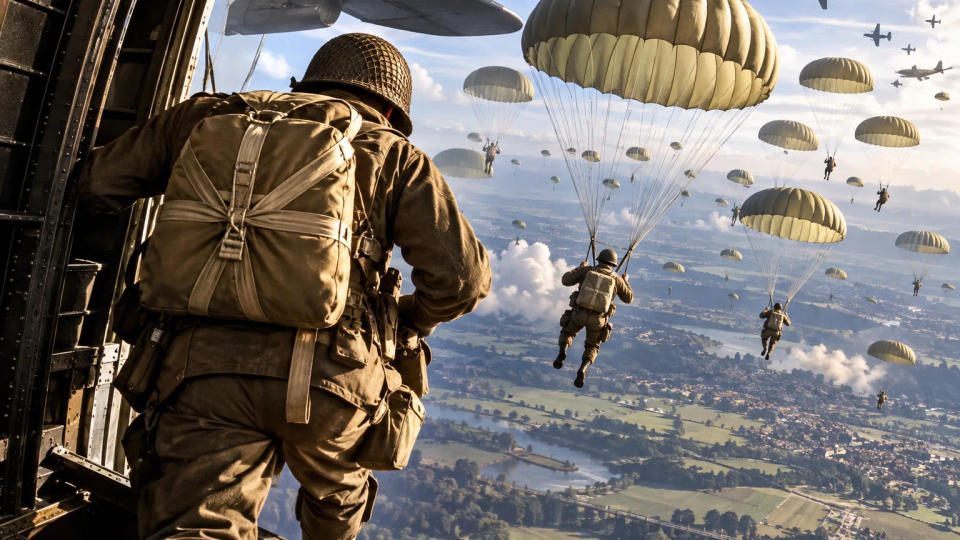
This mattered because the war forced manufacturers to learn what nylon could do under demanding conditions. It was pulled, folded, packed, exposed to weather, woven into different structures, and produced in quantities far beyond the early stocking market. Not every wartime experiment became a permanent civilian product, but nylon emerged from the conflict as a proven engineering material rather than simply a silk substitute.
When civilian production returned after 1945, demand for nylon stockings surged again. Yet the material's identity had permanently widened. Nylon would go on to appear in clothing, luggage, fishing line, carpets, industrial parts, ropes, and countless other products. The war did not create all those uses, but it accelerated the manufacturing experience and public familiarity that made such expansion easier.
Conclusion
Nylon entered World War II as a young synthetic fiber best known for stockings. It came out of the war associated with parachutes, military supply, and large-scale industrial production. The crucial change was not that parachutes invented nylon, but that wartime necessity demonstrated how much more the material could do.
That is why nylon's wartime story still matters: a consumer novelty was tested as strategic technology, and the lessons of mass production helped carry it into everyday postwar life.
Sources & Further Reading
- National Museum of American History — Experimental Stockings
- Science History Institute — Nylon: A Revolution in Textiles
- Library of Congress — Adeline Gray and the First Nylon Parachute
- U.S. Army Center of Military History — The Quartermaster Corps: Organization, Supply, and Services
- National Park Service — Material Drives on the World War II Home Front