Why did a communist country end up fighting another communist country—and later embrace markets without giving up one-party rule? Vietnam's history offers an answer. Its leaders borrowed ideas and accepted powerful allies, but the struggle for national independence, bitter regional rivalries, and the failure of central planning pushed Vietnamese communism in directions neither Moscow nor Beijing could simply dictate.
The difference was not that Vietnam rejected Soviet or Chinese influence. It depended heavily on both at different times. What made its path distinctive was the way Vietnamese leaders adapted communist politics to their country's wars, geography, and economic pressures.
Independence Came Before a Ready-Made Model
Communism reached Vietnam while the country was under French colonial rule. Vietnamese revolutionaries encountered Marxism and Leninism through travels, newspapers, political networks, and training abroad. Ho Chi Minh, who also used the name Nguyen Ai Quoc, worked within the international communist movement, but ending colonial domination remained central to his politics.
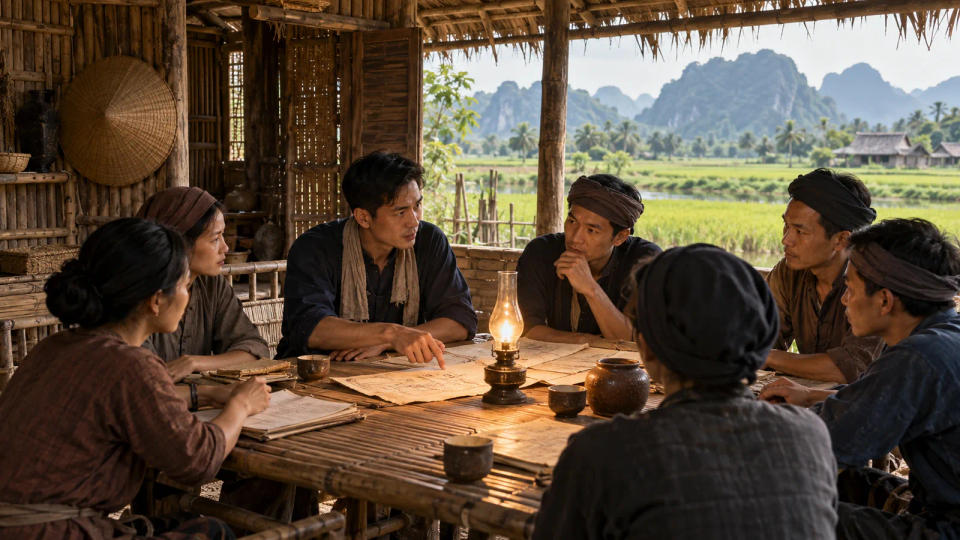
In 1930, communist organizations in Vietnam were brought together into a new party under Ho's involvement. The movement linked social revolution to demands for independence and land reform, in a society where much of the population depended on agriculture. Its leaders did not operate in isolation from Moscow, yet their appeal rested on grievances specific to Vietnam.
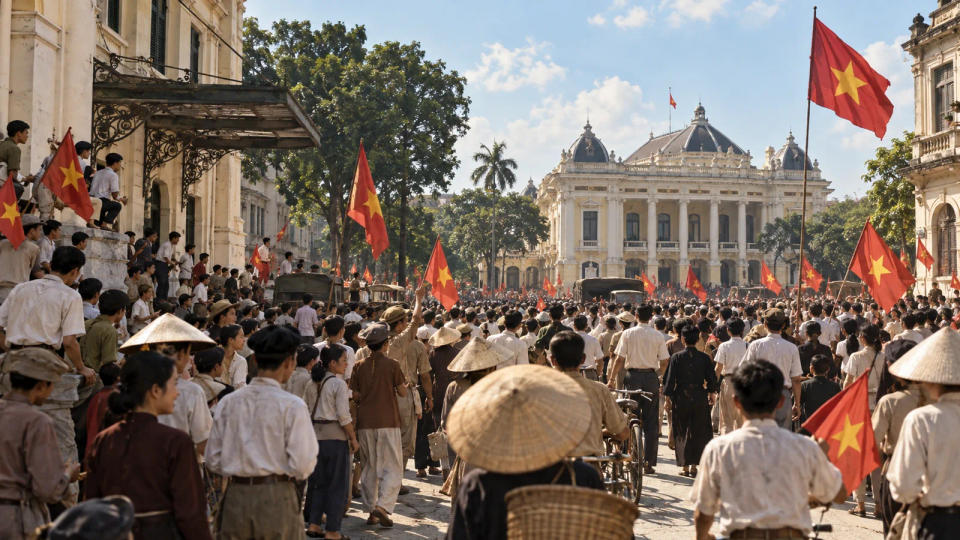
The critical moment came in 1945. Following Japan's defeat, the Viet Minh took advantage of a sudden power vacuum. On September 2, Ho proclaimed the Democratic Republic of Vietnam in Hanoi. The new state was far from secure: French attempts to restore colonial control helped lead to another war.
Even Ho's search for foreign support defies a tidy East-versus-West story. He appealed to American officials as well as Soviet leaders, according to records preserved by the U.S. National Archives. This was not proof that ideology did not matter. It showed that recognition and independence could be just as urgent as allegiance to a communist bloc.
Allies Were Essential, but Their Priorities Differed
In 1950, the newly founded People's Republic of China and the Soviet Union recognized Ho's government. Communist China became a crucial source of support in the struggle against France, while Soviet assistance and diplomatic backing grew in significance during the decades that followed.
Vietnam's leaders thus had reasons to cooperate with both powers. China shared a border with Vietnam and could supply aid across it. The Soviet Union offered a different source of industrial, military, and diplomatic support. Yet the two allies did not always want the same things, particularly after the Sino-Soviet split fractured the communist world.
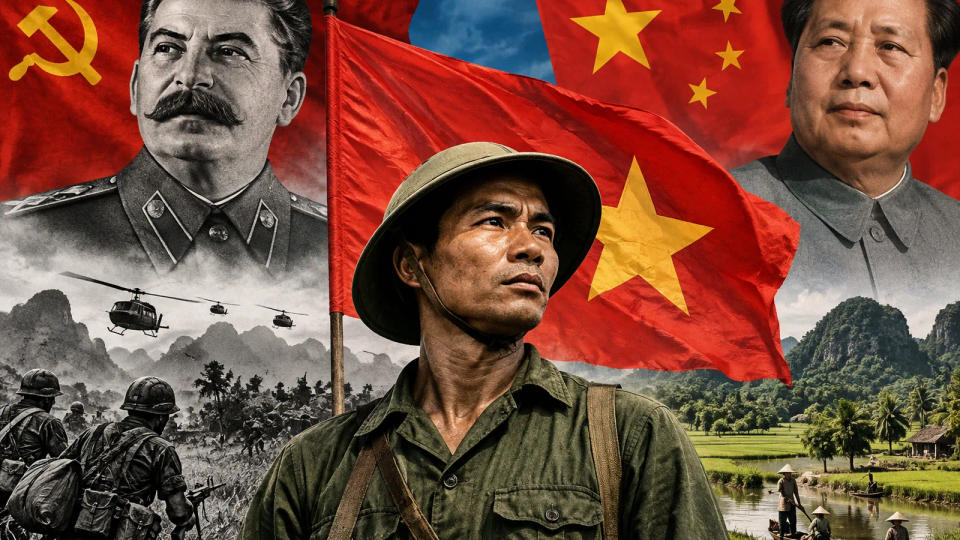
After the 1954 Geneva settlement, Vietnam was provisionally divided, and rival governments ruled the North and South. The conflict that followed was not merely a contest between foreign sponsors. It also involved competing Vietnamese political movements, regional divisions, and a devastating struggle over the country's future.
Hanoi received enormous help, but assistance came with expectations and limits. Vietnam's communist leaders balanced relationships within a divided socialist camp while pursuing their own goal of reunification under their rule. Their eventual military victory in 1975 should not be mistaken for a period in which foreign influence suddenly disappeared.
When Communist Neighbors Became Enemies
The sharpest challenge to the idea of a united communist world came after reunification. Relations between Vietnam and China deteriorated over disputed influence in Southeast Asia, border tensions, treatment of ethnic Chinese residents, and the conflict involving Cambodia.
In Cambodia, the Khmer Rouge government carried out mass killings and brutal repression. Its forces also attacked Vietnamese border communities. Vietnam invaded Cambodia in late 1978, overthrew the Khmer Rouge government, and maintained troops there for years. The intervention ended Khmer Rouge rule, but the prolonged Vietnamese presence drew international condemnation and deepened Hanoi's isolation.
China had backed the Khmer Rouge as a counterweight to Vietnam. Meanwhile, Hanoi drew closer to the Soviet Union and signed a friendship treaty with Moscow in November 1978. American diplomatic assessments from that year described the confrontation as a struggle for regional influence, not simply a quarrel over doctrine.
In February 1979, China invaded northern Vietnam. The fighting brought extraordinary destruction to border areas before Chinese troops withdrew. Two governments claiming Marxist-Leninist legitimacy had fought a war against each other. National security and strategic rivalry had overtaken the idea of automatic solidarity between communist states.
Doi Moi Changed the Economy, Not the Political System
Winning wars had not solved Vietnam's economic problems. After 1975, the government extended centralized planning across a reunited country, supported state enterprises, and collectivized parts of agriculture. Shortages, weak incentives, and mounting financial pressures exposed serious weaknesses in that system.
At the Communist Party's Sixth Congress in December 1986, leaders launched the reform course known as Doi Moi, often translated as "renovation." Its important practical changes gathered speed in 1988 and 1989. Farmers gained greater freedom to produce and sell, price controls were dismantled across much of the economy, and private commercial activity expanded.
This was not a sudden invention wholly unlike China's reforms. Chinese experiments with market incentives offered one point of comparison; Vietnamese policymakers also responded to local experiments, economic distress, and the prospect of shrinking Soviet aid. Research by the World Bank and International Monetary Fund emphasizes both the pressures inside Vietnam and lessons drawn from abroad.
The essential political choice was to expand market activity while retaining Communist Party leadership. Vietnam did not follow the Soviet Union into the dissolution of its ruling party and state. Nor did it replicate every stage of China's economic transformation. Its reform timetable and policies reflected the agricultural structure and hardships of its own economy.
An Independent Course Did Not Mean Isolation
As the Cold War ended, Vietnam had to rebuild international relationships. It normalized ties with China in 1991, joined the Association of Southeast Asian Nations in 1995, and established diplomatic relations with the United States that same year. Those steps widened Hanoi's options beyond dependence on a single great-power patron.
Economic opening also brought trade, investment, and new opportunities, while the Communist Party kept a monopoly on national political leadership. That combination made Vietnam's system distinct from Soviet-style centralized planning, but it did not make the country a multiparty democracy. Criticism of limits on political rights and expression remains part of any balanced account.
Calling Vietnam's communist experience "neither Soviet nor Chinese" is therefore useful only as shorthand. Soviet and Chinese influences were real, sometimes decisive, and never entirely absent. The distinctive story lies in how Vietnamese leaders repeatedly reshaped those influences under pressure: first from colonial rule and war, then from geopolitical conflict, and finally from economic crisis.
Conclusion
Vietnam did not discover a form of communism untouched by its powerful neighbors. It made a changing set of political and economic choices while trying to preserve national control. Independence, rivalry, and reform—not ideological purity—explain why its path diverged.
Sources & Further Reading
- U.S. National Archives, Remembering Vietnam: Episodes 1–4 — independence, foreign appeals, recognition, and wartime context.
- Cambridge University Press, Vietnam's Communist Revolution, Chapter 1 — the movement's intellectual and international origins.
- U.S. State Department, Foreign Relations of the United States, 1978 memorandum — the China–Vietnam–Soviet rivalry.
- World Bank, Vietnam 2035 — postwar economic policy and the evolution of Doi Moi.
- International Monetary Fund, Viet Nam (1993) — economic crisis and the reform strategy.
- Vietnam Ministry of Foreign Affairs, Six Milestones in 75 Years of Diplomacy — the diplomatic opening and normalization with China.