
In an eighteenth-century Virginia household, what happened to the pork butchered in winter when there was no refrigerator to keep it cold? Much of it was rubbed with salt, packed away to cure, and then hung in a smokehouse. The aim was not to keep the meat fresh in the modern sense. It was to change it enough that it could remain usable for months.
People had been working with salt, wind, and smoke for thousands of years before this. Their methods varied with climate, available fuel, and the kind of animal being preserved. Yet the central problem stayed the same: fresh meat contains moisture that allows microbes to grow. A successful preservation method had to make that environment less welcoming.
The results could be remarkably durable, but they were not foolproof. The story of preserved meat is as much about patient work and careful storage as it is about salt and smoke.
Salt Curing: The Foundation of a Winter Meat Supply
Salt was the great workhorse of meat preservation. It reduced the water available to microorganisms, slowing many of the processes that cause food to spoil. A cut could be packed in dry salt or immersed in a strong salt solution known as brine. Both approaches left the meat distinctly different in texture and taste from a fresh joint.
In early modern Britain and colonial North America, salted pork and beef were practical foods for households, ships, and other settings where fresh supplies were uncertain. Salt was not always cheap or easy to obtain. Historic England's research on salt-making shows why salt production became an important industry: preservation made it valuable to communities far from the coast as well as to merchants trading preserved fish and meat.
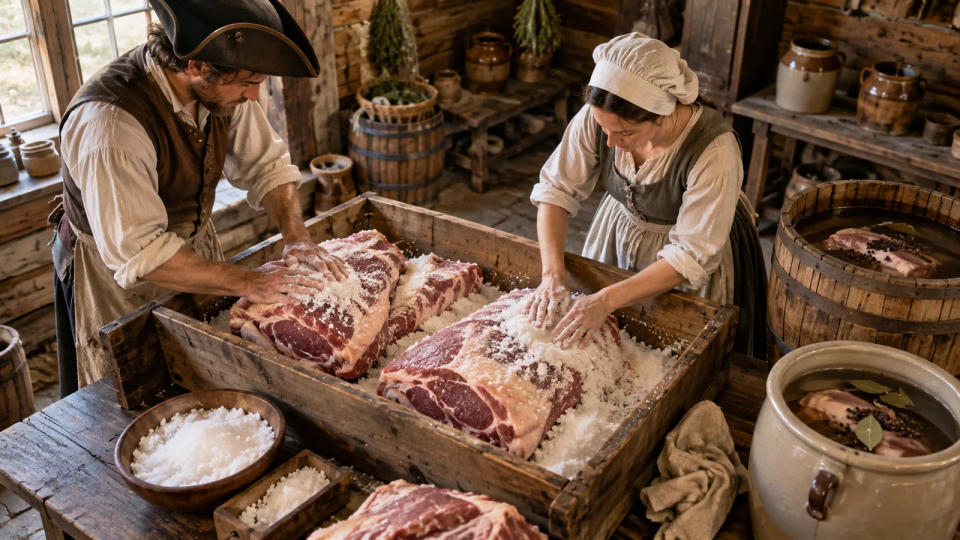
Colonial Williamsburg's research on eighteenth-century pork processing describes both dry curing and brining. Salted pieces were left for weeks, not hours. Some recipes called for the meat to be turned or basted repeatedly so that the curing liquid reached it more evenly. Saltpeter, sugar, and other ingredients appeared in historical recipes, although the exact combinations differed.
This was slow, seasonal labor. In Virginia, winter slaughter reduced the immediate problem of warm-weather spoilage, while the curing process prepared pork for the warmer months ahead. A stored ham was therefore the product of planning long before anyone sat down to eat it.
Drying: Removing the Water That Spoilage Needs
Drying offered another answer. Instead of relying mainly on a heavy layer of salt, people could expose relatively thin pieces of meat to conditions that removed moisture. In suitable climates, sun and moving air helped do the work. Elsewhere, shelter and heat were important. The finished meat weighed less and occupied less space, qualities that mattered to travelers as much as to households.
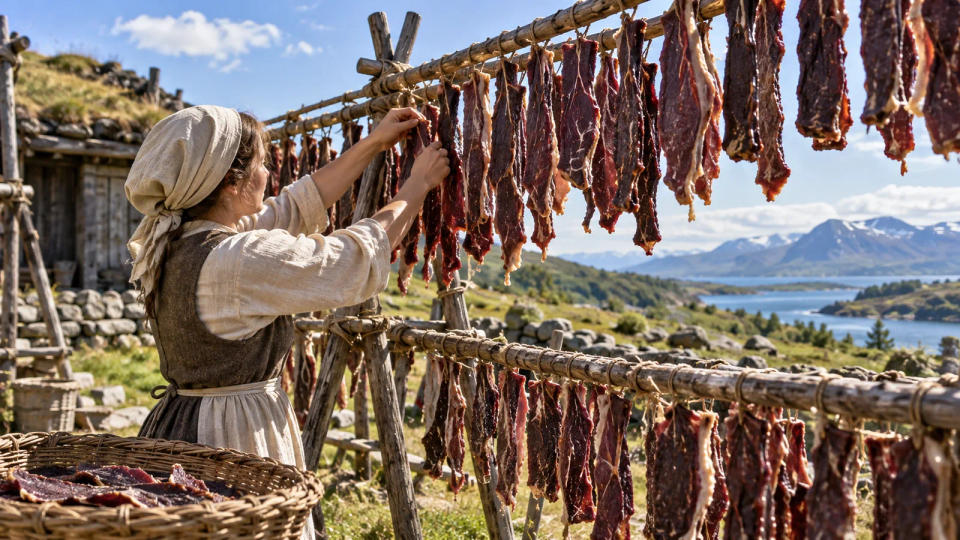
There was no single worldwide version of dried meat. The USDA notes examples ranging from jerky traditions in the Americas to biltong in southern Africa. Some Indigenous North American communities also made pemmican by combining dried meat with fat and sometimes dried fruit. These were distinct food traditions, shaped by local ingredients and needs rather than one recipe spreading everywhere.
Drying worked because microorganisms need available water to multiply. But simply leaving meat outdoors did not guarantee a safe result. Humidity, insects, dirt, temperature, and the thickness of the cuts could all change the outcome. Historical people developed methods suited to their environments; a modern cook should not assume those methods are safe without tested food-safety controls.
Smoking: Why a Slow Fire Mattered
Smoke added another layer of protection, along with a flavor people still recognize. Its effect came partly from substances deposited on the meat's surface and partly from the drying that accompanied smoking. When enough heat was applied, temperature mattered too. But smoking alone was not a magical shield against spoilage.
In eighteenth-century Virginia, a cured ham might spend additional weeks hanging above a small, smoky fire. Colonial Williamsburg's account describes hickory as a favored fuel and emphasizes a slow smoke rather than a roaring blaze. That distinction matters: the purpose was often to expose the already salted meat to smoke for an extended period, not simply to roast it for dinner.
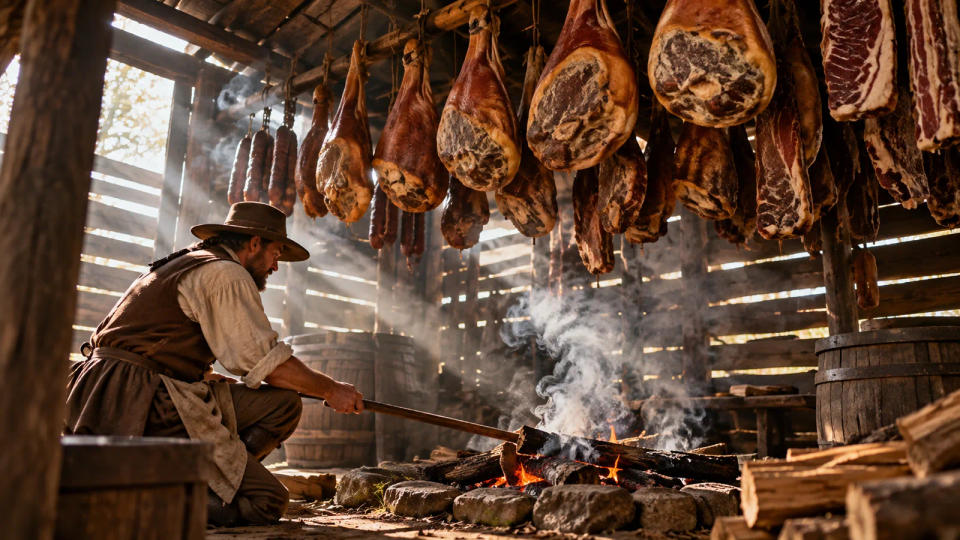
A smokehouse made this work more manageable. Meat could be suspended above the source of smoke, while the building offered some separation from weather and animals. Such spaces were stores as well as workplaces. A substantial household might keep much of its annual pork supply inside one.
Not every smoked food was shelf-stable. Modern food-safety authorities distinguish between properly processed shelf-stable products and meats that still require refrigeration. That distinction also helps us read historical claims cautiously: a ham lasting a long time under particular conditions does not mean that every smoked joint could do the same.
Storage and the Table: Preserving Meat Was Only Half the Job
Once the meat had been cured or dried, people still had to protect their investment. Moisture could return, pests could reach exposed food, and poorly prepared cuts could spoil. Smokehouses, cool cellars, covered vessels, and other storage spaces offered different advantages, but none removed every risk. The Colonial Williamsburg research even records checks for insects and signs of damage to stored hams.
Local conditions mattered enormously. Cold climates could help preserve food through freezing, while caves, cellars, and cool running water could delay spoilage without truly freezing it. These were useful extensions of the preservation toolkit, not substitutes for salting and drying where meat needed to last through warmer weather.
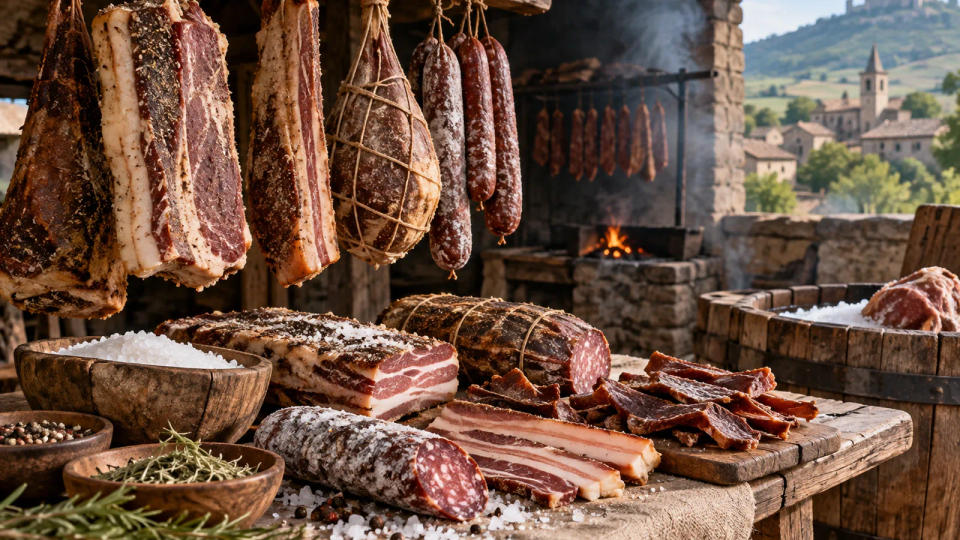
Preservation also changed what people ate. Salted meat was intensely seasoned and often firmer than fresh meat. Depending on the product and dish, cooks might soak or boil it before serving. In medieval England, for example, English Heritage describes winter meals in a castle kitchen that relied on salted meat or fish and strongly flavored sauces. Food preservation shaped everyday cooking centuries before the colonial smokehouses of Virginia.
It shaped trade, too. Historic England identifies salt fish as a major medieval commodity. Once a food could survive transport and storage, it could feed markets, ships, and communities beyond the immediate reach of a fresh catch or a recent slaughter. The long shelf life of preserved meat and fish helped connect ordinary meals to much wider networks.
But “months” should never be treated as an automatic guarantee. The length of storage depended on the specific food, the processing method, and the conditions afterward. The USDA warns that dangerous bacteria can survive some forms of drying; a historical description is not a modern recipe for safely preserving meat at home.
Conclusion
Before refrigeration, people kept meat for months by changing it—drawing out water with salt, drying it in moving air, exposing it to smoke, and storing it as carefully as they could. The techniques took time and carried risks, but they turned a seasonal slaughter or hunt into food that could help a household through the months ahead.
Sources & Further Reading
- Colonial Williamsburg, The Butchering and Processing of Pork in Eighteenth Century Williamsburg
- Historic England, Pre-industrial Salterns
- National Center for Home Food Preservation, Historical Origins of Food Preservation
- USDA Food Safety and Inspection Service, Jerky and Food Safety
- English Heritage, Life in a Castle
- Smithsonian National Museum of American History, Keeping Your Food Cool