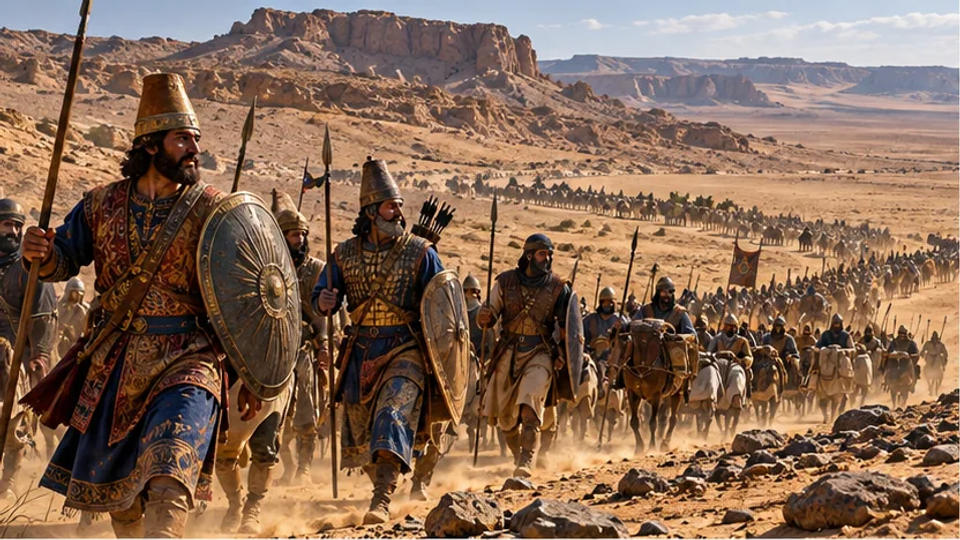
How could tens of thousands of soldiers simply vanish in the desert? That is the mystery attached to the “lost army” of Cambyses II, the Persian king who conquered Egypt in the sixth century BC. The famous answer—a gigantic sandstorm buried the entire force—is ancient, but it is not a confirmed archaeological fact.
What we can say with more confidence is that a Persian expedition seems to have disappeared after leaving the Nile Valley for the Western Desert. Everything beyond that point depends on a mixture of Herodotus, later historical reconstruction, and evidence that remains incomplete.
What Herodotus Actually Says About the Lost Army
The story comes above all from Herodotus, writing in the fifth century BC, several generations after Cambyses’ reign. According to his account, Cambyses sent about 50,000 men from Thebes to attack the “Ammonians,” whose famous oracle was associated with the oasis of Siwa.
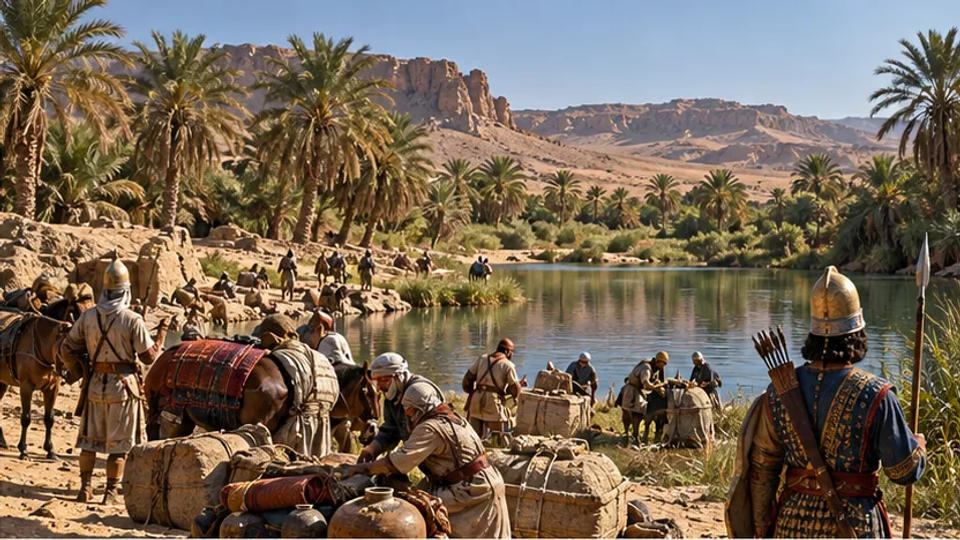
Herodotus is unusually careful about where his knowledge ends. He says the army reached a place he calls Oasis after a seven-day journey across sandy country. After that, the force neither reached the Ammonians nor returned. The dramatic sandstorm comes from the Ammonians’ own story: while the Persians were eating, a violent south wind allegedly drove great masses of sand over them until they disappeared.
That distinction matters. Herodotus does not claim to have independent confirmation that a storm buried 50,000 soldiers. He reports that the army vanished and then identifies the sandstorm explanation as what the Ammonians said had happened.
Why the Sandstorm Story Is Hard to Prove
The Western Desert can be deadly. Armies and caravans depended on wells, guides, animals, and carefully planned supplies. Heat, thirst, navigation errors, exhaustion, and the loss of water could destroy a large expedition even without a single catastrophic event.
But the image of an entire army being instantly swallowed by a moving wall of sand is harder to demonstrate. No excavated mass grave, battlefield, or securely identified concentration of Persian military equipment has confirmed Herodotus’ account. The number of 50,000 men also comes from the literary tradition, not from surviving Persian administrative records.
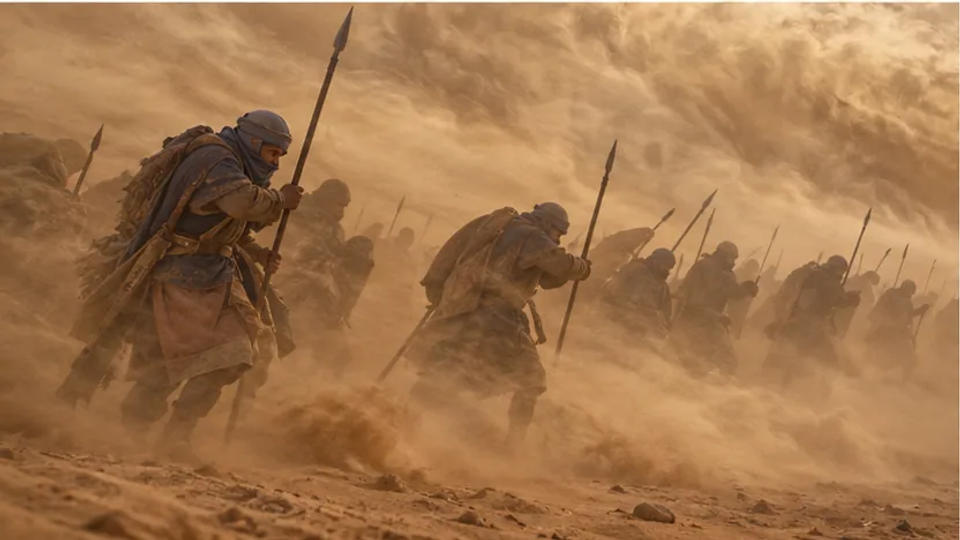
This does not mean a storm played no role. Severe wind and blowing sand could disorient troops, separate units, damage supplies, and make an already dangerous crossing worse. The problem is that archaeology has not shown that one sandstorm killed and buried the whole force.
Could the Army Have Been Defeated Instead?
A different explanation gained attention from work in the Dakhla Oasis. Egyptologist Olaf Kaper argued that the expedition may have been connected to a rebellion led by an Egyptian ruler named Petubastis. Excavations at Amheida revealed temple blocks carrying royal titles associated with this rebel ruler, showing that opposition to Persian rule had a real presence in the Western Desert.
Kaper proposed that Cambyses’ troops may have marched into the oases to suppress the revolt and then suffered a military defeat. In that reconstruction, the later sandstorm story could have replaced the memory of an embarrassing Persian disaster.
It is an intriguing theory, but it is not a solved case. More recent scholarship continues to debate the chronology of the rebellion, the identity of the rebel involved, and the destination of the Persian expedition. Some researchers accept that Herodotus may preserve distorted memories of conflict in the desert, while others caution that the evidence does not allow us to connect the missing force to one specific battle.
Have Archaeologists Ever Found Cambyses’ Soldiers?
Several expeditions and explorers have claimed possible traces. In 2000, Archaeology reported that a Helwan University geological team had encountered human remains, textiles, and metal objects in the Western Desert that were thought worthy of investigation. Later, Italian explorers Alfredo and Angelo Castiglioni publicized bones and objects that they argued belonged to the lost Persian force.
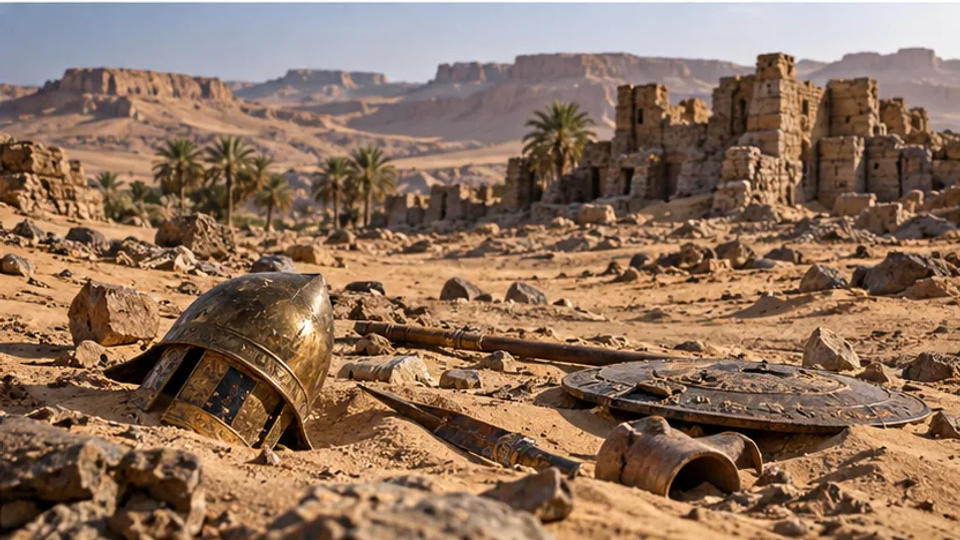
None of those claims has produced a widely accepted identification of Cambyses’ army. Desert landscapes contain remains from many periods, and an artifact that looks Persian—or even dates to the sixth century BC—does not by itself prove that it belonged to this expedition. Establishing that would require secure archaeological context, dating, and a convincing connection between the finds and the military event described in the sources.
That is why the “lost army discovered” headline keeps returning while the mystery itself remains open. The search has found suggestive clues, but not the kind of evidence needed to place tens of thousands of soldiers at one verified site.
So What Most Likely Happened?
The safest conclusion is narrower than the legend. Cambyses probably sent a substantial force into Egypt’s Western Desert, and that expedition failed to return in recognizable form. Its disappearance may have involved several causes: military resistance, water shortages, navigation problems, dispersal, exposure, or severe weather.
Herodotus’ sandstorm may preserve a real memory of disaster, a local explanation for a vanished enemy, or a story that grew around an expedition whose true end was already obscure. The rebel-war theory offers a plausible historical setting, but it still depends on connecting evidence that does not yet form a complete chain.
Conclusion
The lost army of Cambyses has not been found in any definitive sense, and the famous tale of 50,000 Persians buried beneath the sand remains unproven. What survives is more interesting than a simple legend: a real Persian conquest, a dangerous desert frontier, traces of Egyptian resistance, and an ancient historian openly telling us where certainty ends and hearsay begins.
Sources & Further Reading
- Herodotus, The Histories, Book 3 — Perseus Digital Library, Tufts University
- Institute for the Study of the Ancient World, NYU — Amheida excavations and Cambyses’ army
- David Branscome, “What Can We Know about Cambyses?” Syllogos 3 (2024)
- Encyclopaedia Iranica — “Cambyses”
- Archaeology Magazine Archive — “Cambyses’ Lost Army”