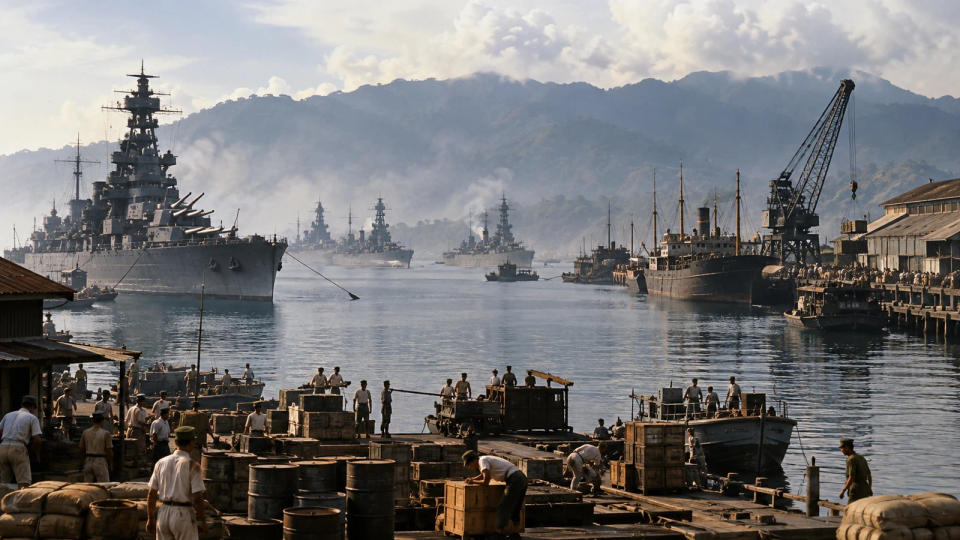
What would the world look like if Imperial Japan had emerged victorious from World War II? The most plausible version is not a Japanese conquest of America, but a negotiated peace that allowed Tokyo to retain much of its empire. That single change could have transformed the future of Korea, China, Southeast Asia, and the Cold War—although nothing about that alternate future is certain.
To make sense of the question, we need to separate Japan’s documented ambitions from what might have happened afterward. The records tell us what Japanese leaders wanted and how occupation worked. They cannot tell us exactly how a hypothetical empire would have survived another eighty years.
What Would a Japanese Victory Actually Mean?
Japan entered the Pacific War with an enormous strategic gamble. After striking the American fleet at Pearl Harbor in December 1941, its forces seized territory across Southeast Asia and the western Pacific. The intention was to secure resources, establish fortified defenses, and make an American counteroffensive so expensive that Washington might accept a settlement.
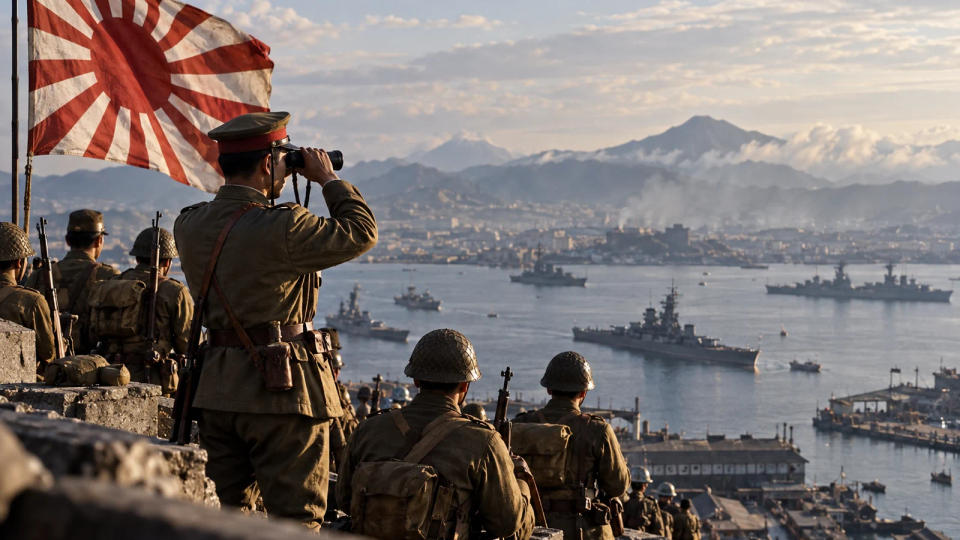
That is different from defeating and occupying the continental United States. Japan had been fighting a stubborn war in China since 1937, lacked secure oil supplies, and faced an American economy with vastly greater industrial capacity. Even successful early campaigns did not solve those problems.
By 1945, Japanese leaders were pursuing what they called Ketsu-Go, a plan to inflict devastating losses on a possible Allied invasion and secure better surrender terms. It was a desperate strategy rather than evidence that an outright military victory was within reach.
Our counterfactual therefore begins with a very large assumption: an American-led coalition, for some reason, accepts a settlement leaving Japan in control of strategically important Asian territories. Whether such a deal could have been negotiated is itself doubtful. But it gives us a specific starting point for exploring the consequences.
Could Korea and China Have Followed Completely Different Paths?
Korea is one of the clearest places to see how different the map might have become. Japan formally annexed Korea in 1910. Its colonial government remained in place until Japan’s defeat in 1945, when Allied arrangements divided the task of accepting Japanese surrender between Soviet forces in the north and American forces in the south.
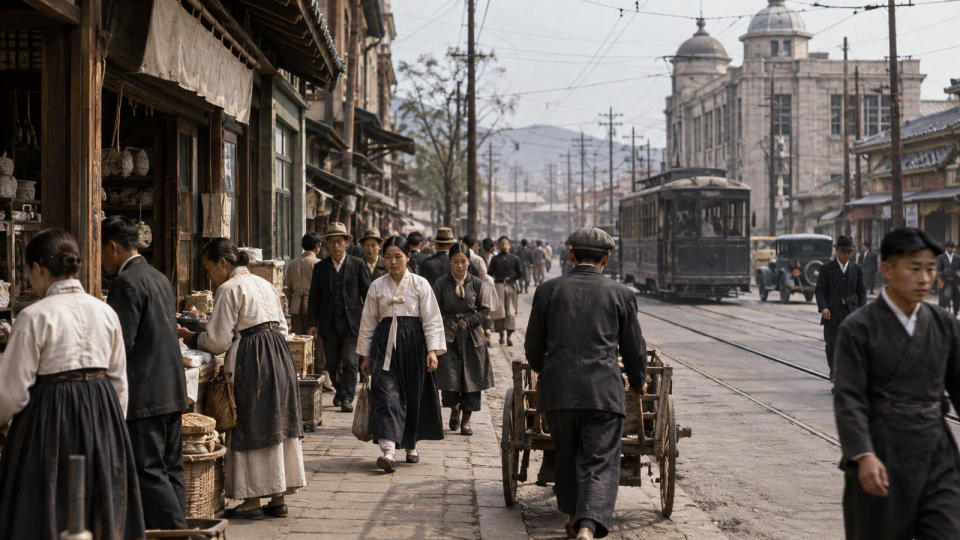
Without that surrender, the particular chain of events that produced the Republic of Korea and the Democratic People’s Republic of Korea would not have happened in the same way. That does not mean a permanently united, peaceful Korea was guaranteed. Continued Japanese rule would have faced Korean independence movements, while the Soviet Union, China, and the United States might still have intervened in different ways.
Longer colonial rule could also have prolonged policies that elevated Japanese political authority and constrained Korean language, identity, and self-government. How successfully Koreans would have resisted or negotiated change remains impossible to predict.
China presents an even larger uncertainty. Japan occupied significant Chinese territories, but it had failed to end organized Chinese resistance. Nationalist forces under Chiang Kai-shek and Communist forces under Mao Zedong both fought Japan, despite their own rivalry.
If Japan had retained its occupied territories, China’s civil war might have taken a different course or been delayed by prolonged anti-Japanese fighting. The founding of the People’s Republic of China in 1949 would not be something we could simply assume. Yet it would be equally unjustified to imagine that Japan could easily subdue the whole country indefinitely.
What Would Have Happened to Southeast Asia?
Japanese propaganda presented the Greater East Asia Co-Prosperity Sphere as a project for Asia freed from Western colonial domination. The reality was much more complicated. Japan replaced European or American control in many places with its own military authority, resource extraction, and political demands.
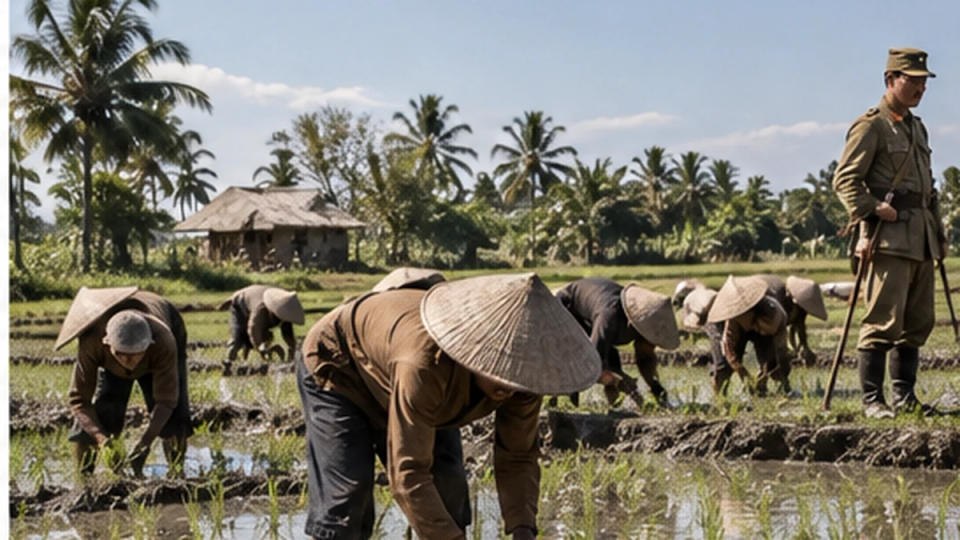
The Philippines offers an especially revealing example. Japan announced Philippine independence in 1943, yet wartime occupation was marked by repression and severe violence against prisoners and civilians. That experience warns against treating an imperial promise of independence as proof of genuine sovereignty.
If Tokyo had held Southeast Asia after a peace agreement, some local governments might have operated under Japanese influence while the empire controlled security, trade, or strategic resources. Others might have fought to regain independence. The precise outcome would vary from country to country.
Japan also helped undermine the old assumption that European empires could never be defeated by an Asian power. Even in our actual timeline, the defeat of colonial forces affected the political environment in which independence movements grew. A victorious Japan, however, might have replaced one set of colonial constraints with another, changing both the timing and character of decolonization.
Would the United States and Japan Have Become Rival Superpowers?
A surviving Japanese sphere of influence could have made the Pacific a lasting geopolitical fault line. Washington might have retained its naval reach and economic power while recognizing—or continuing to challenge—Japanese dominance in parts of East and Southeast Asia.
Consider what actually followed Japan’s defeat. Allied occupation introduced major political and economic reforms in Japan, including a new constitutional order, changes to landownership, and the rejection of aggressive war as national policy. Japan eventually became a major American security partner.
A negotiated peace preserving the wartime regime would have removed the conditions that made that particular transformation possible. Japan might have remained more authoritarian and militarized, though internal political and economic pressures could still have produced reform later.
The Cold War would also have looked different. Historically, Soviet and American occupation of Korea helped create two rival Korean states. The Korean War then strengthened the US-Japan security relationship. Remove Japan’s 1945 defeat, and that entire sequence is thrown into question.
But it would not automatically turn into a simple three-way rivalry among Washington, Moscow, and Tokyo. Relations among a Japanese empire, Chinese resistance movements, and the Soviet Union could have created shifting alliances, border conflicts, or even the eventual collapse of Japan’s gains. Each step would depend on decisions we cannot recover from the historical record.
How Different Would Life and the World Economy Be Today?
It is tempting to imagine a modern world where everyone in Asia speaks Japanese, uses Japanese currency, and lives under the same imperial flag. That is a dramatic image, but not a credible prediction. Even at the height of Japan’s wartime expansion, the occupied territories were socially, linguistically, and politically diverse.
What is more defensible is that continued occupation could have altered education, public administration, migration, infrastructure, and access to resources for millions of people. Those changes would have affected families and communities long after the original war ended.
The economic effects could have spread worldwide. In the real postwar order, Japanese industry grew through reforms, international trade, and close security ties with the United States. A victorious imperial system would have faced a very different mix of trade partners, military costs, sanctions, and resistance. There is no sound basis for claiming that it would necessarily be richer—or poorer—than Japan is today.
Even the familiar political map might be unrecognizable. Korea’s division, China’s revolutionary victory, Philippine independence, and the United States’ alliance system emerged from particular postwar circumstances. Change the outcome of 1945, and you change the starting conditions for all of them.
The central caution is that wartime conquest does not guarantee permanent control. Empires can win battles and still lose legitimacy, resources, and the ability to govern. An Imperial Japanese victory might therefore have postponed decolonization rather than prevented it.
Conclusion
If Japan had won a negotiated victory in World War II, Asia might have faced longer imperial rule, different independence struggles, and a completely altered Cold War. But no historian can map a precise path from that imagined peace to the present. The strongest answer comes from examining what Japan actually attempted—and remembering how fiercely people resisted it.
Sources & Further Reading
- The National WWII Museum — The Road to Pearl Harbor: The Short Fuse
- The National WWII Museum — There Are No Civilians in Japan
- The National WWII Museum — Liberation of the Philippines 1945
- U.S. Department of State — Occupation and Reconstruction of Japan, 1945–52
- U.S. Department of State — Korean War and Japan’s Recovery
- U.S. National Archives — Surrender of Japan (1945)