At Olympia, Greeks honored Zeus with athletic contests that brought prestige to winners and their home communities.
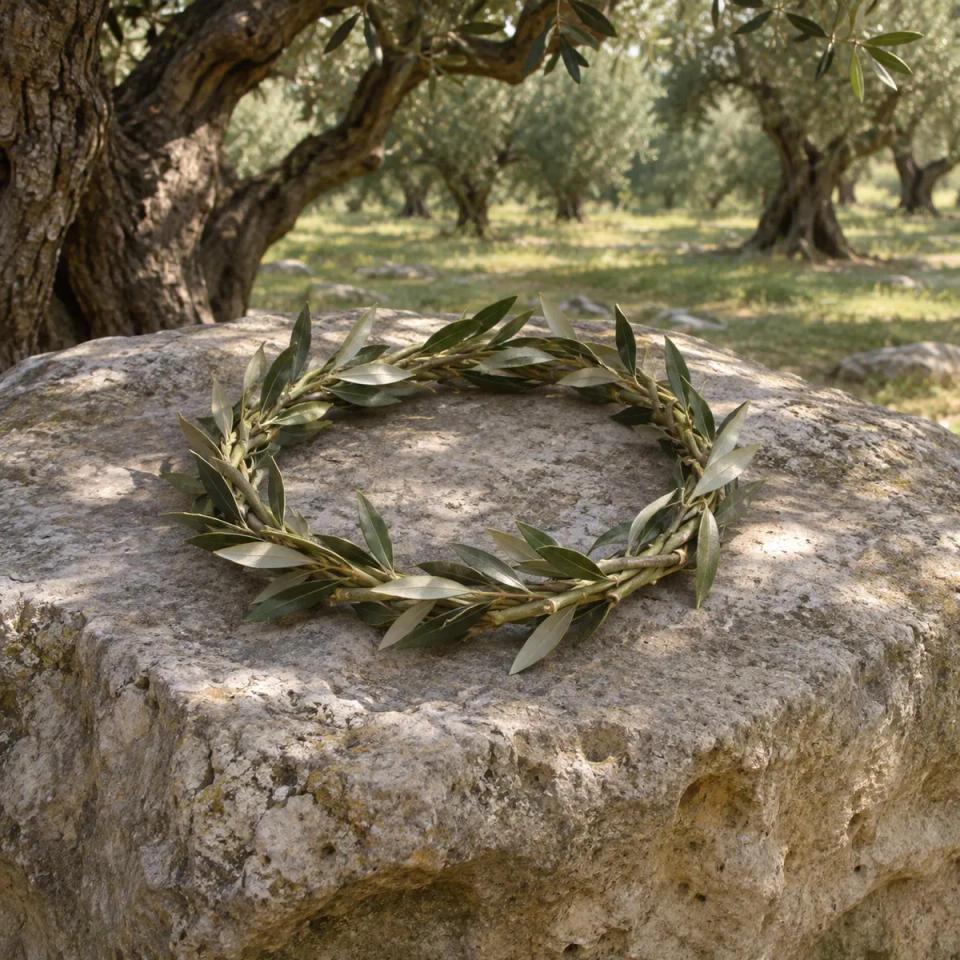
The ancient Greeks held the Olympic Games as part of a religious festival for Zeus. At Olympia, athletic contests took place alongside worship, and winning brought distinction to the athlete, his family, and his home community. The gathering gave people from different Greek-speaking cities a shared occasion to travel, make offerings, and compete, even when those cities had serious political disagreements.
That combination explains why Olympia mattered. A footrace could establish which runner was fastest that day. Holding it at a sanctuary during a recurring festival turned the result into an achievement that spectators from many places could recognize. The religious setting, the reputation a winner carried home, and the rules that made the gathering possible all contributed to the Games’ long appeal.
Why Was Olympia a Festival for Zeus?
Olympia lay in the western Peloponnese. It was a sanctuary whose sacred precinct, the Altis, became a center of worship of Zeus. The remains of temples and athletic facilities at the site show that the same gathering place served both religious and sporting purposes. The Games returned every four years. The conventional starting date is 776 BCE, a date transmitted by tradition rather than a contemporary account describing how the festival was founded.
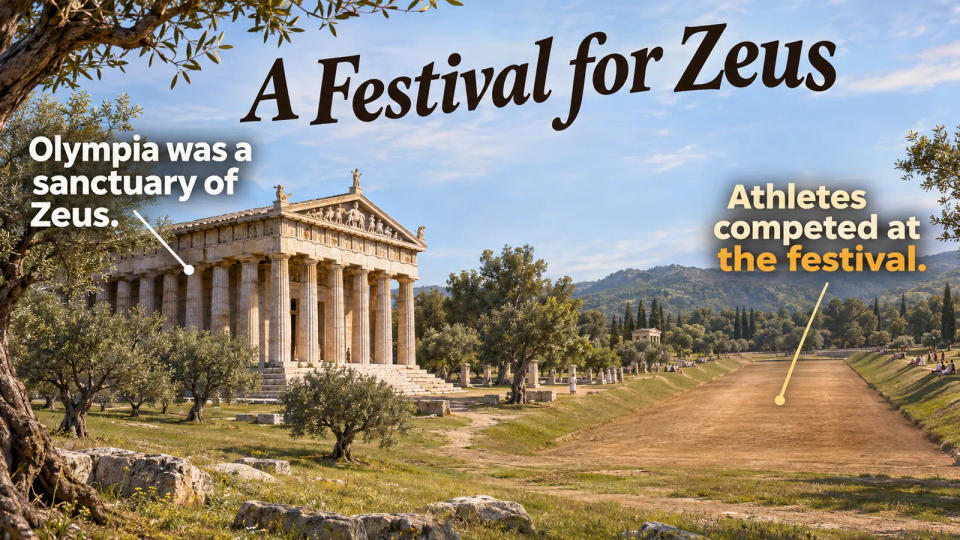
The illustration shows a conceptual view of the sanctuary and an earthen running ground in the Classical period, after the Temple of Zeus had been built. Olympia changed over many generations. The building and track in the illustration help explain the connection between worship and competition, and the archaeological site shows how those activities occupied different spaces within the larger gathering place.
Athletic festivals for gods also took place elsewhere. The Metropolitan Museum of Art points to the Pythian Games at Delphi, which honored Apollo, and the games at Isthmia, which honored Poseidon. Olympia belonged to a wider Greek tradition in which a sanctuary could host contests that attracted participants beyond its immediate region. The cult of Zeus gave this particular festival its focus and made an Olympic victory something more than success in a local competition.
The events changed over time. Footraces were among the contests, along with wrestling, boxing, throwing events, and horse and chariot races. A visitor could therefore encounter different kinds of competition under the umbrella of the same festival. The point of a contest was to defeat the other competitors there, and the honor attached to that result depended partly on where it happened and who witnessed it.
Why Did an Olive Crown Matter So Much?
At Olympia, the official victor’s prize was a crown made from wild olive. Its materials were modest, and its value came from what the award signified. A winner had prevailed at a major festival before people who could carry news of the achievement elsewhere. The crown made that accomplishment visible in a form that spectators could recognize.
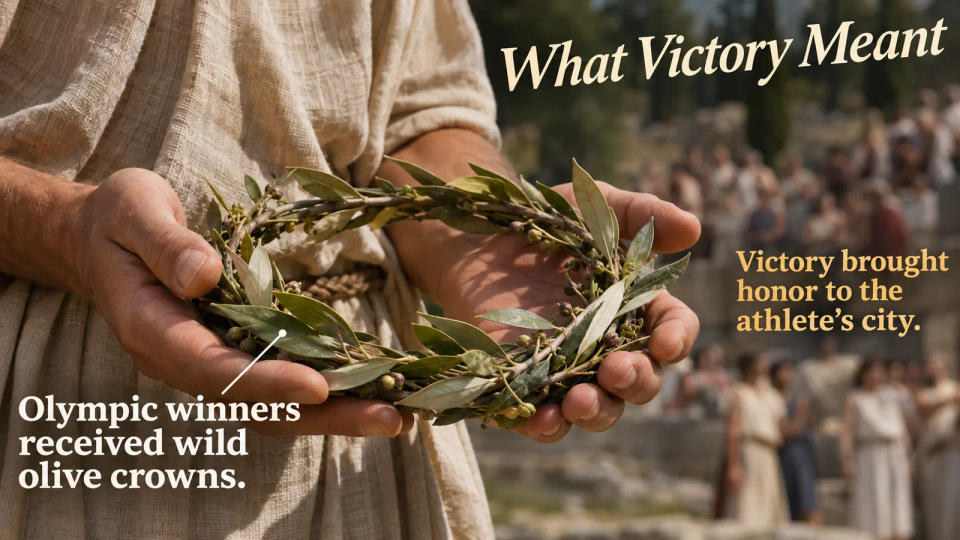
The consequences could extend beyond the individual. The Met notes that victories brought distinction to families and hometowns. Statues and victory poems could preserve the memory of an achievement long after the contest. A city could claim some of the prestige when one of its own succeeded, and an athlete’s family could be associated with a feat that drew attention beyond its local community.
This also helps explain why it is worth separating the prize at Olympia from later recognition. An olive crown could be the official award at the sanctuary while a winner might receive public honors elsewhere. Asking what the crown was made from tells us about the prize. Asking who celebrated the winner tells us why the contest carried so much social weight. Greek communities shared the festival, and they could still compete for distinction through the people who represented them.
The festival also had limits. The Olympic contests and the separate games for Hera, which the Met describes as involving young unmarried women, were distinct occasions. Shared participation across communities took place under ancient rules about who could compete. Reading modern ideas about universal eligibility back into the ancient festival obscures those differences.
What Did the Olympic Truce Make Possible?
A festival drawing people from different communities depended on participants being able to reach it. The Olympic truce protected the gathering and travel associated with it. Its importance is especially clear in a case where people disagreed about how it applied.
Thucydides describes the organizers from Elis excluding the Spartans from the sanctuary after the Spartans refused to pay a fine. The Eleans accused them of military actions during the truce. The Spartans answered that it had yet to be announced to them when they sent their troops. The dispute concerned when the rules took effect and who had authority to enforce them. Exclusion meant the Spartans could neither sacrifice at the sanctuary nor take part in the contests.
That account is particularly revealing because both religious and athletic participation were at stake. It also shows that the truce operated in a world where military disputes continued and the rules could be contested. A common festival could bring communities together for a defined purpose while leaving their political rivalries intact. The achievement was getting people to a gathering with recognized rules, even though those rules sometimes produced another argument.
Conclusion
The Greeks held the Olympics to honor Zeus through a festival in which athletic excellence earned public recognition. The sanctuary gave the contests a religious setting. The crown gave spectators a recognizable sign of victory, and the athlete’s community could share in the prestige. The truce helped make travel and participation possible among communities that otherwise disagreed. Those functions explain why a recurring festival at one sanctuary could matter so widely.
Sources & Further Reading
- UNESCO World Heritage Centre — Archaeological Site of Olympia
- Metropolitan Museum of Art — Athletics in Ancient Greece
- International Olympic Committee — Winners’ rewards
- International Olympic Committee — What is the Olympic Truce?
- Thucydides — History of the Peloponnesian War, 5.49