In 897, a dead pope was tried because attacks on his authority could threaten the living clergy he had ordained.
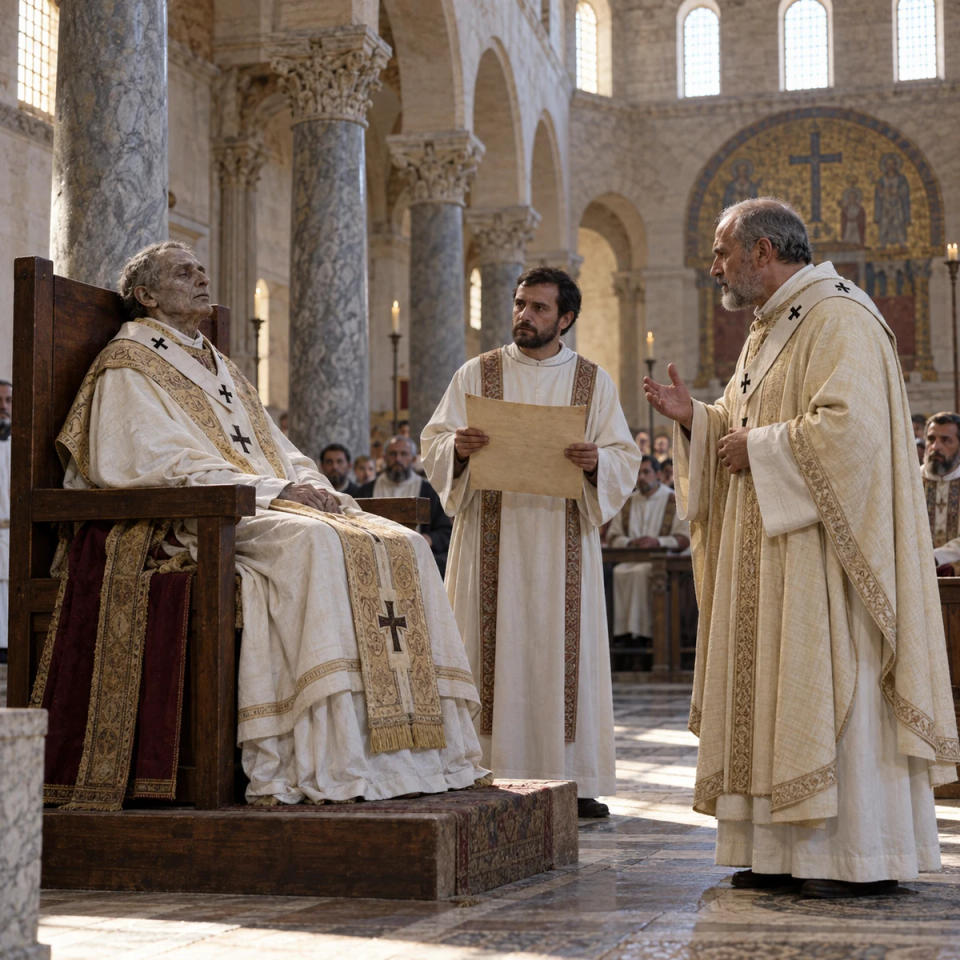
The defendant could not speak, acknowledge a charge or dispute a witness. Pope Formosus had died in April 896, yet early the following year Pope Stephen VI convened a Roman council against him. The proceeding remembered as the Cadaver Synod attacked a dead man's standing as pope, with consequences for people whose ecclesiastical positions depended on his acts.
The event belongs to documented medieval history, although familiar retellings often make its motives and dramatic details seem more certain than the sources allow. Understanding it means looking beyond the shocking presence of a corpse to the authority that corpse represented.
What Happened at the Trial?
Accounts describe Formosus being removed from his tomb, dressed in papal vestments and seated before the assembly. A deacon was assigned to respond on his behalf. Stephen VI presided over a proceeding aimed at condemning an earlier pontiff. Boniface VI's brief reign had intervened between Formosus's death and Stephen's accession, so Stephen was not his immediate successor.
The body made an abstract institutional dispute physically visible. Clothing and the ceremonial seat marked papal office; stripping away that dignity would reverse the same message. In Wojtek Jezierski's discussion of episcopal symbolism, the episode illustrates the relationship between a bishop's body and the authority attached to it. Jezierski also identifies Liutprand of Cremona's narrative as an account written roughly half a century later.
The accusations concerned Formosus's ecclesiastical career. He had been bishop of Porto before becoming bishop of Rome, and the prosecution attacked his movement between sees. Earlier disciplinary action and allegations about an oath also formed part of the controversy. These were accusations used against him, rather than facts a modern account should automatically accept as proof of guilt.
Later narratives report that the corpse was stripped and mutilated, and that it eventually ended up in the Tiber. They do not provide a modern forensic record or a complete courtroom transcript. Details of the body's treatment and the agency behind its final disposal require more caution than a single seamless horror story suggests.
Why a Dead Pope's Office Still Mattered
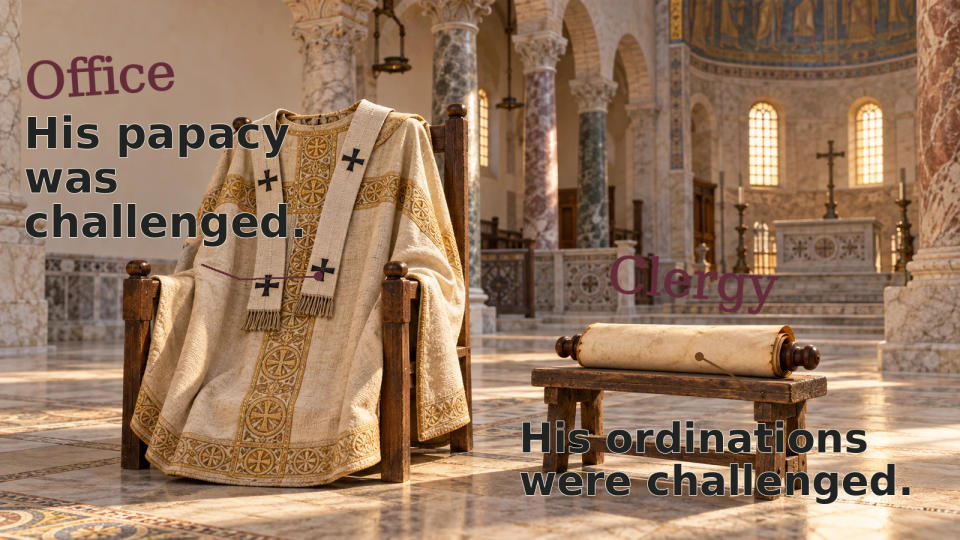
A dead man could no longer exercise power, but his previous decisions continued to shape the Church. The ruling challenged Formosus's legitimacy and declared his ordinations invalid. Its targets therefore included living clergy. That practical consequence helps explain why the episode was more than an insult directed at a corpse.
The older Catholic Encyclopedia biography of Formosus situates his pontificate within competition for power in Italy after the Carolingian political order fractured. Formosus crowned Arnulf emperor in 896, after previously recognizing the imperial position of the Spoletan dynasty. Traditional explanations present the posthumous prosecution as revenge associated with Emperor Lambert and his mother, Ageltrude.
That interpretation is influential, but it is disputed. William S. Monroe challenges the simple betrayal-and-revenge explanation and emphasizes Roman factional conflict. He also proposes that humiliating and removing Formosus's remains could obstruct veneration of him. This is a scholarly interpretation of the evidence, not a recovered confession establishing everyone's private motive.
The legal vocabulary mattered alongside political conflict. Condemning a predecessor as improperly installed could undermine the authority of acts performed during his pontificate. The symbolic attack and the institutional attack reinforced one another: the deceased pope was displayed as a defendant while the consequences extended beyond his grave.
The writings associated with Auxilius of Naples show how enduring those consequences were. A supporter who had received orders from Formosus, Auxilius defended both him and the validity of his ordinations in works composed around 908–911. The controversy thus survived the original council and affected arguments about the standing of subsequent clergy.
Reversals and the Limits of the Sources
Stephen VI did not retain power for long. He was imprisoned and strangled in 897. The condemnation of Formosus was subsequently reversed, but the aftermath was not a neat sequence in which everyone immediately agreed and the controversy disappeared.
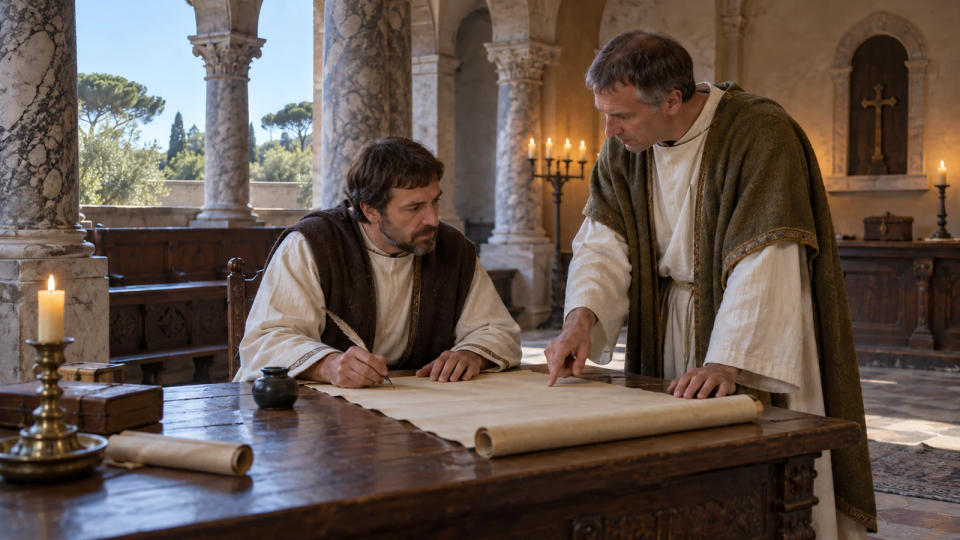
Under John IX, councils in 898 condemned Stephen's synod, restored clergy who had been degraded and prohibited reordination. The Catholic Encyclopedia account of John IX also records that the earlier synod's acts were ordered burned. Those measures addressed living offices and institutional stability, as well as the treatment of a dead predecessor.
The later Ravenna proceedings are particularly important to reconstruction of the case. Monroe discusses their rejection of bringing a dead person to judgment when he cannot answer for himself. They also present participating clergy as having acted under intimidation. Identifying exactly who exerted that pressure remains a historical problem, rather than a detail that can safely be filled with imagined dialogue.
Other sources require attention to their authors' purposes. Anastasia Anufrieva's study, summarized in its English abstract, compares Liutprand's portrayals of papal depositions as illegitimate or legitimate. The comparison cautions readers to examine how a narrative constructs authority. A vivid description is evidence of a writer's account, not automatic access to every gesture or spoken word in the room.
There was continuing resistance to Formosus's rehabilitation. The later controversy under Sergius III and the defenses written by Formosus's supporters show that a papal reversal did not remove all factional or theological disagreement. This longer aftermath explains why a proceeding against a corpse could remain a serious issue for people alive years later.
The accompanying images are illustrative AI reconstructions, not portraits or photographs of recorded meetings. The infographic's vestments represent office, and its parchment represents the ruling's consequences; it is not a surviving verdict. Stories of miraculous signs surrounding Formosus's remains belong to the history of his memory and veneration, rather than independently established courtroom events.
Conclusion
Formosus was put on trial because his authority still mattered after his death. By attacking his right to have been pope, opponents could challenge the legitimacy of acts that affected living clergy. Political rivalry, canonical arguments and the treatment of papal memory intersected in the Cadaver Synod. Its reality is well grounded, while the precise motives and every dramatic detail remain subjects for careful historical interpretation.
Sources & Further Reading
- William S. Monroe: A New Look at the Cadaver Synod (2022), author-uploaded full text
- Wojtek Jezierski: Domesticating St Adalbert (2018), discussion of Formosus, printed page 13
- Anastasia S. Anufrieva: Broken Staff, Torn Clothes (2024), English abstract
- Johann Peter Kirsch: Pope Formosus, Catholic Encyclopedia (1909)
- Horace Mann: Pope John IX, Catholic Encyclopedia (1910)
- Johann Peter Kirsch: Auxilius of Naples, Catholic Encyclopedia (1907)