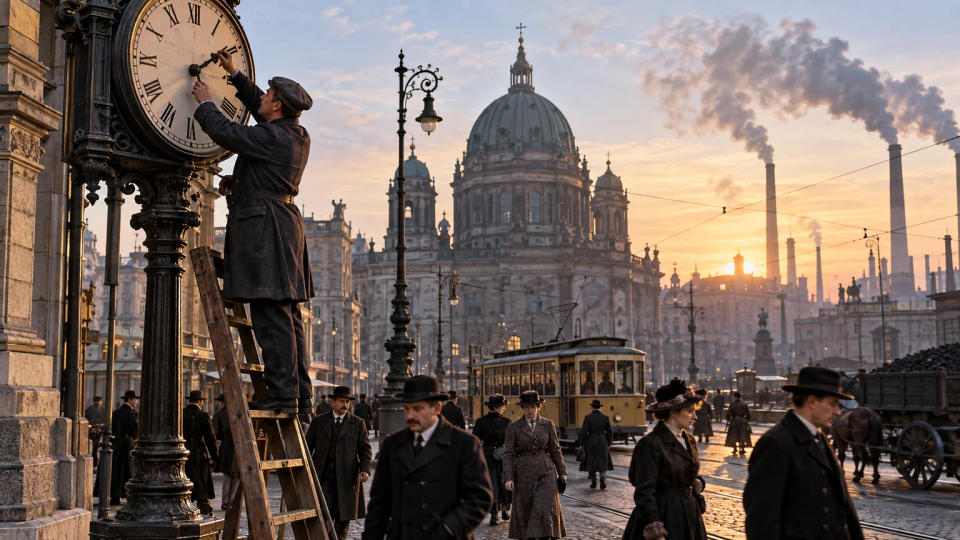
Why did governments suddenly decide that an entire nation should move its clocks forward by an hour? During World War I, the answer was largely practical: longer evening daylight promised less dependence on artificial lighting at a time when coal, oil, transport capacity, and industrial resources were being consumed by the war effort.
Daylight saving time was not invented by the war. The idea had circulated for years. But the pressures of total war turned an unusual proposal about summer daylight into government policy, first on a national scale in Germany in 1916 and then across much of Europe and, later, the United States.
Before World War I, Daylight Saving Was Already an Idea
Long before wartime governments touched the clock, reformers had argued that people were wasting summer daylight. In Britain, builder William Willett became the best-known campaigner after publishing The Waste of Daylight in 1907. He wanted people to begin their days earlier during the bright months so that more useful daylight would fall in the evening.
Willett's proposal was not originally a wartime scheme. It was associated with leisure, health, productivity, and lower lighting costs. Parliament considered versions of daylight-saving legislation several times, but the idea repeatedly failed to become law. Royal Museums Greenwich notes that bills were rejected five times between 1908 and 1916.
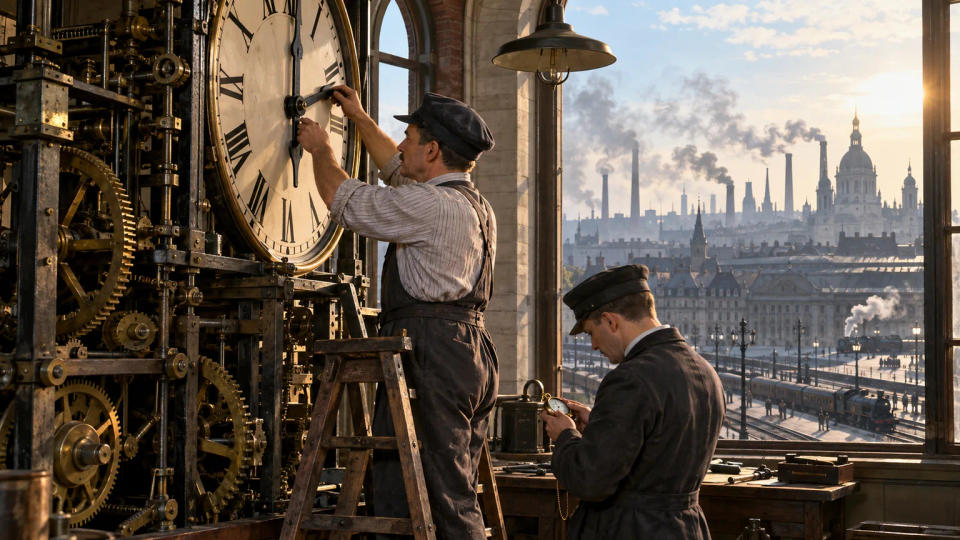
The problem was not that clocks could not be changed. By the early twentieth century, railways, factories, telegraphs, offices, and government administration already depended heavily on standardized time. The larger question was whether society should deliberately shift that time for part of the year. War made the possible savings look much more important.
Germany Made the Clock a Wartime Tool in 1916
By 1916, the German Empire had been at war for nearly two years. Fuel and other strategic resources were under intense pressure, while factories, railways, military supply systems, and civilians all competed for energy. In that environment, saving even some of the fuel used for lighting seemed worthwhile.
Germany introduced nationwide daylight saving in the spring of 1916. On the night of April 30, clocks were advanced by one hour so that May 1 began earlier by the new official time. The basic logic was simple: shift an hour of usable daylight from the early morning, when many people were asleep, into the evening, when homes, shops, offices, and factories might otherwise need more artificial light.
This did not create more daylight, of course. It changed the relationship between the clock and the sun. A summer sunset that had occurred at, say, 8 p.m. by the old clock would now appear at 9 p.m. by the new one. Supporters hoped that the altered schedule would reduce evening lighting and therefore conserve fuel and the transportation needed to move it.
Britain and the United States Followed
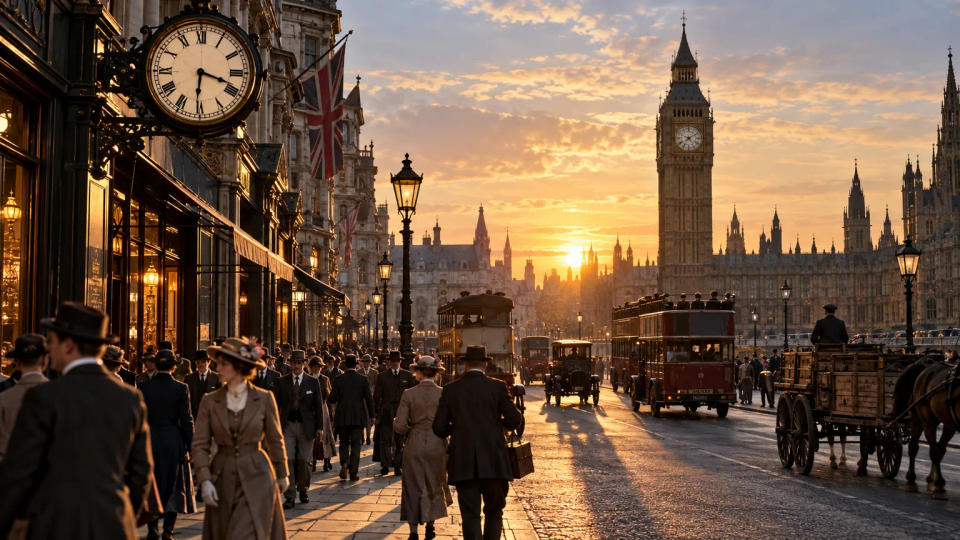
Germany's move weakened one of the arguments against changing the clocks elsewhere: international coordination. Britain moved quickly. In a House of Commons debate on May 8, 1916, supporters emphasized the expected economy in fuel and fuel transport from shortening the hours of artificial lighting. The resolution passed overwhelmingly, and the Summer Time Act followed.
Under the 1916 British law, time in Great Britain was advanced by one hour from May 21 until October 1. The measure was explicitly tied to wartime conditions. During parliamentary debate, Home Secretary Herbert Samuel said it had been advocated as a war measure and on grounds of war economy, while leaving open the question of whether it should continue after normal conditions returned.
The United States entered the war in April 1917 and adopted nationwide daylight saving the following year. The Standard Time Act, approved on March 19, 1918, established federal standard-time zones and required clocks to move forward seasonally. The U.S. House historian notes that advocates argued Americans could use more natural light and less electricity generated from coal. Supporters also connected the extra evening daylight with recreation and tending war gardens.
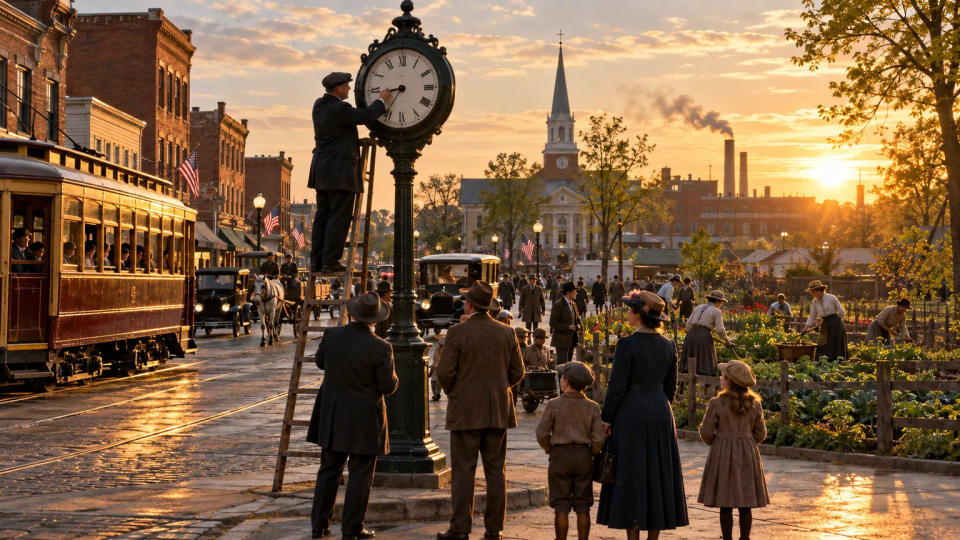
The American experiment was short-lived at the federal level. After the war, national daylight saving became unpopular in many rural areas and was repealed in 1919, although some cities and states continued using it. That uneven history is a reminder that the wartime case for daylight saving did not automatically convince everyone once emergency conditions faded.
Did Changing the Clock Really Save Fuel?
The original wartime argument was plausible, but it should not be treated as a perfectly measured engineering result. In 1916, artificial lighting depended heavily on fuel-based energy systems, so reducing evening lighting could reduce demand. British parliamentary supporters explicitly argued that this would save both fuel and the transport required to deliver it.
In the United States, supporters circulated estimates of large coal savings. The House of Representatives' historical account records a contemporary Wall Street Journal estimate that the daylight-saving bill might save more than 800,000 tons of coal. That was an estimate used in the public debate, not proof that the final savings actually reached that figure.
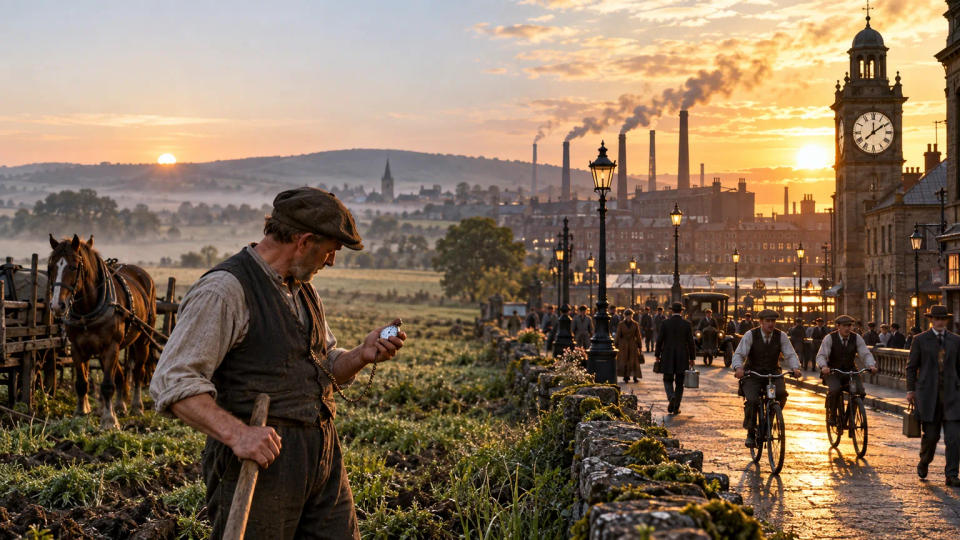
Daylight saving also affected different groups differently. Farmers often organized work around sunlight, weather, dew, and animal routines rather than factory clocks. That tension appeared in the 1916 British parliamentary debates, where agricultural concerns were raised even as supporters argued that urban and industrial life was increasingly governed by the clock.
What World War I unquestionably did was give governments a powerful reason to try a system that had previously seemed optional or eccentric. Once millions of people had lived through seasonal clock changes, daylight saving was no longer merely a reformer's pamphlet. It had become an administrative tool that governments could revive, alter, abandon, and reintroduce according to national policy.
Conclusion
World War I did not invent daylight saving time, but wartime pressure transformed it from a debated idea into mass policy. Fuel conservation and the desire to use summer daylight more efficiently pushed Germany, Britain, the United States, and other countries to experiment with changing the clock. The modern ritual of moving clocks forward and back is one of the clearest everyday reminders that even timekeeping can be reshaped by war.
Sources & Further Reading
- Royal Museums Greenwich evidence to the UK Parliament — history of daylight saving time
- UK Parliament Hansard, May 8, 1916 — Daylight Saving debate
- UK Summer Time Act 1916 — original legislation
- U.S. House of Representatives: Time Travel — Daylight Saving Time and the House
- U.S. Code, Title 15 — statutory notes on the 1918 Standard Time Act