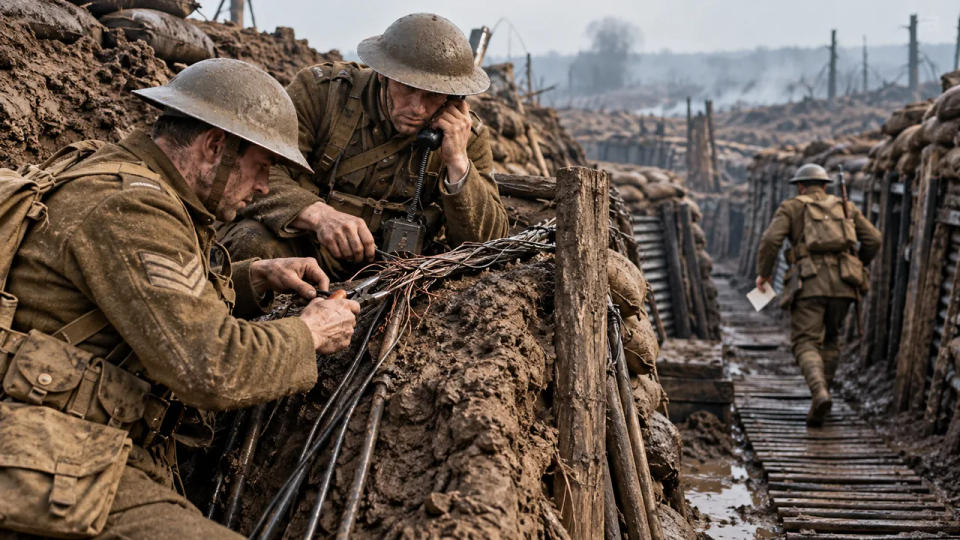
What happened when artillery fire sliced through a field telephone line in the middle of a World War I battle? Soldiers did not simply stop sending orders: they turned to runners, carrier pigeons, visual signals and, increasingly, wireless equipment while signallers tried to repair the cables.
The difficulty was not finding one clever replacement. It was keeping a chain of communication alive when every available method could fail at the worst possible moment.
Why Telephone Lines Kept Going Silent
By 1914, armies already relied on telephones and telegraphs. A field telephone connected officers, observation posts and artillery units through cables laid across or beneath the ground. Compared with carrying a written order, speaking directly to another headquarters could be extraordinarily useful when a battlefield changed quickly.
But the Western Front was a hostile place for an improvised cable network. Shells ripped open trenches, buried wiring under collapsed earth and broke lines crossing exposed ground. Even without a direct hit, men advancing beyond prepared positions could outrun their own communications network.
British Royal Engineers and other army signallers therefore spent much of their work laying, maintaining and repairing lines. Where possible, cables could be buried or given alternative routes. These measures reduced interruptions, but neither made the wires invulnerable to heavy bombardment.
There was a second problem: listening in. Ordinary telephone traffic could sometimes be intercepted. The British Fullerphone, developed during the war, offered a more secure way of transmitting Morse messages over a wire. Yet even a sophisticated wired set needed an intact physical connection. A cut cable still meant silence.
Runners Carried Orders Through Shellfire
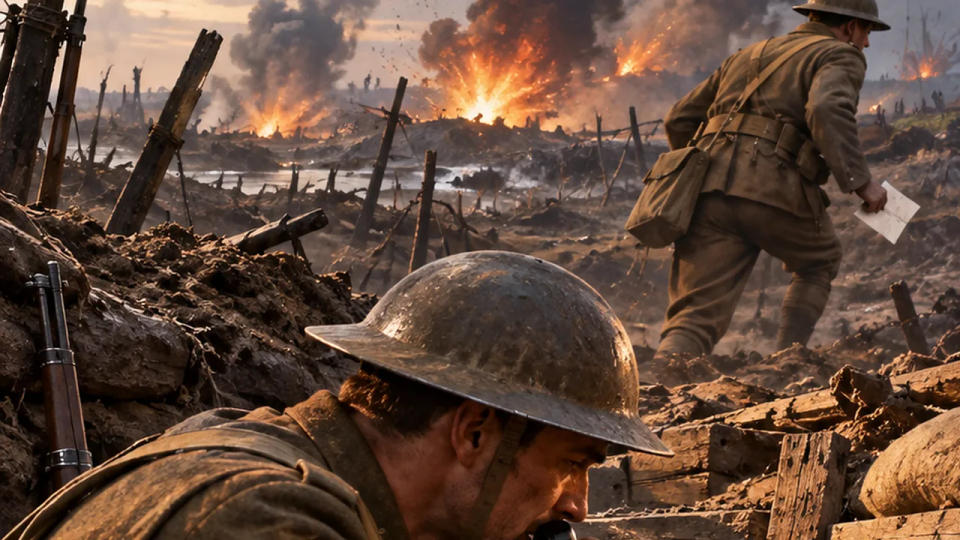
When the telephone stopped working, a runner could carry a written message from a forward position to the next command post. Trench routes and established relay points helped messages pass from one formation to another. Runners were particularly important during assaults, when troops had moved away from fixed lines and commanders needed reports from newly occupied ground.
This sounds simple only until the conditions are considered. Trenches could be blocked, flooded or damaged. Crossing open ground exposed a messenger to machine-gun fire, artillery and snipers. A runner might arrive late, become lost or never arrive at all. Other runners could be sent with the same information to improve the chances of delivery.
The messenger also carried more than paper. A person arriving at headquarters could explain what they had witnessed and clarify an uncertain report. But human speed and endurance placed obvious limits on how quickly instructions could travel.
Farther behind the front, mounted or motorcycle dispatch riders could connect headquarters and other posts where routes allowed. They were not interchangeable with a foot runner threading through a shattered forward trench. Different sections of the route demanded different solutions.
Why Armies Trusted Homing Pigeons
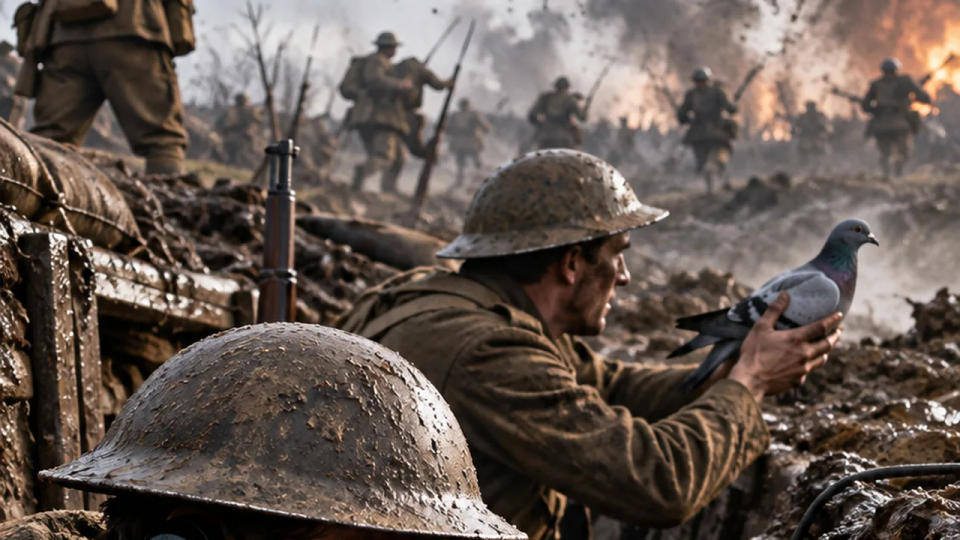
Carrier pigeons offered a surprising advantage: they could fly over ground that would delay or endanger a human messenger. The birds were taken to forward troops and released carrying short reports in tiny containers. Their destination was not any place chosen by the sender. Trained homing pigeons returned to their own lofts, where handlers recovered the messages and forwarded the information.
The British Army maintained pigeon services with stationary and mobile lofts. The Australian War Memorial records that messages could be sent with two birds, giving the same report more than one chance to get through. A pigeon was especially useful when a unit was isolated, cut off by fire or unable to get a person safely back to headquarters.
That reliability had boundaries. Fog, darkness and poor weather could prevent a flight, and birds could be injured, killed or captured. The method also chiefly served communication back toward an established loft; it was not a two-way conversation. A new order still had to reach troops by another channel.
Dogs were sometimes trained to carry messages as well. Like humans, however, they had to negotiate dangerous ground. Their use did not turn animal couriers into a universal cure for broken communications.
The birds also had to be cared for and positioned before they were needed. A mobile loft could be moved, but its pigeons had to learn where home was before that new location could become a dependable destination. Handlers, baskets and message slips formed a small communications system in their own right. What appeared to be an almost effortless flight depended on preparation far from the moment of release.
Flags, Signal Lamps and Wireless Filled the Gaps
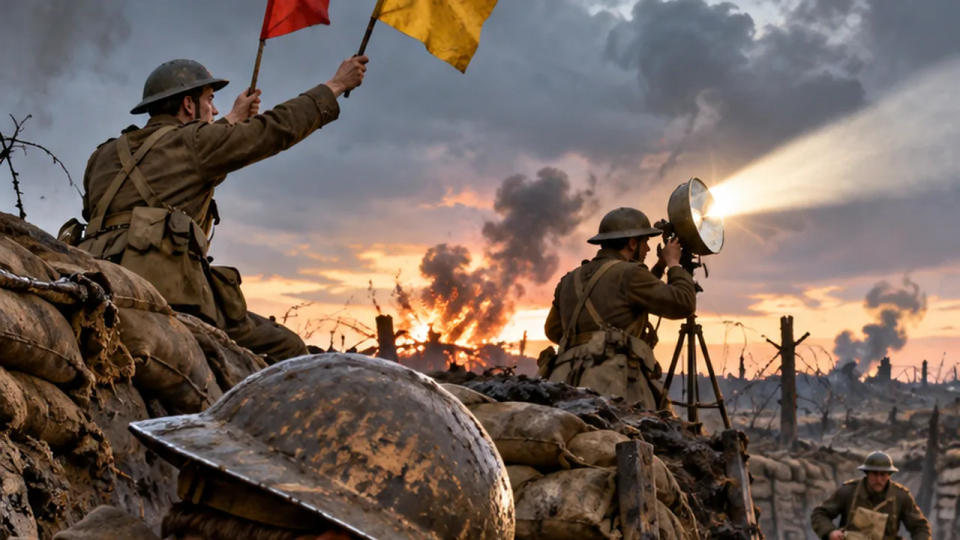
Visual signalling remained useful when two positions could see each other. Trained soldiers used flags, shutters and lamps to send prearranged signals or coded messages. A heliograph used reflected sunlight to transmit Morse code, while signalling lamps made flashes that could be read from a distance. Such equipment did not require a connecting telephone wire.
Its weakness was visibility. Smoke, darkness, weather or uneven ground could obstruct a signal, and anyone showing a flag or lamp might reveal a position to the enemy. The Royal Signals Museum notes that some signalling devices were adapted so they could be operated from cover, but visual messages still depended on a clear path between sender and receiver.
Wireless communication also developed during the conflict, though early military radios were far from pocket-sized. Sets could be heavy, required power and trained operators, and radio transmissions were vulnerable to interception. By the later war years, better equipment extended what wireless could do, including helping aircraft report artillery observations.
Aircraft could also drop written messages, and some formations planned for message rockets or other special signals. The methods were not equally practical in every battle. A contemporary Australian operational report from July 1918 listed telephone and Fullerphone, wireless, visual signals, pigeons, aircraft, message rockets and runners as available means of communication. That inventory illustrates the point: commanders prepared overlapping channels rather than trusting a single one.
It is tempting to imagine a fixed order of preference: telephone first, pigeon second, runner last. The historical picture is less tidy. The distance, terrain, weather, urgency of the report and equipment actually on hand all affected the choice. A visual signal could be fast across an unobstructed gap, yet useless behind smoke. A pigeon could bypass a shell-torn road, but could not take a fresh reply back to the sender. Knowing those limits mattered as much as having the equipment.
Conclusion
When World War I telephone lines were cut, the answer was usually a combination of human messengers, trained birds, visible signals, emerging wireless technology and urgent cable repairs. Battlefield communication worked best when an army had several imperfect ways to get the same vital information through.
Sources & Further Reading
- National Army Museum — Communication on the Front Line
- National Army Museum — The British Army Entrusted Its Secrets to Birdbrains
- Royal Signals Museum — WW1 & WW2 Communications
- Australian War Memorial — Pigeons in War
- Science Museum Group — Fullerphone, 1916–1918
- Australian War Memorial — 1918 Signal Communications Operational Report