
Why did a device once treated as jewelry become something millions of men began wearing every day? World War I did not invent the wristwatch, but it gave the watch a new job: soldiers needed to know the time instantly, often while both hands were occupied and a few seconds could matter. The war helped turn the wristwatch from a niche accessory into a practical tool associated with modern military life—and then with modern civilian life.
Before 1914, pocket watches still dominated men’s timekeeping. Wristwatches already existed, especially among women, athletes, travelers, and some military officers, but many men regarded them as feminine or unconventional. The trenches changed that image because a watch on the wrist could be read with a glance rather than pulled from a pocket under layers of clothing and equipment.
The Wristwatch Existed Before World War I
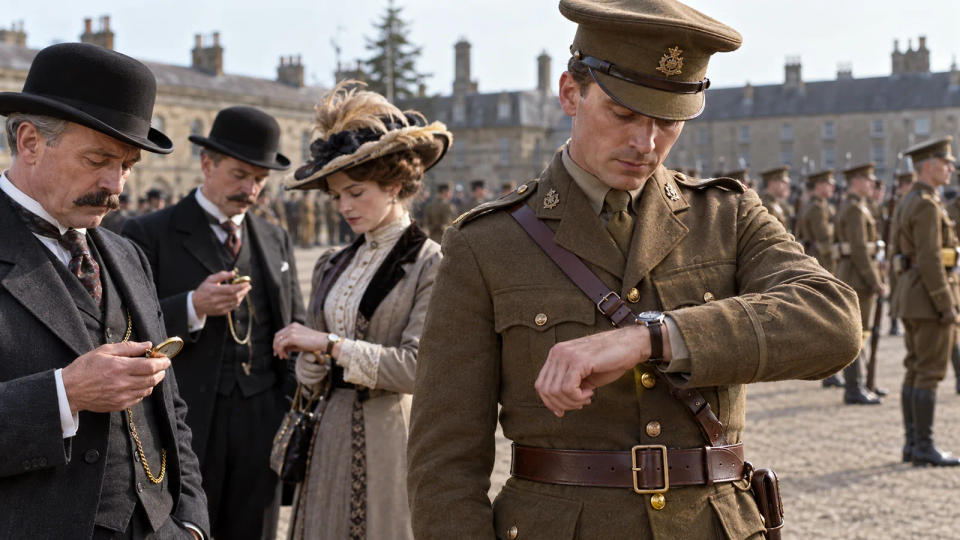
The popular story that soldiers suddenly invented the wristwatch in the trenches is too simple. Small watches worn on bracelets or leather straps were already known in the nineteenth century. The Smithsonian’s National Museum of American History notes that women in England and Europe were wearing modern wristwatches in the 1880s, particularly for outdoor activities, because the time could be checked more quickly than with a watch tucked into clothing.
Military men had also discovered the same advantage before the First World War. Officers who needed to coordinate movement on horseback or in the field could use a watch strapped to the wrist instead of reaching for a pocket watch. By the early twentieth century, manufacturers were producing watches specifically intended for the wrist, even if men’s fashion had not yet fully accepted them.
That distinction matters. World War I was not the wristwatch’s birth. It was the moment when an existing idea met an enormous practical need. The scale of the conflict exposed millions of soldiers to equipment and routines that would previously have remained limited to smaller groups of officers, sportsmen, or fashionable consumers.
Why Trench Warfare Put Time on the Wrist
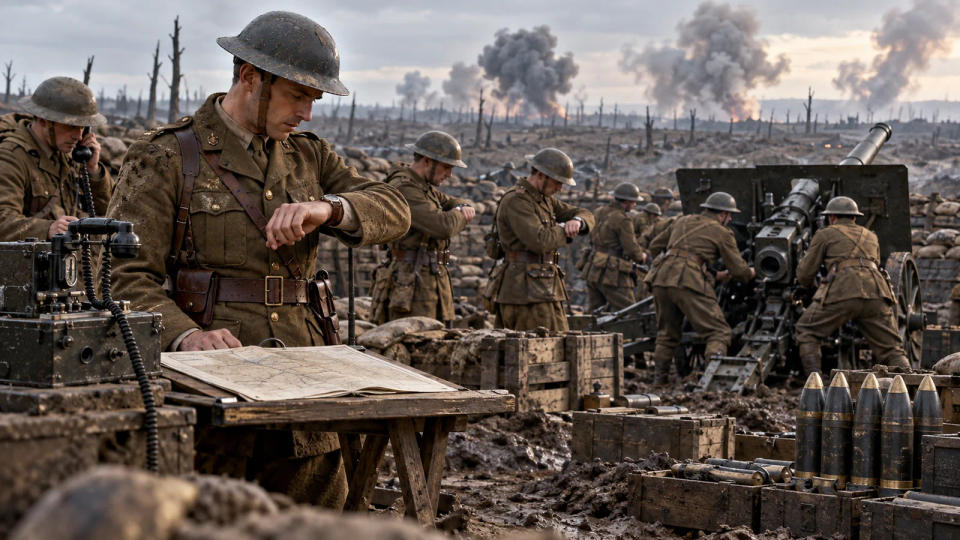
Industrial warfare made timing unusually important. Artillery fire, infantry movement, communications, supply, and attacks often had to be coordinated across positions that could not easily see one another. Historian Richard S. Faulkner, writing about American soldiers in World War I, describes combat as heavily dependent on the clock because artillery and infantry had to work together despite limited tactical communications.
Imagine the practical difference between two kinds of watch. A pocket watch might sit beneath a tunic, coat, webbing, or equipment straps. Reading it could mean freeing a hand, reaching into clothing, opening the case, checking the dial, and putting it away again. A wristwatch could be consulted in a second without dropping a map, binoculars, rifle, telephone handset, or other gear.
That convenience mattered during timed barrages and coordinated advances. Units might be waiting for artillery fire to lift before moving, while officers tried to keep separate groups working to the same schedule. A wristwatch did not solve the enormous command problems of trench warfare, but it made one essential piece of information—time—far easier to access.
How the War Reshaped the Watch Itself
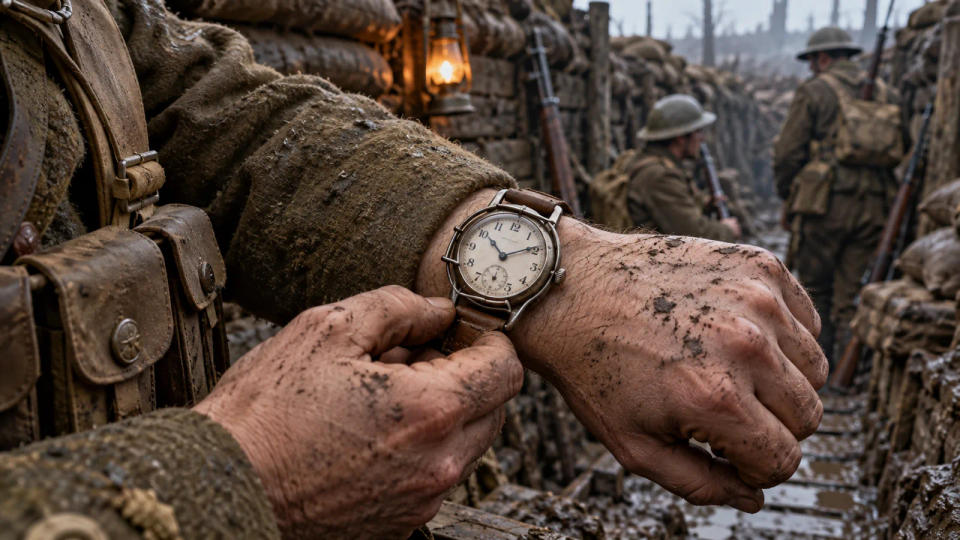
Military use also encouraged watches to become easier to read and harder to damage. A 1917 Elgin wristwatch in the Smithsonian collection has a metal grill over the crystal, a feature commonly nicknamed a “shrapnel guard.” It was not armor against battlefield fragments in any meaningful sense; its practical purpose was to protect the fragile glass while leaving the dial visible.
Legibility mattered just as much. Wartime wristwatches often used clear numerals, contrasting dials, and luminous markings that could be read in dim conditions. Radium-based luminous paint became one way to make dials and hands visible at night, although the serious health dangers of radium exposure were not yet understood. Leather straps and secure cases made the watch easier to keep on the body through mud, movement, and rough handling.
The basic layout also moved closer to what later generations would recognize as a conventional wristwatch. The Smithsonian notes that by the 1910s the orientation of the dial on the strap and the placement of the winding crown had largely settled into familiar patterns. War did not create every feature, but mass military demand rewarded designs that were simple, readable, and practical.
The wristwatch also acquired a new social meaning. Before the war, men who rejected it could dismiss it as decorative. During the war, the same object became associated with officers, soldiers, nurses, schedules, machines, and efficiency. That change in reputation was as important as any mechanical improvement.
From Military Habit to Civilian Standard
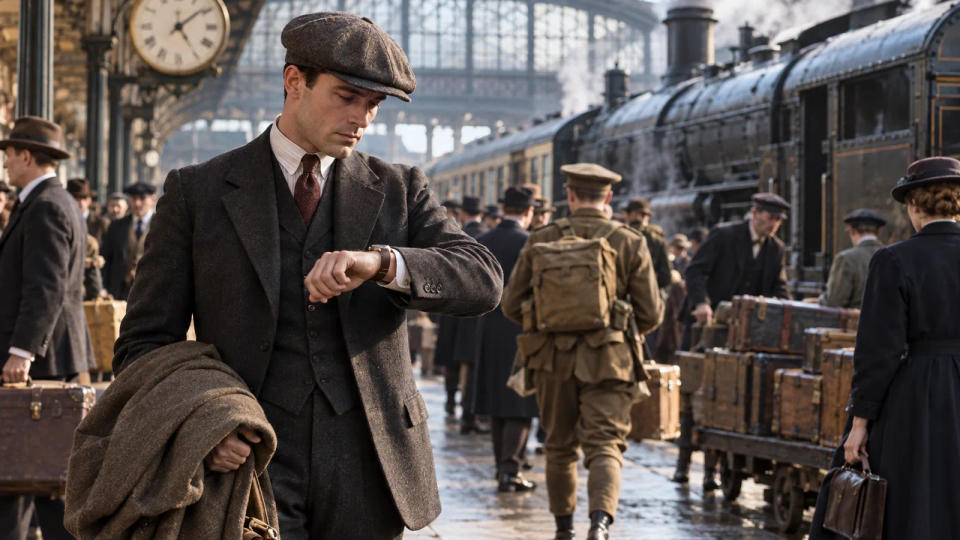
When the fighting ended in November 1918, the wristwatch did not return to being a curiosity. Men who had become accustomed to checking the time on their wrists brought that habit back into civilian life. Manufacturers also had a much easier product to sell: they could present the wristwatch as durable, efficient, modern, and proven by wartime use.
The Smithsonian’s timekeeping history notes that wristwatches grew first as a sporty alternative to dress pocket watches and then as a quick-to-use timepiece for modern people on the move. Advertising after the war often worked to distance men’s wristwatches from their earlier association with feminine jewelry. The practical image of military service helped make that transition believable.
The change was rapid enough to reshape the watch industry. Smithsonian Magazine, drawing on historical watch research, reports that wristwatches accounted for a relatively small share of American watch production around 1920 but dominated production by the mid-1930s. The exact path differed by country and manufacturer, yet the direction was clear: the wrist became the normal place for a personal watch.
There is an important caution, however. It would be misleading to say World War I alone created the modern wristwatch market. The shift also depended on earlier watchmaking advances, falling production costs, changing fashion, urban time discipline, mass advertising, and the growing demand for portable time in industrial societies. What the war did was accelerate adoption on a huge scale and give male wristwatch use a powerful new practical identity.
Conclusion
World War I did not invent the wristwatch. It made its advantages difficult to ignore. In a conflict built around coordination, schedules, artillery, and rapid decisions, time had to be visible at a glance. Soldiers carried that habit home, and an object once viewed by many men as an unusual accessory became one of the defining everyday tools of the twentieth century.
Sources & Further Reading
- Smithsonian Institution — Elgin Wristwatch, ca. 1917
- National Museum of American History — On Time: Synchronizing Time
- JSTOR / University Press of Kansas — Pershing’s Crusaders: The American Soldier in World War I
- Science Museum Group Collection — Wristwatches
- British Museum — Harwood Self-Winding Wristwatch
- Smithsonian Magazine — The Pocket Watch Was the World’s First Wearable Tech Game Changer