
Why would two armies fight for ten days over a hill only 395 meters high? In October 1952, White Horse Hill was not simply a patch of high ground: it overlooked routes through the Cheorwon area that mattered to the entire central Korean front. Losing it could expose roads, positions, and supply movements below. That was why South Korea's 9th Infantry Division and China's 38th Army fought for its summit again and again.
From October 6 to 15, the ridge became the scene of one of the Korean War's fiercest late-stage battles. South Korean accounts describe twelve major struggles for the position and seven changes of control. The striking fact is not just how often the hill changed hands, but why neither side could afford to stop trying.
Why Hill 395 Was Worth So Much
On a map, Hill 395 can look almost insignificant. It stood northwest of Cheorwon, near the western edge of the region called the Iron Triangle, a network of roads and valleys around Cheorwon, Gimhwa, and Pyeonggang. Yet a modest hill can be valuable when it rises above the ground everyone else must cross.
From high ground, troops can observe movement, direct artillery fire, and make roads below dangerous to use. Imagine trying to move trucks along a valley while an opponent watches from a balcony over the only practical route. The balcony does not have to be very tall; its view is what matters. White Horse Hill offered a military version of that advantage.
Its position also mattered because the Korean War had entered a different phase. The vast advances and retreats of 1950 and early 1951 had given way to relatively stable front lines. Armistice negotiations were taking place, but the question of how prisoners of war should be returned remained unresolved. The armies were still fighting to improve positions while diplomats argued over how to end the conflict.
Holding a ridge could protect a defensive line and influence the terrain each side would possess when an armistice finally came. This did not mean that White Horse Hill alone could decide the war. It meant that a small place could have consequences far beyond its summit.
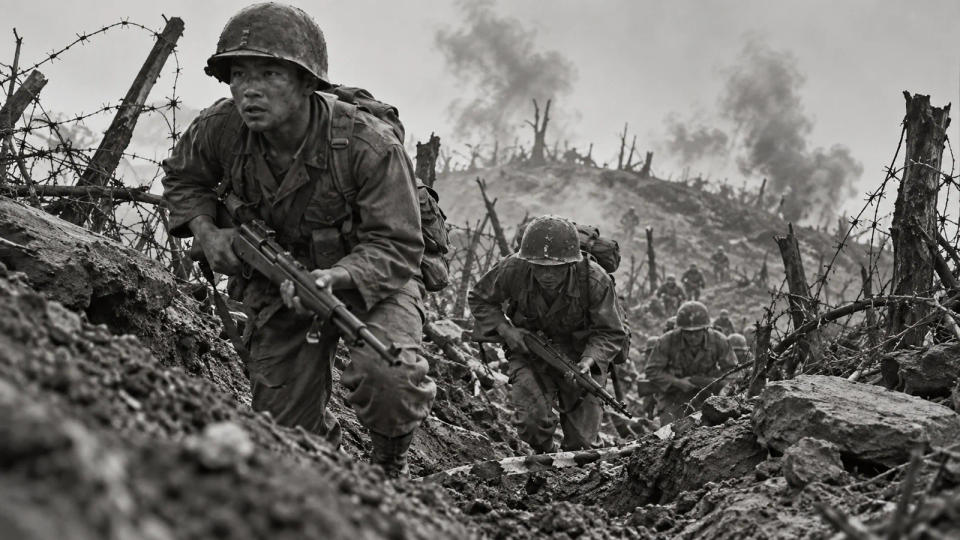
South Korea's 9th Infantry Division, commanded by Major General Kim Jong-oh, occupied the area under United Nations Command. Opposing it was the Chinese People's Volunteer Army's 38th Army. Both sides understood that this narrow stretch of high ground was connected to the security of much wider ground below.
October 6: An Attack Measured in Shells and Water
The attack began on October 6, 1952. According to the Academy of Korean Studies, Chinese forces bombarded positions held by the 9th Division and destroyed the gates of a reservoir farther north, flooding the Yeokgok stream in an attempt to complicate South Korean reinforcement and supply. This was not only an assault on a hilltop; it was also an effort to make the defending troops harder to support.
Artillery made the opening especially destructive. The U.S. Army Center of Military History describes the attacks around Hills 281 and 395 as beginning with the heaviest concentration of mortar and artillery fire received by the U.S. Eighth Army during the war. The two hills should not be confused: that American account groups the October fighting in the area, while White Horse Hill itself was Hill 395.
Heavy shelling did more than cause casualties. It damaged trenches, cut communication routes, and made it dangerous to bring ammunition, food, and replacement troops forward. A defender who kept the summit still had to survive the next barrage and prepare for the next infantry assault.
There had also been warning. One account published in The Korea Times describes a Chinese officer who defected shortly before the attack and supplied information about the planned offensive. United Nations forces reinforced the sector with additional armor and artillery support. It would be misleading, however, to explain the eventual outcome as a surprise intelligence success alone: preparation, sustained firepower, infantry fighting, and continued reinforcement all mattered.
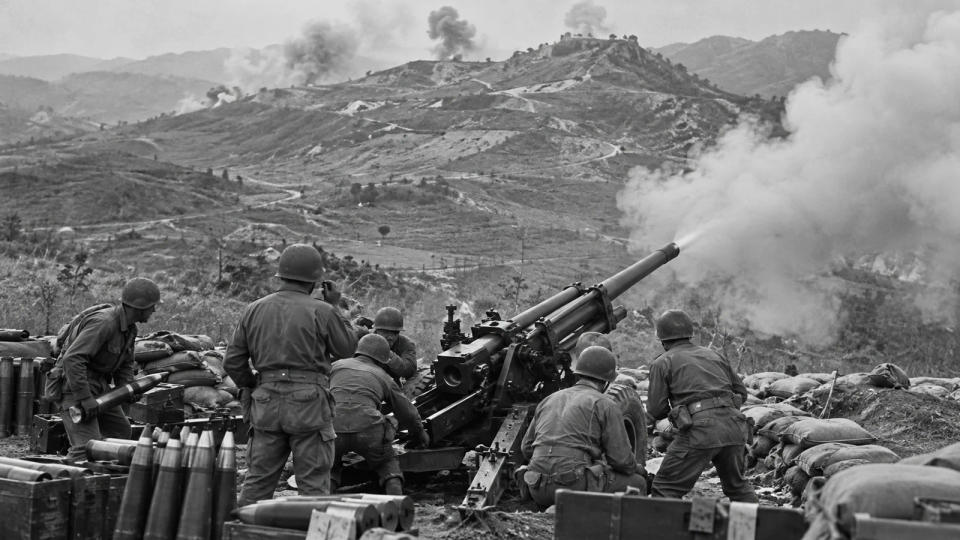
The defenders had to coordinate the infantry on the ridge with guns positioned farther back. This is a central reason the fight was so intense: taking a position meant climbing into fire, but keeping it meant enduring counterattacks that could arrive before the new occupants had rebuilt their defenses.
Twelve Contests, Seven Changes—and the Human Cost
Over the next days, the struggle became a cycle. Chinese troops attacked; South Korean units resisted or counterattacked; the summit shifted back and forth. South Korean historical references commonly record twelve contests for the hill and seven changes of control over ten days. Other popular accounts use different figures, so those numbers should be read as one documented counting convention, not a perfectly universal tally of every local movement.
South Korean regiments took turns bearing the burden. The 28th, 29th, and 30th Regiments of the 9th Division were involved at different points, with severe losses forcing units to reorganize or rotate. On the night of October 11, the summit again fell to Chinese troops. South Korean forces counterattacked on October 12, lost ground in further fighting, and continued the struggle until the ridge was secured by October 15.
At such close quarters, the neat arrows drawn on later battle maps conceal an ugly reality. An assault could gain only a few hundred meters, or a trench, while costing men who could not easily be replaced. The hill was not a single clean objective reached once and held forever. It was a series of exposed slopes, positions, and ridgeline approaches that had to be fought over repeatedly.
One recorded episode gives the battle a human scale. The Academy of Korean Studies identifies Second Lieutenant Kang Seung-woo and soldiers Oh Gyu-bong and Ahn Yeong-gwon as members of a South Korean assault group involved in an attack against a Chinese machine-gun position on October 12. The three men were killed. Their individual histories matter because the victory on a map came from dangerous work by people fighting in very small groups.
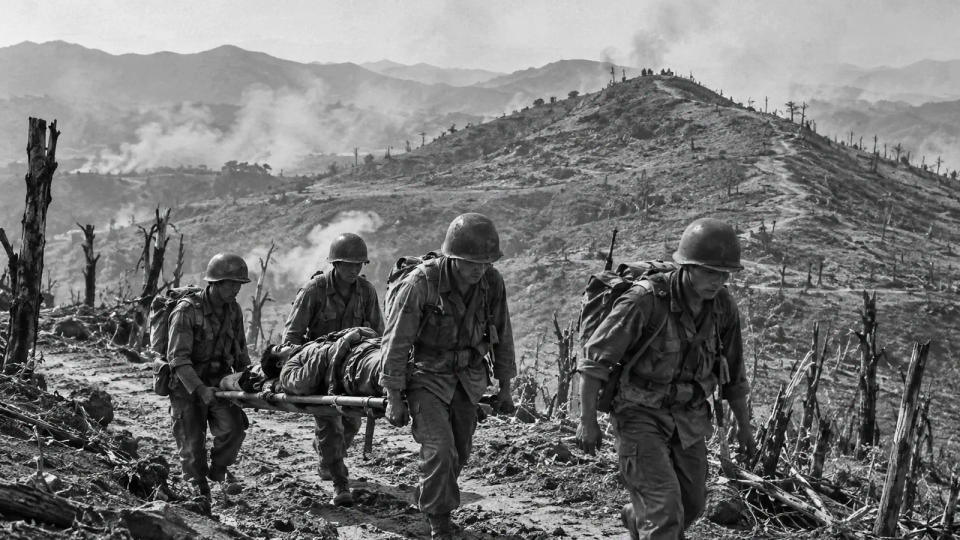
Casualty figures need particular care. The Academy of Korean Studies cites approximately 3,500 South Korean casualties and more than 10,000 Chinese personnel killed, wounded, or captured in one reported accounting. These are wartime estimates, not independently verified individual totals, and sources disagree on how to count losses. The U.S. Army's history, for example, records more than 2,000 Chinese dead counted on Hills 281 and 395 together, a different category and a different geographical scope. These numbers cannot simply be added or treated as direct equivalents.
By October 15, the South Korean 9th Division held White Horse Hill and the Chinese attack had failed. Its soldiers earned the division's enduring White Horse identity. Yet the name should never obscure the lives lost on both sides or the fact that this victory did not end the war.
There is one final, unsettling detail. Korean historical accounts explain that the massive bombardment stripped vegetation and altered the hill's appearance so drastically that the bare, pale ridge was likened to a white horse lying on the ground. The account is part of the hill's remembered naming tradition, not a precise measurement of the landscape. It captures how profoundly a ten-day battle could transform a place.
Conclusion
White Horse Hill was fought over for ten days because it gave whoever held it a view and a tactical advantage over important ground around Cheorwon. In October 1952, a war stuck between battlefield stalemate and unfinished peace talks made even one ridge worth repeated attacks. The 9th Division eventually held Hill 395, but the lasting lesson is not that a small hill was magically decisive. It is that geography, firepower, determination, and terrible human costs can converge in a place that looks ordinary on a map.
Sources & Further Reading
- Academy of Korean Studies — Battle of White Horse Hill (백마고지 전투)
- U.S. Army Center of Military History — Korean War Campaigns
- Academy of Korean Studies — Oh Gyu-bong (오규봉)
- Kumsung Educational Encyclopedia — Battle of White Horse Hill
- The Korea Times — Battles of White Horse Hill