
What if Japan had struck every important target at Pearl Harbor on December 7, 1941? Could a more complete victory have kept the United States out of the Pacific War—or even changed who won?
Japan's attack was devastating, but it left American aircraft carriers untouched and vital naval facilities operating. Destroying those assets might have delayed the American counteroffensive. It would not, however, have removed the much larger problem facing Japan: a long war against an industrial power it could not easily exhaust.
That distinction matters because some of Pearl Harbor's supposed “mistakes” were missed opportunities, while others were risks Japanese commanders consciously chose not to take.
The Attack Succeeded—But Left a War Machine Alive
The Japanese carrier force approached Hawaii undetected and launched two waves of aircraft against American warships and airfields. The battleship USS Arizona was destroyed in a catastrophic explosion, and the Pacific Fleet suffered an enormous blow. According to the U.S. Navy's historical account, 2,403 Americans died in the attack.
From Japan's immediate military perspective, the operation achieved something remarkable. The American battle line had been badly damaged, while the Japanese strike force escaped with relatively limited aircraft losses. Japan hoped this would buy time for offensives across Southeast Asia and the western Pacific.
Yet the attack was designed to disable a fleet, not to occupy Hawaii. American submarines, repair facilities and fuel supplies remained available, as did the U.S. carriers that would soon fight at sea. A dramatic tactical victory had not produced a permanent strategic solution.
This is the starting point for any realistic alternative history: Japan could have inflicted more damage without necessarily gaining the ability to dictate peace.
The Aircraft Carriers Were Out of Reach
Among the most consequential survivors were America's aircraft carriers. None was in Pearl Harbor when the bombs fell. Enterprise was returning from a mission to Wake Island, Lexington was carrying aircraft toward Midway, and Saratoga was on the U.S. West Coast.
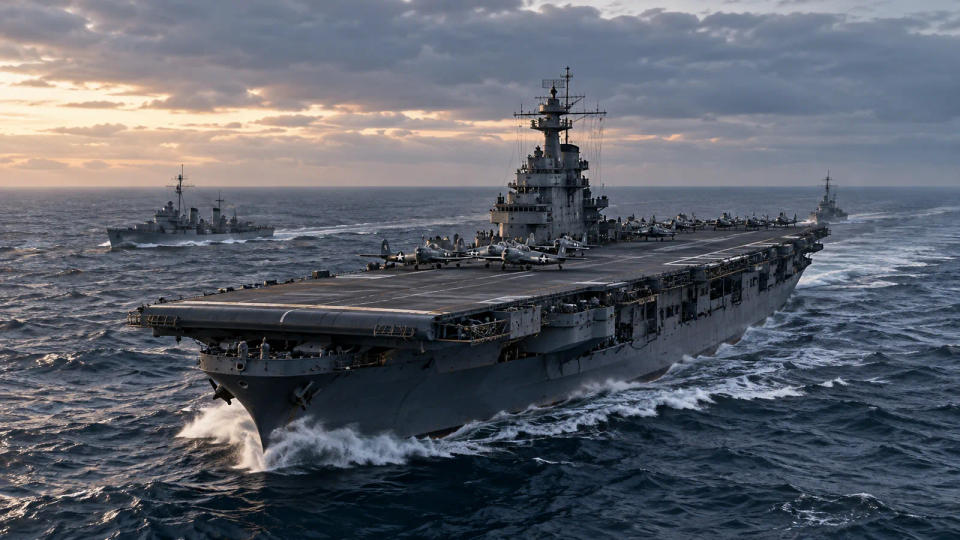
That absence was not a simple targeting error. The carriers were beyond the reach of aircraft attacking the harbor, and Japan did not know precisely where they were. To destroy them on December 7 would have required a different set of circumstances: better intelligence, a successful search at sea, or an earlier attack when carriers happened to be present.
Had Japan sunk one or more carriers, the American Navy's first months of war might have become substantially harder. Carriers and submarines were the forces that could still strike back while damaged battleships were being repaired.
But that hypothetical comes with limits. Even finding American carriers would not have guaranteed sinking them; mobile warships could fight, evade or launch their own aircraft. Their survival was crucial, but their destruction cannot be treated as an automatic Japanese victory.
The Fuel Tanks and Repair Yards That Survived
A less glamorous target lay on shore. Pearl Harbor contained fuel storage tanks, workshops, dockyards and a submarine base. These were the facilities that let a fleet refuel, repair damage, and return to action without making the long journey to the American mainland.
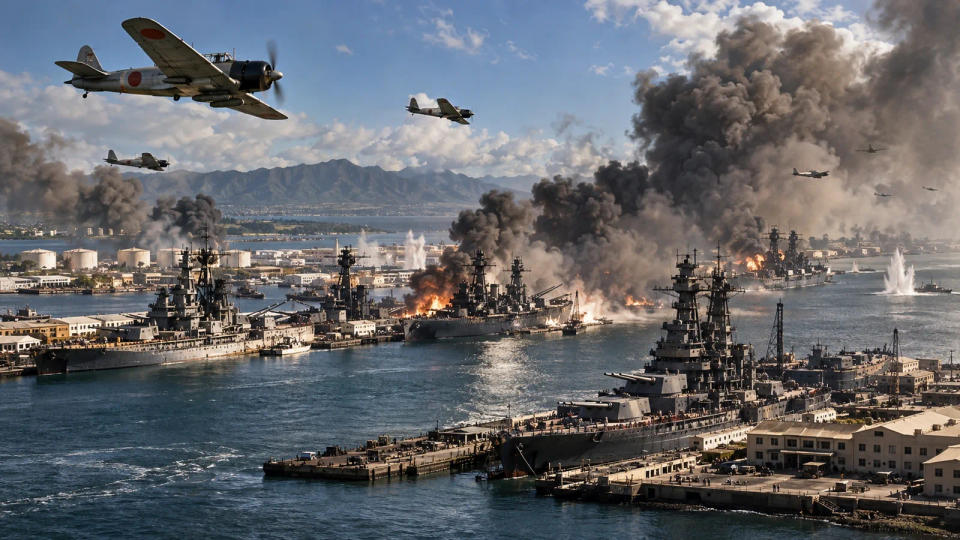
Japan concentrated on ships and aircraft instead. The U.S. Naval History and Heritage Command identifies the survival of the fuel farms, repair yards and submarine base as important to American operations during the following months.
Imagine that Japanese aircraft had destroyed substantial portions of these facilities. Even ships that escaped serious damage would have faced a more difficult supply situation. Repairs could have taken longer; operations from Hawaii might have been constrained; pressure on other Pacific bases would have increased.
Those are plausible military effects, not a timetable historians can prove. Tanks could be replaced, repairs reorganized and resources redirected, though not instantly. What matters is that attacking infrastructure could have damaged America's ability to use Pearl Harbor after the smoke cleared, rather than only the ships caught there on one morning.
Why a Third Wave Was Not a Simple Fix
The most familiar Pearl Harbor counterfactual asks why Japanese commander Vice Admiral Chūichi Nagumo did not send a third wave against the harbor's remaining facilities.
It sounds obvious in hindsight: the first two waves had struck hard, so why stop? Yet the U.S. Navy's historical analysis notes that Japan had not planned a third attack. Nagumo faced uncertainty about the missing American carriers, mounting resistance from American antiaircraft fire, damaged Japanese aircraft and fuel concerns among his escorts.
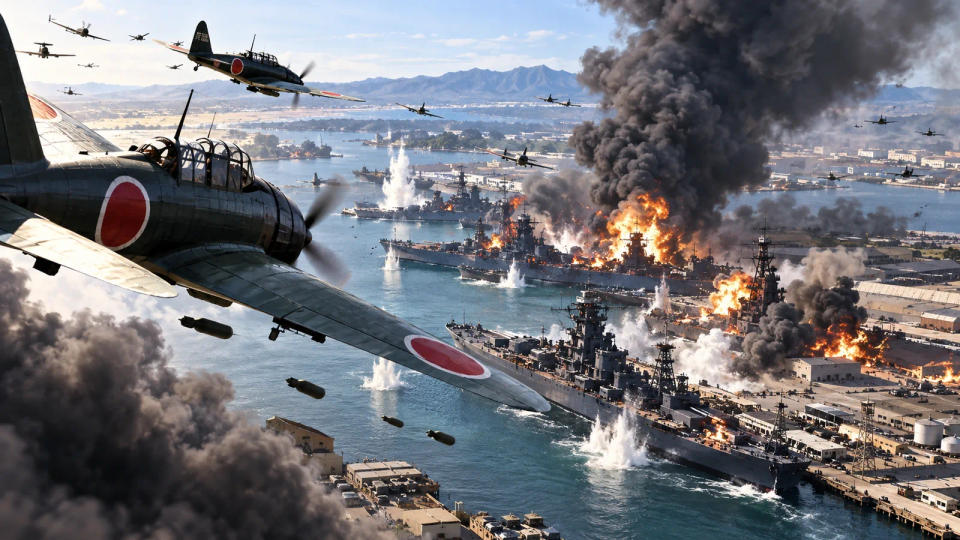
Timing was another serious obstacle. A new strike would have required preparing aircraft again, and returning crews could have faced a nighttime landing on carriers. Most Japanese aviators involved were not trained for that operation. A third attack might have caused greater American losses while placing some of Japan's most valuable carrier aircraft and aircrews at risk.
Even success would have had to be measured against the cost. Destroying oil tanks would matter greatly, but losing irreplaceable experienced aviators could weaken the same force Japan needed for its coming campaigns.
There is no reliable way to calculate the outcome of a strike that was never launched. Calling the decision to withdraw an obvious blunder skips over the dangers Nagumo could see—and the information he did not possess.
The Bigger Mistake Was Expecting America to Back Down
Japan's leaders wanted freedom to pursue their campaigns in Asia without American naval interference. U.S. restrictions on oil and other trade, imposed amid Japan's war in China and expansion into Southeast Asia, had intensified the crisis. Pearl Harbor was part of Japan's attempt to seize a strategic advantage before the United States could respond effectively.
What Japan could not control was the American reaction. On December 8, President Franklin D. Roosevelt addressed Congress, which declared war against Japan. The attack helped unite a country previously divided over how far it should go into the fighting.
The diplomatic timing was another failure. Japan's final message to Washington arrived after the attack had begun. But it was not a formal declaration of war, as the U.S. National Archives explains. Delivering it on time might have changed the diplomatic circumstances and the language of American outrage; it is far harder to argue it would have made an attack on Hawaii acceptable or prevented war.
Now suppose Japan had sunk American carriers, destroyed the fuel depots and returned home with few additional losses. The United States would have faced a steeper climb back into the Pacific. Operations such as the carrier battles of 1942 might have unfolded differently, perhaps on different dates and under less favorable conditions for American forces.
Still, Japan would have been confronting the United States' shipyards, factories, manpower and access to resources. American wartime production eventually put new ships and aircraft into service on a scale Japan struggled to match. More damage in Hawaii could have bought Japan time, but using that time to force a negotiated peace was a separate—and much more uncertain—challenge.
Conclusion
A more destructive Pearl Harbor attack could plausibly have delayed the American recovery and increased the war's cost. That is the strongest defensible answer to this “what if.” It is not evidence that Japan would have won. The raid's deepest limitation was strategic: it could cripple the Pacific Fleet for a time, but it could not guarantee that the United States would abandon the fight.
Sources & Further Reading
- U.S. Naval History and Heritage Command — The Pearl Harbor Attack: Overview
- U.S. Naval History and Heritage Command — H-Gram 085
- U.S. Naval History and Heritage Command — Pearl Harbor Attack
- The National WWII Museum — The Pacific Strategy, 1941–1944
- U.S. National Archives — How Roosevelt Attacked Japan at Pearl Harbor