
What did the Japanese Government-General actually do in Korea between 1910 and 1945? It did far more than administer offices in Seoul. It made colonial laws, directed the police and courts, supervised schools and economic policy, and eventually helped organize Korea's people and resources for Japan's wars.
The Government-General of Korea, known in Korean as the Joseon Chongdokbu, was the central machinery of Japanese colonial rule. Its history shows how imperial power reached from official decrees to fields, classrooms, newspapers, and households.
A Government That Held Nearly Every Lever of Power
Japan formally annexed Korea in August 1910, ending the Korean Empire's sovereignty. The new Government-General replaced the earlier Japanese Residency-General and placed a governor-general at the top of colonial administration. This was no ordinary provincial government with elected representatives able to restrain it.
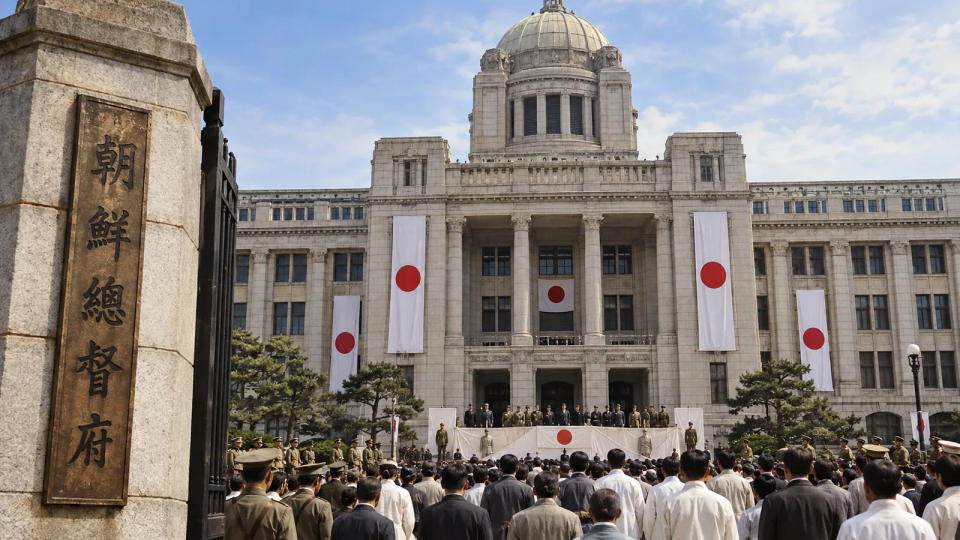
The governor-general possessed sweeping powers over administration and legislation, with the courts organized under his authority. Governors-general were appointed from senior Japanese military ranks, even after the rules were altered to permit civilian appointments. None of the governors-general appointed during the colonial period was a civilian.
Its departments oversaw police, taxation, agriculture, industry, education, public works, railways, prisons, and the judiciary. A decision made at the center could therefore shape the operation of a local school, the collection of a land tax, or the treatment of a political suspect.
The Government-General also created an advisory body, the Central Council, that included selected Koreans. But it did not provide representative self-government. Appointments and consultation did not give Koreans the power to choose the rulers who controlled their country.
The headquarters itself became a lasting symbol. In 1926, a monumental new building opened inside the grounds of Seoul's Gyeongbokgung Palace. Its position on the former royal site made colonial authority visible in the very landscape of the Korean capital.
Policing Resistance and Changing the Rules After 1919
In its early years, the colonial government relied on a military-police system. Japanese gendarmes performed police duties alongside civilian officers, while colonial regulations restricted political organizing and public expression. The police did not simply investigate crimes; they also watched for resistance to Japanese rule.
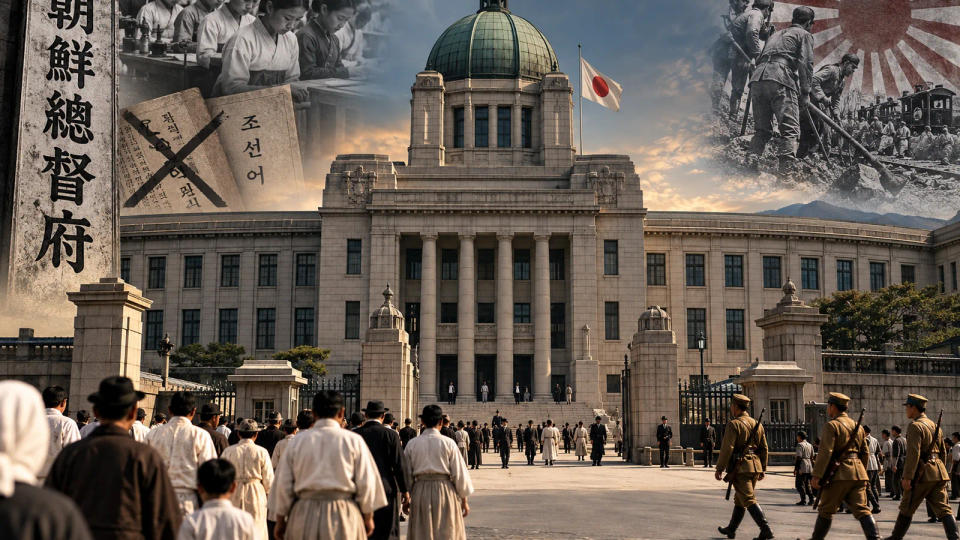
That system faced a profound challenge in March 1919, when Koreans demonstrated for independence across the peninsula. The March First Movement exposed the depth of opposition to annexation and prompted a change in colonial policy.
Japan then announced what it called cultural rule. The Government-General formally replaced the military-police system with a civilian police structure, while allowing some additional space for newspapers and public cultural activity. These changes mattered, but they did not end colonial control.
Indeed, the police organization expanded, and surveillance and censorship remained central to the government's work. The authorities could permit limited publications or associations while still suppressing movements that challenged Japanese sovereignty. The distinction is important: colonial policy changed its methods without conceding Korean independence.
Courts and prisons were another part of this apparatus. The judiciary operated within the colonial administrative order rather than as a fully independent check on the governor-general. For Koreans who opposed Japanese rule, political policing and the legal system could work together to enforce imperial authority.
Land, Taxes, Rice, and the Colonial Economy
Much of the Government-General's work took place far from its headquarters. A major land survey launched in 1910 measured property, registered ownership, and assessed land values. In administrative terms, it helped establish a new land registry and taxation system. In political terms, it allowed the colonial state to make agriculture a more legible and taxable source of revenue.
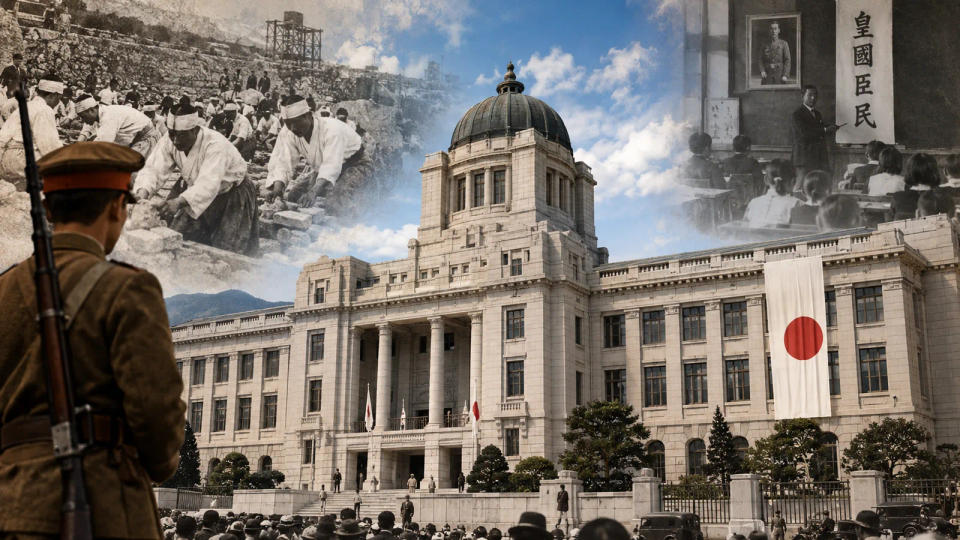
It would be misleading to say that every Korean farmer lost their land through the survey. Its consequences varied, and historians distinguish the formal registration of property from later patterns of landholding and tenancy. Yet the survey served a state whose priorities were determined by Japanese imperial rule, not by an independent Korean government.
The Government-General collected taxes and directed policies involving farming, transport, trade, forests, and industry. Rice production became particularly important. Colonial authorities encouraged measures to increase output, while Korea's agricultural economy was linked more closely to demand in Japan. Export flows and the benefits of agricultural expansion were not shared evenly across Korean society.
Railways, ports, roads, and industrial facilities grew during the colonial decades. Those changes were real, but infrastructure is not proof that colonial rule primarily served the colonized population. Much of this development supported movement of goods, military logistics, administrative oversight, and Japan's wider economic interests.
In towns and countryside alike, Koreans experienced colonial economics differently. Some found new commercial opportunities, while others faced insecure tenancy, unequal access to resources, or growing pressure from a system they had no democratic power to direct. The existence of construction and production does not erase the coercive political setting in which they occurred.
Schools, Identity, and Mobilization for War
Schools were a central concern because colonial rule was not only about controlling territory. It also sought to shape the outlook of the next generation. The Government-General prescribed curricula, regulated teachers and textbooks, and maintained different educational arrangements for Japanese settlers and Koreans.
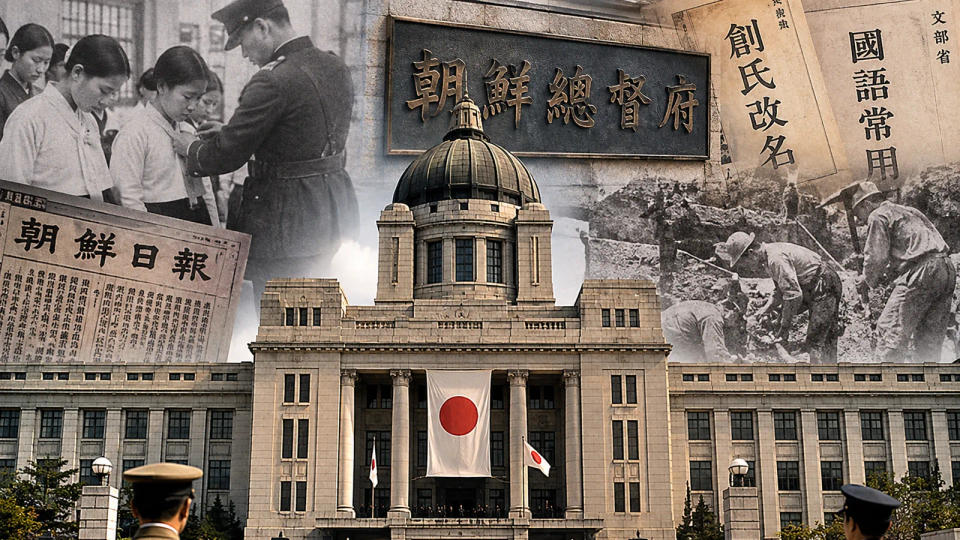
Education policy was not identical throughout the thirty-five years. The authorities relaxed some earlier restrictions in the 1920s, including rules affecting the use of Korean in instruction. But following Japan's expansion of war in China in 1937, the government accelerated efforts to turn Koreans into loyal subjects of the Japanese emperor.
Japanese-language instruction received greater emphasis, while Korean-language education was progressively curtailed and ultimately removed from the formal school curriculum during the war. The colonial state also promoted imperial rituals and pressed Koreans to adopt Japanese-style family names under the name-change policy introduced in 1939.
That pressure extended beyond classrooms. Newspapers faced tightening censorship, and the Chosun Ilbo and Dong-A Ilbo were shut down in 1940. The government used schools, local organizations, propaganda, and police authority to promote identification with the empire and discourage expressions of Korean national identity.
As Japan's wars intensified, the administration became increasingly focused on mobilization. Its offices coordinated supplies, labor, production, and recruitment for the Japanese war effort. Koreans were subjected to coercive labor mobilization, and military conscription was extended to Korean men in the final years of the war. The forms and timing of mobilization differed, but its overarching purpose was unmistakable: to make the colony serve Japan's wartime needs.
By 1945, the institution that had begun by asserting authority over Korean law and policing was deeply involved in regulating work, schooling, language, and daily life. Japan's surrender that August ended the Government-General's colonial rule, but its policies left social and institutional consequences that liberation could not immediately undo.
Conclusion
The Government-General was the operating center of Japanese rule in Korea, not simply a grand building in Seoul. Across thirty-five years, its methods shifted from overt military policing to managed cultural concessions and then wartime mobilization. What remained constant was the absence of Korean sovereignty over the institutions that governed Korean lives.
Images are artistic historical reconstructions, not archival photographs.
Sources & Further Reading
- National Institute of Korean History, “Government-General of Korea” (Korean History Chronology)
- National Archives of Korea, “Administrative System of the Government-General”
- National Institute of Korean History, “Land Survey and Land Tax Reform”
- National Institute of Korean History, “Colonial Education Ordinances”
- Seoul Museum of History, “Seoul under Japanese Control”
- National Museum of Korean Contemporary History, Collection: Imperial Assimilation Leaflet