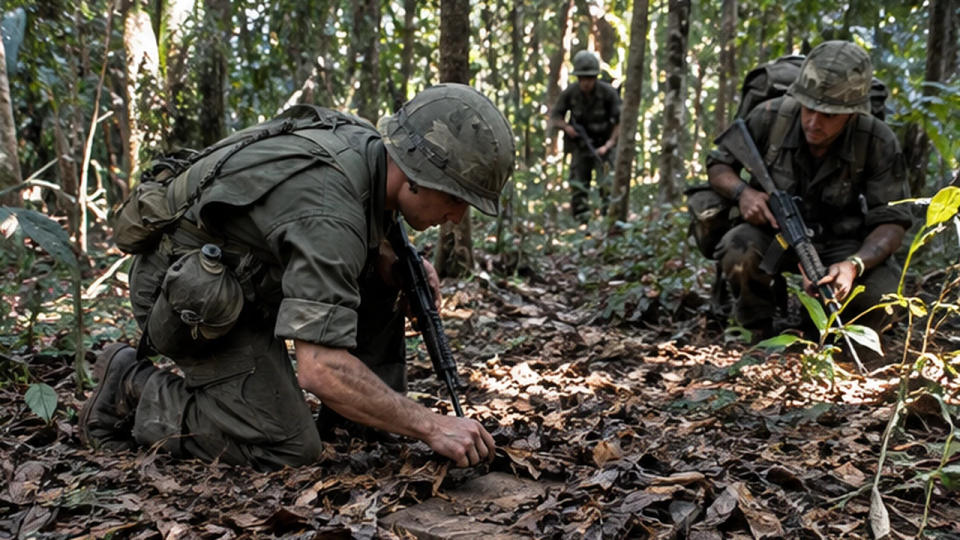
What could make a soldier with modern rifles, artillery, and air support hesitate at a hole in the ground? In the Cu Chi district northwest of Saigon, the answer was simple: underground, those advantages could disappear. The tunnels concealed Viet Cong fighters, but they also forced anyone entering to crawl through unfamiliar passages where a hidden explosive, an enemy at the next turn, or an inability to retreat could be fatal.
For American and allied troops during the Vietnam War, the problem was not just darkness or claustrophobia. They had found a battlefield whose defenders had shaped the terrain to their advantage. To understand why the entrances were so feared, it helps to see what the tunnels were built to accomplish—and what happened when the war moved beneath the surface.
How Cu Chi Became an Underground Stronghold
The first tunnels in the Cu Chi area were dug during the war against French colonial rule in the late 1940s. According to Vietnam's Department of Cultural Heritage, early passages served as hiding places for people and documents. During the later conflict, they were reinforced, lengthened, and connected into a much more elaborate defensive network. The land itself helped: firm clay could hold narrow passages without the kind of supports a loose, sandy soil might need.
By the 1960s, Cu Chi was more than a collection of escape holes. Local residents and communist guerrillas used sections of the system to shelter, move, communicate, store provisions, care for wounded people, and prepare operations. Some parts had multiple levels, concealed ventilation openings, hidden doors, and links toward the Saigon River. Different branches served different purposes; it would be misleading to imagine a single identical tunnel stretching continuously through the district.
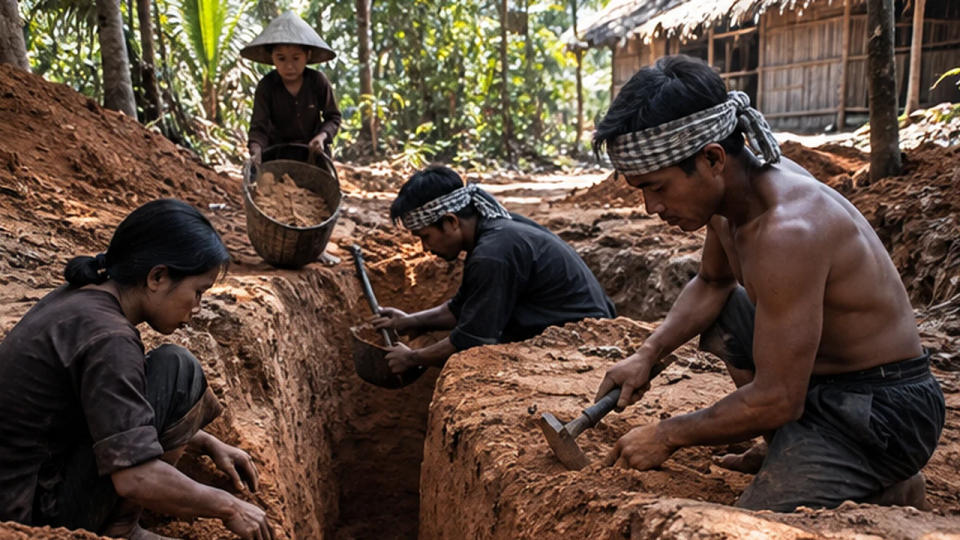
This was a powerful answer to an opponent with aircraft and heavy guns. A fighter who could not remain safely above ground might vanish into an entrance hidden by leaves, then emerge elsewhere. The U.S. Army's museum notes that American forces even established a major base over a large tunnel complex at Cu Chi. The apparent security of occupying the surface did not necessarily mean controlling what lay underneath.
Length figures also require care. Historical summaries often speak of more than 200 kilometers of passages, but the system grew over many years, and its exact historical extent cannot be mapped with certainty. The important fact is not an exact number: it is the combination of concealment, multiple exits, and connections to real military and civilian activity.
Why One Entrance Could Be So Dangerous
A discovered entrance offered almost no reliable preview of the route ahead. The U.S. Army museum describes many passages as only about two feet by three feet, with sharp changes of direction. A soldier might have to move on hands and knees or stomach, often unable to turn around or bring a full-length weapon to bear. Helmets, packs, and other normal equipment became obstacles rather than protection.
There was a second problem: the tunnel's defenders understood its layout better than the intruder. A junction could conceal an escape route, a firing position, or a dangerous surprise. Some entrances and passages were rigged with explosive devices or sharpened-stake traps. Army accounts also describe encounters with snakes and other animals. Not every tunnel contained every hazard, but the entering soldier had no dependable way to know which threat waited ahead.
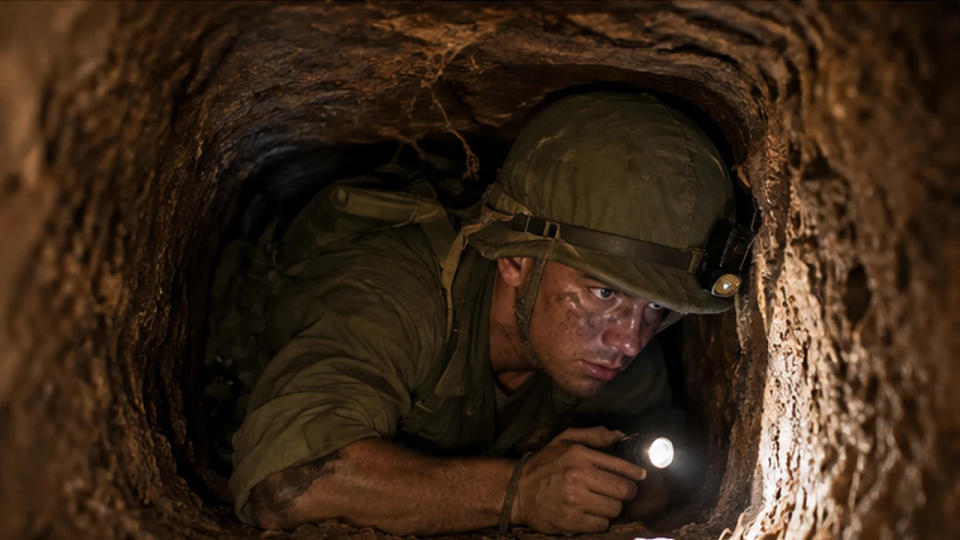
Even the ordinary act of looking ahead was difficult. A flashlight illuminated only part of a passage and could betray the user's position. Dust, darkness, tight turns, and restricted movement made it hard to identify another person quickly. Smoke or chemical agents could also create danger, while bulky protective equipment limited visibility and hearing.
The fear is recorded rather than merely imagined. Australian veterans' accounts collected by their government's Anzac Portal describe entering tunnels with little more than a light, knife, and a means of finding the way back. An Australian soldier later described the constriction and uncertainty as terrifying. Such testimony should not be taken to mean that every soldier felt exactly the same, but it confirms why the task demanded unusual composure.
The Tunnel Rats and the Limits of American Firepower
American units first tried to deal with tunnels using tools that worked well above ground: bombardment, bulldozers, explosives, flooding, and smoke. These methods could destroy entrances or individual sections, yet they did not reliably neutralize deep, branching complexes. The U.S. Army Corps of Engineers explains that packed earth, protected lower levels, and drainage features could defeat attempts to collapse or flood an entire system.
Operation Crimp in January 1966 exposed the scale of the problem. U.S. and Australian forces searched the Cu Chi area after aerial attacks, discovering a network that could shelter fighters and equipment. Australian engineers chose to explore and map important passages, finding supplies and intelligence. Their work also carried deadly risks. The operation helped demonstrate that locating a tunnel entrance was only the beginning of understanding the enemy position.
The response included specialists nicknamed tunnel rats. The U.S. Army developed volunteer teams drawn from infantry, engineers, and other personnel to investigate the smallest passages. They often entered with a pistol, flashlight, and minimal gear, while other troops guarded the opening. Their task was not simply to fight: they searched for documents, weapons, routes, and information that could reveal a much larger network.
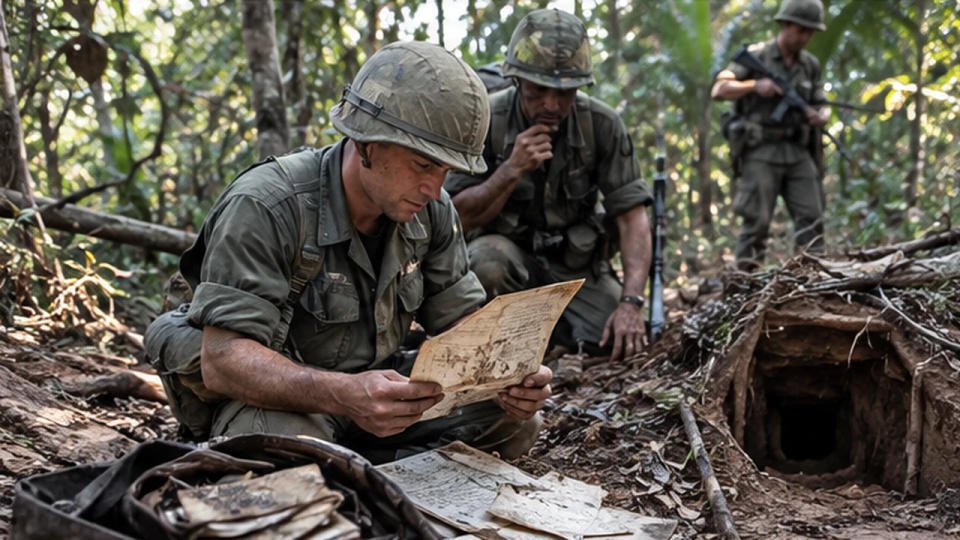
This created a revealing reversal. Above ground, U.S. forces could call on aircraft, armored vehicles, and artillery. Inside a narrow clay passage, the decisive tools might be patience, close observation, and a small light. The same tunnel that allowed guerrillas to avoid conventional battles could make a lone intruder vulnerable to an ambush at arm's length.
It is important, however, not to turn the tunnels into a story of effortless Viet Cong invulnerability. Living underground was exhausting and dangerous for Vietnamese combatants and civilians, too. Air, water, disease, bombardment, and limited supplies constrained daily life. Nor did all tunnel systems resemble Cu Chi's expansive network: Australian tunnel specialists later encountered many much shorter shelters and linked bunkers elsewhere in Vietnam.
The underground war was therefore a contest of adaptations, not a magical weapon that made one side unbeatable. Tunnels offered concealment and survival; dedicated searches and intelligence work could expose them. Both sides faced serious danger, but in different forms.
Conclusion
American soldiers had good reasons to dread entering the Cu Chi tunnels. Each small opening led from a battlefield of visible targets into one of uncertain routes, hidden hazards, and extreme physical vulnerability. The courage of the tunnel rats mattered precisely because entering was not routine or safe. Cu Chi remains a reminder that military superiority above ground does not automatically translate into control of the terrain beneath it.
Sources & Further Reading
- National Museum of the United States Army — Tunnel Rats of the Vietnam War
- U.S. Army Corps of Engineers — How Army Engineers Cleared Viet Cong Tunnels
- Australian Department of Veterans' Affairs — Snapshots: Australians in War and Conflict (Tunnel Rats)
- Vietnam Department of Cultural Heritage — Di tích lịch sử Địa đạo Củ Chi
- Australian Army, The Cove — Fresh Off the Plane and Straight into It